
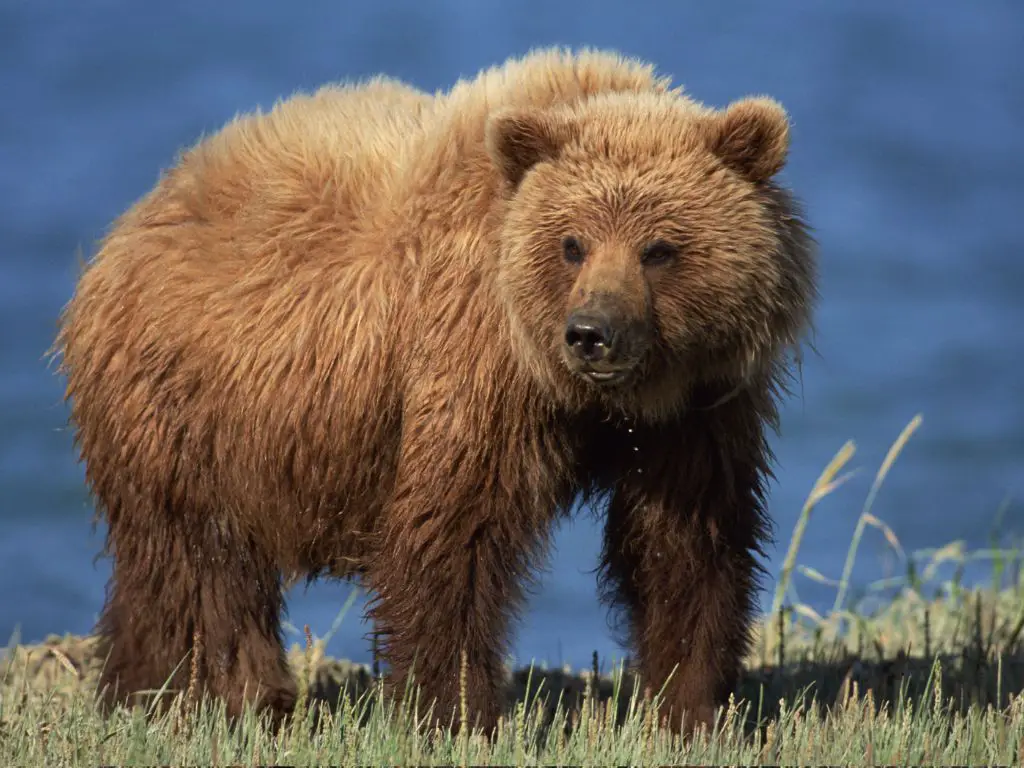
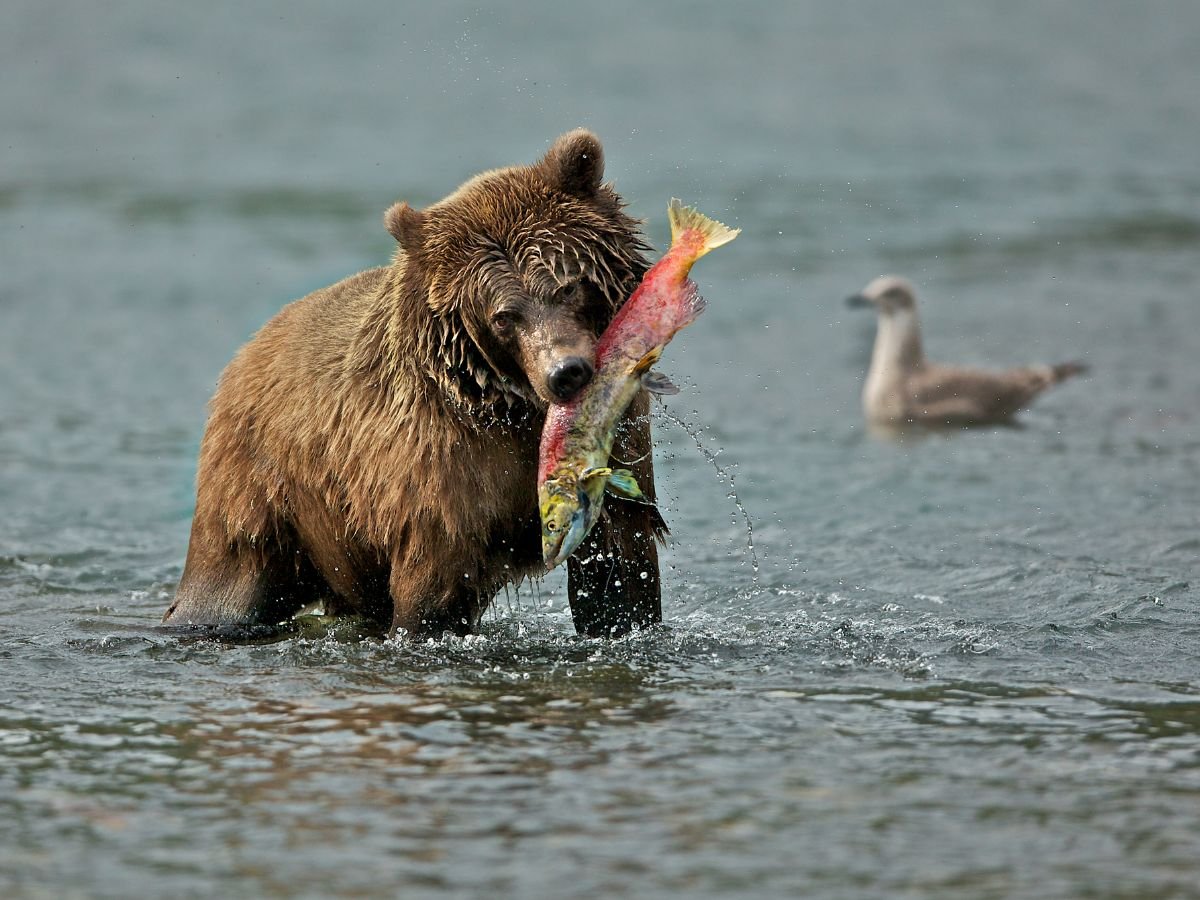
An adult male grizzly bear in the lower 48 US states usually weighs 180–270 kg (400–600 lb), and a female 110–160 kg (250–350 lb), says the US Fish and Wildlife Service. Brown bears on the Alaska coast eat salmon and get far heavier. Big males there can pass 454 kg (1,000 lb) by autumn.
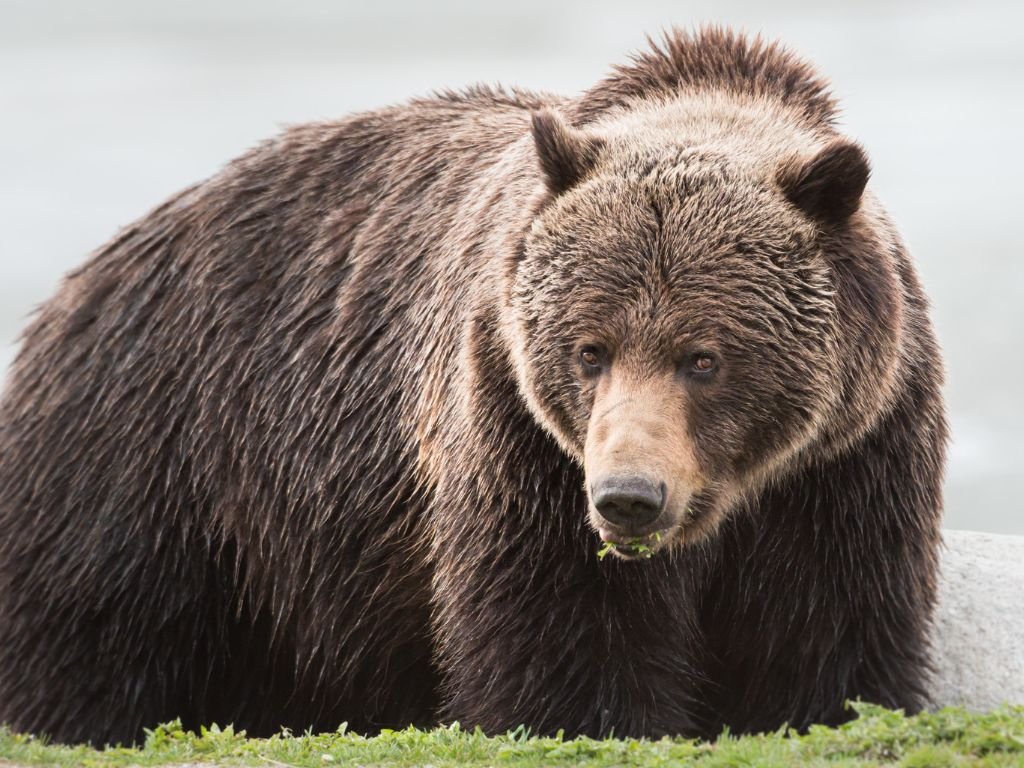
How much does a grizzly bear weigh?
It depends on three things: whether the bear is male or female, what it eats and what month it is. The National Park Service says brown bears, the species that includes grizzlies, weigh 90–450 kg (200–1,000 lb) depending on sex, place and season.
That is a huge spread. A thin female leaving her den in spring may weigh less than a quarter of a fat coastal male in October. So when you read a single number for grizzly weight, ask which bears and which season it describes.
The table below sorts the best measured and official figures. The Yellowstone numbers are averages from bears that scientists caught and weighed. The Alaska figures are ranges given by park and state wildlife staff.
| Group | Adult males | Adult females | Source |
|---|---|---|---|
| Lower 48 US grizzlies (typical) | 180–270 kg (400–600 lb) | 110–160 kg (250–350 lb) | USFWS |
| Yellowstone grizzlies (average weighed) | 187 kg (413 lb) | 122 kg (269 lb) | NPS Yellowstone |
| Yellowstone grizzlies (heaviest weighed) | 324 kg (715 lb) | 198 kg (436 lb) | NPS Yellowstone |
| Katmai coastal brown bears, mid-summer | 272–408 kg (600–900 lb) | About one-third less than males | NPS Katmai |
| Katmai coastal brown bears, Oct–Nov | Large males well over 454 kg (1,000 lb) | About one-third less than males | NPS Katmai |
| Alaska brown bears (upper limit) | Up to 680 kg (1,500 lb) | Smaller than males | ADF&G |
| Kodiak bears (for comparison) | 272–635 kg (600–1,400 lb) | 136–318 kg (300–700 lb) | USFWS |
Male vs female grizzly bear weight
Males are much heavier. In Yellowstone, weighed adult males averaged 187 kg (413 lb) and females 122 kg (269 lb), according to the Yellowstone grizzly bear fact sheet. The heaviest male on that list was 324 kg (715 lb). That fact sheet dates from 2015.
Across all brown bears, males are 1.2 to 2.2 times larger than females, says the San Diego Zoo Wildlife Alliance. At Katmai National Park in Alaska, adult females average about one-third less than adult males.
Why the gap? Males compete with each other for mates, and bigger males usually win. Females spend years raising cubs, which uses up a lot of their stored fat.
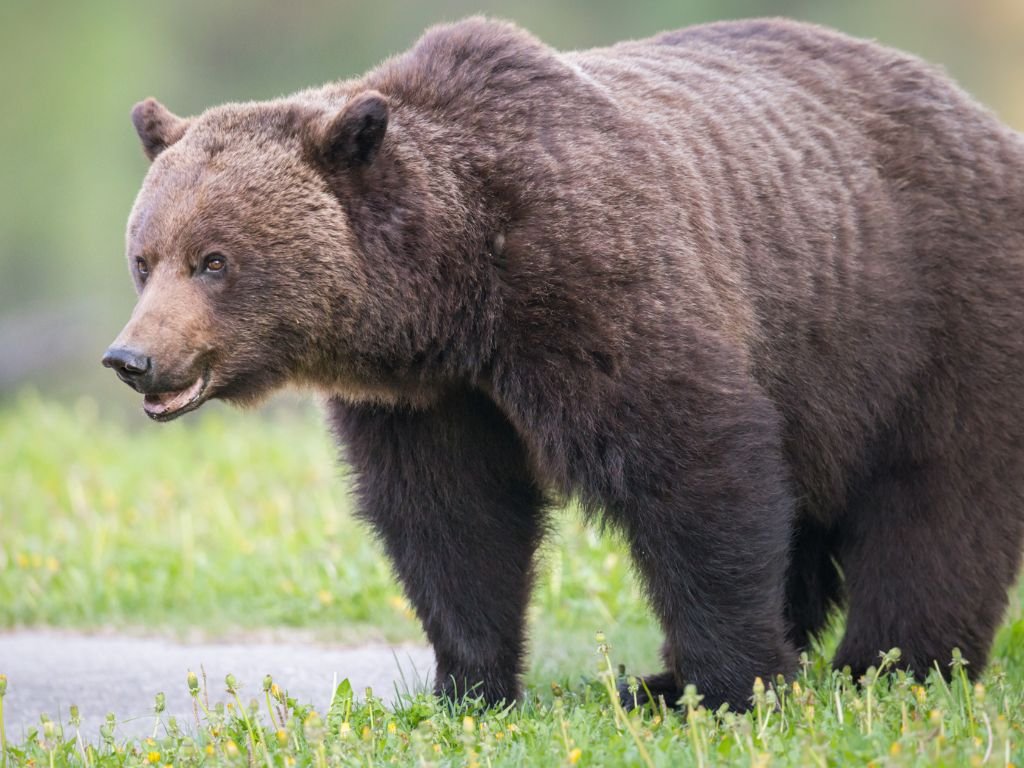
Why are coastal brown bears heavier than grizzlies?
Grizzlies and coastal brown bears are the same species, Ursus arctos. The National Park Service explains that the name grizzly usually means bears living inland, away from the coast. The difference in size comes mostly from food.
Coastal bears catch salmon, which is packed with fat and protein. Inland grizzlies live mostly on plants, roots, insects and the odd elk calf or ground squirrel. Our page on what grizzly bears eat covers their menu in detail.
The numbers show the salmon effect. Most adult males at Katmai weigh 272–408 kg (600–900 lb) in mid-summer, says the Katmai brown bear FAQ. The same page says there are no documented Yellowstone grizzlies over 408 kg (900 lb). The US Fish and Wildlife Service says coastal brown bears weigh about twice as much as interior brown bears.
How does a grizzly’s weight change through the year?
A grizzly is lightest in spring and heaviest in late autumn. In late summer and fall, grizzlies eat almost nonstop. The USFWS says they may gain up to 1.65 kg (3.64 lb) a day at this time.
Then they stop eating. Grizzlies in the lower 48 states spend four to six months a year in dens, usually going in between October and December (USFWS). They live off the fat they stored, so they come out in spring much thinner.
You can see the swing at Katmai. A male of 272–408 kg (600–900 lb) in mid-summer can be well over 454 kg (1,000 lb) by October or November. That is the difference between a grand piano and a small horse, gained in a few months of fishing.
How tall is a grizzly bear?
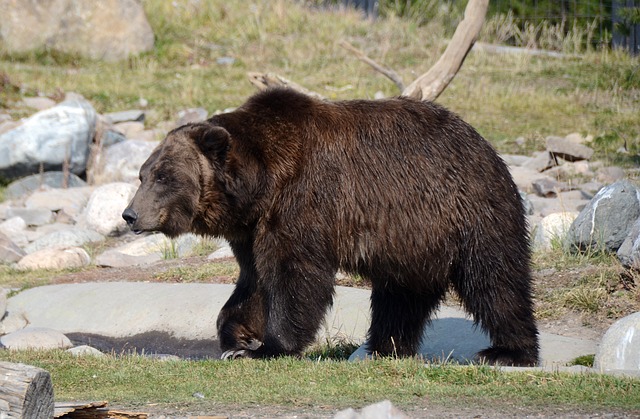
On all four feet, a brown bear stands about 0.9–1.5 m (3–5 ft) at the shoulder. From nose to tail it measures about 1.5–2.1 m (5–7 ft). Very large brown bears can reach almost 2.7 m (9 ft) when they stand on their hind legs. All three figures come from the National Park Service.
| Measurement | Typical adult | Source |
|---|---|---|
| Height at the shoulder, on all fours | 0.9–1.5 m (3–5 ft) | NPS |
| Head and body length | 1.5–2.1 m (5–7 ft) | NPS |
| Height standing on hind legs | Almost 2.7 m (9 ft) for very large bears | NPS |
| Tail | 8–11 cm (3–4.5 in) | NPS Yellowstone |
| Front claws | Average 4.5 cm (1.8 in); longest 15 cm (5.9 in) | NPS Yellowstone |
How tall is a grizzly bear on all fours?
Most adults stand between 0.9 and 1.5 m (3 and 5 ft) at the shoulder. The highest point is the hump above the shoulders. That hump is a mass of muscle that powers digging, as our page on grizzly bear adaptations explains. A big grizzly on all fours can look a 12-year-old in the eye.
How tall is a grizzly bear standing up?
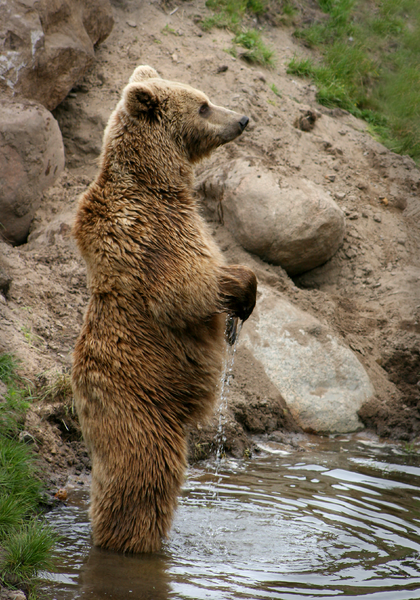
Standing on its hind legs, a very large brown bear reaches almost 2.7 m (9 ft). That is taller than a standard doorway. Most inland grizzlies are smaller than that, because they are lighter and shorter than coastal bears.
Some websites say grizzlies stand 3 m (10 ft) tall. That figure belongs to the biggest Kodiak bears, not to typical grizzlies. The old claim of a 12-foot grizzly called Goliath is also wrong. Goliath was a captive Kodiak bear, and Guinness World Records lists him for weight, not height.
How much does a baby grizzly bear weigh?
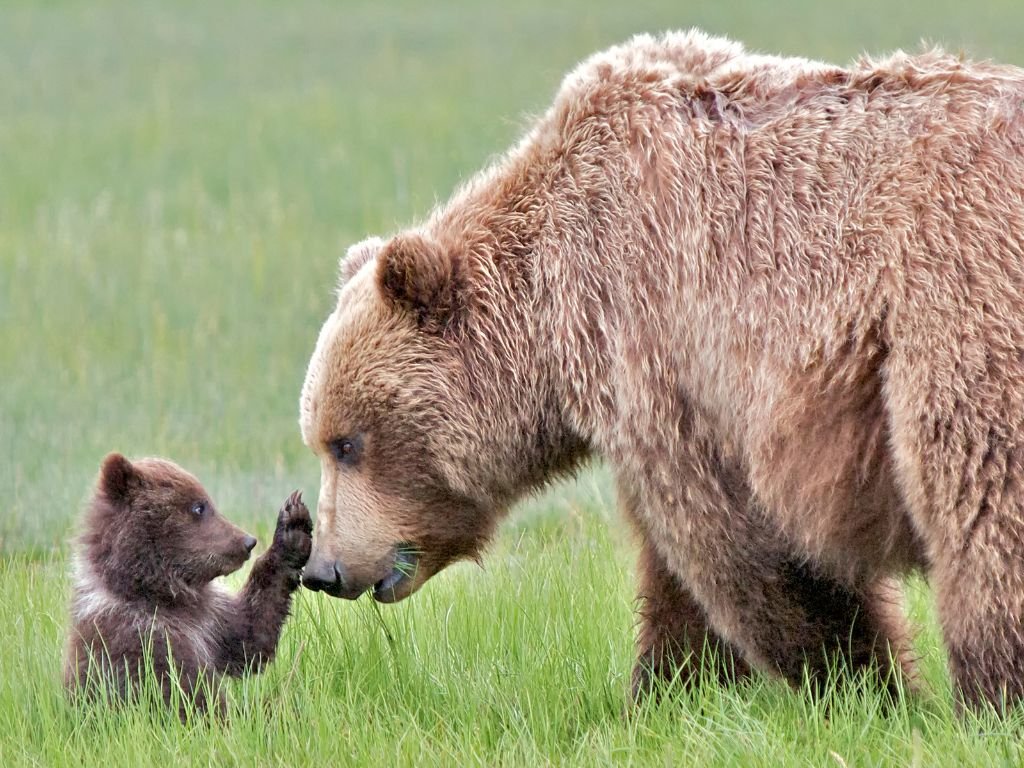
Grizzly cubs are born in the winter den in late January or early February. They weigh about 0.5 kg (1 lb) at birth, says Parks Canada. That is about as heavy as a loaf of bread.
Their mother’s milk makes them grow fast. Parks Canada says cubs weigh about 8 kg (18 lb) when they leave the den in spring, and up to 45 kg (100 lb) by their first autumn. The Alaska Department of Fish and Game gives up to 7 kg (15 lb) for Alaskan cubs coming out in June.
Is a grizzly bigger than a Kodiak bear or a polar bear?
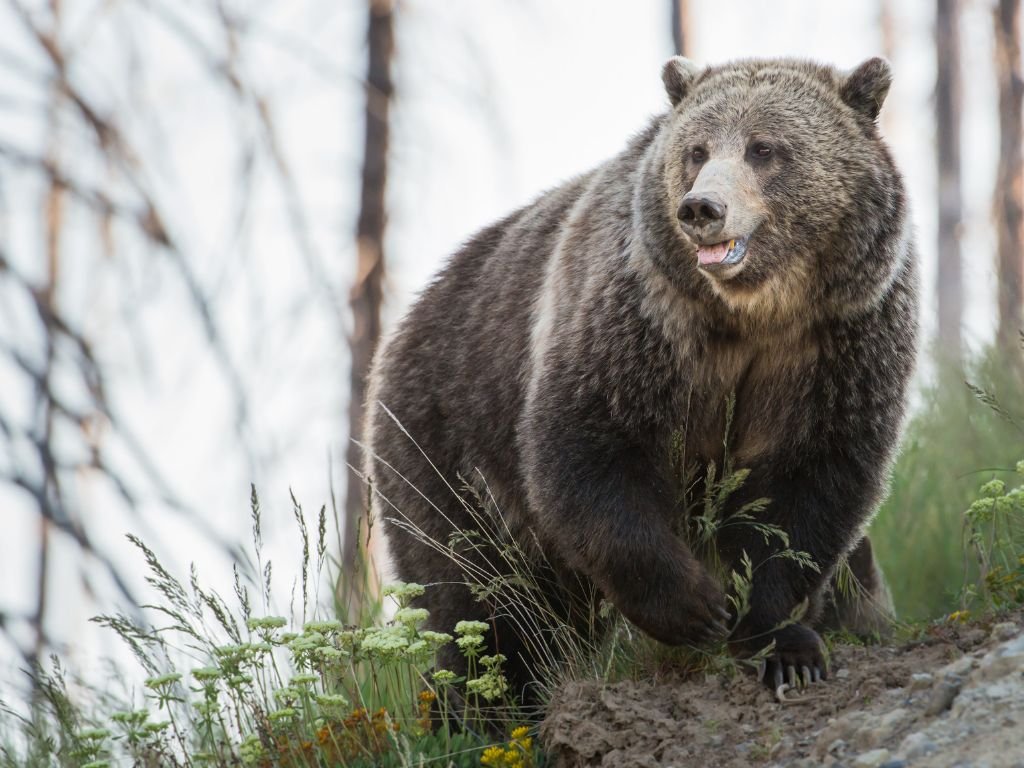
No. A typical inland grizzly is the lightest of the three. Male Kodiak bears weigh 272–635 kg (600–1,400 lb), says the USFWS. Adult male polar bears weigh 350–600 kg (775–1,300 lb), according to Polar Bears International.
Kodiak bears are brown bears too, living only on Alaska’s Kodiak islands; see how big a Kodiak bear is. Polar bears are a separate species. For a side-by-side look, read polar bear vs grizzly bear size and how big a polar bear is.
What is the biggest grizzly bear ever weighed?
The largest official figure for any Alaskan brown bear is 680 kg (1,500 lb), from the Alaska Department of Fish and Game. Those giants are coastal bears, not inland grizzlies. For true inland grizzlies, the heaviest weighed Yellowstone male was 324 kg (715 lb).
You will find online claims of 725 kg (1,600 lb) grizzlies and more. We could not find any of them backed by an official weighing. The famous heavyweight Goliath was a captive Kodiak bear in New Jersey. Guinness says he reportedly passed 900 kg (1,984 lb) in the early 1980s. Our page on the biggest bear in the world compares all the record holders.
Are grizzly bears dangerous because of their size?
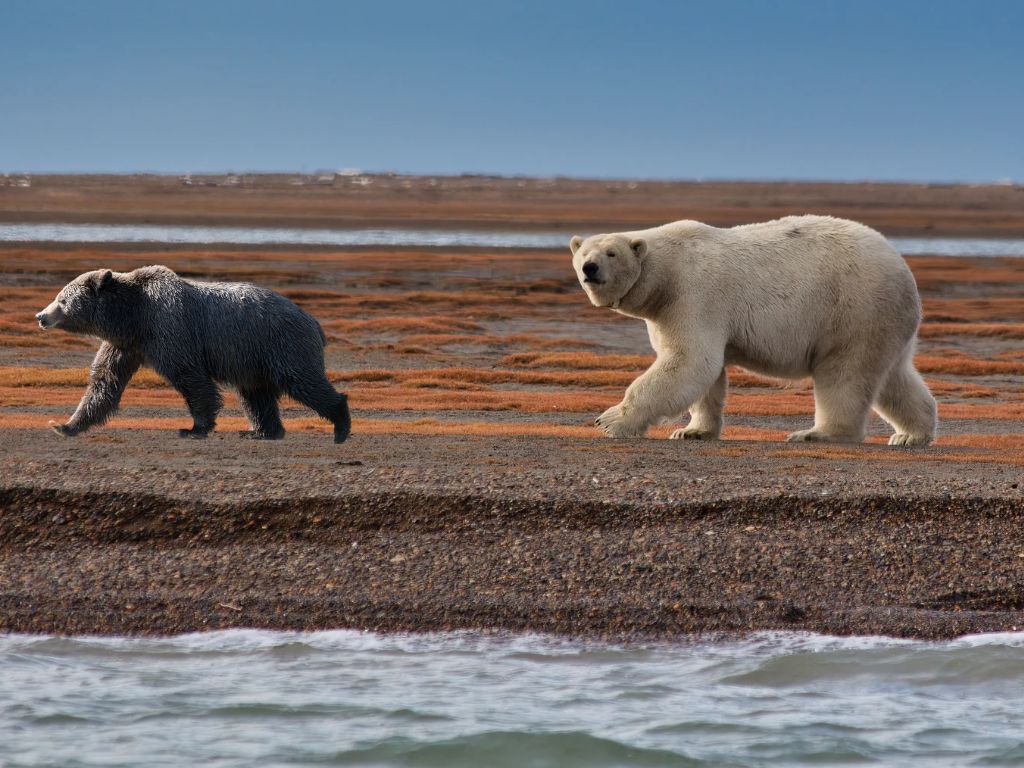
A bear this heavy deserves respect. It can also run at 56–64 km/h (35–40 mph), according to NPS Yellowstone, so you cannot outrun one. For how that size turns into power, see how strong a grizzly bear is.
Most bears avoid people. If you visit bear country, stay in a group, make noise and carry bear spray. Follow the National Park Service bear safety advice if you meet one.
Grizzlies in the lower 48 states are listed as Threatened under the US Endangered Species Act (USFWS). Brown bears as a whole are listed as Least Concern by the IUCN, reports the International Association for Bear Research and Management. Find out where they live in where grizzly bears live.
Frequently asked questions
How heavy is a grizzly bear in kg?
An adult male grizzly in the lower 48 US states usually weighs 180 to 270 kg, and a female 110 to 160 kg, based on the USFWS figures of 400 to 600 lb and 250 to 350 lb. Weighed Yellowstone bears averaged 187 kg for males and 122 kg for females.
Are grizzlies heavier before or after hibernation?
Before. Grizzlies can gain up to 1.65 kg (3.64 lb) a day in late summer and fall, says the USFWS. They then spend four to six months in a den without eating, living off that fat, so they come out in spring much thinner.
Is a grizzly bear the same as a brown bear?
Yes. Grizzlies are brown bears, Ursus arctos. The National Park Service says the name grizzly usually means bears living inland, away from the coast. Coastal brown bears eat salmon and grow much heavier, but they are the same species.
How long do grizzly bears live?
Wild grizzlies generally live to around 25 years, and some have lived for over 35 years, says the USFWS. In Yellowstone, the oldest known grizzly reached 31, according to the National Park Service.
Can a grizzly bear weigh 1,000 pounds?
An inland grizzly almost never does. No Yellowstone grizzly has been documented over 408 kg (900 lb), says Katmai National Park. Salmon-eating coastal brown bears can, though: large Katmai males weigh well over 454 kg (1,000 lb) by October.
Sources
- US Fish and Wildlife Service. Grizzly bear (Ursus arctos horribilis).
- US National Park Service. Brown bears.
- US National Park Service, Katmai National Park and Preserve. Brown bear frequently asked questions.
- US National Park Service, Yellowstone National Park (2015). Yellowstone grizzly bear facts.
- Alaska Department of Fish and Game. Brown bear species profile.
- Parks Canada. Grizzly bears: bears in the mountain national parks.
- US Fish and Wildlife Service. Kodiak brown bear (Ursus arctos middendorffi).
- San Diego Zoo Wildlife Alliance Library. Brown bear fact sheet: physical characteristics.
- Polar Bears International. Adaptations and characteristics.
- Guinness World Records. Heaviest carnivore on land.
- International Association for Bear Research and Management. Ursus arctos (brown bear).
- US National Park Service. Staying safe around bears.
Sources checked 15 September 2026.
Keep the conversation curious