
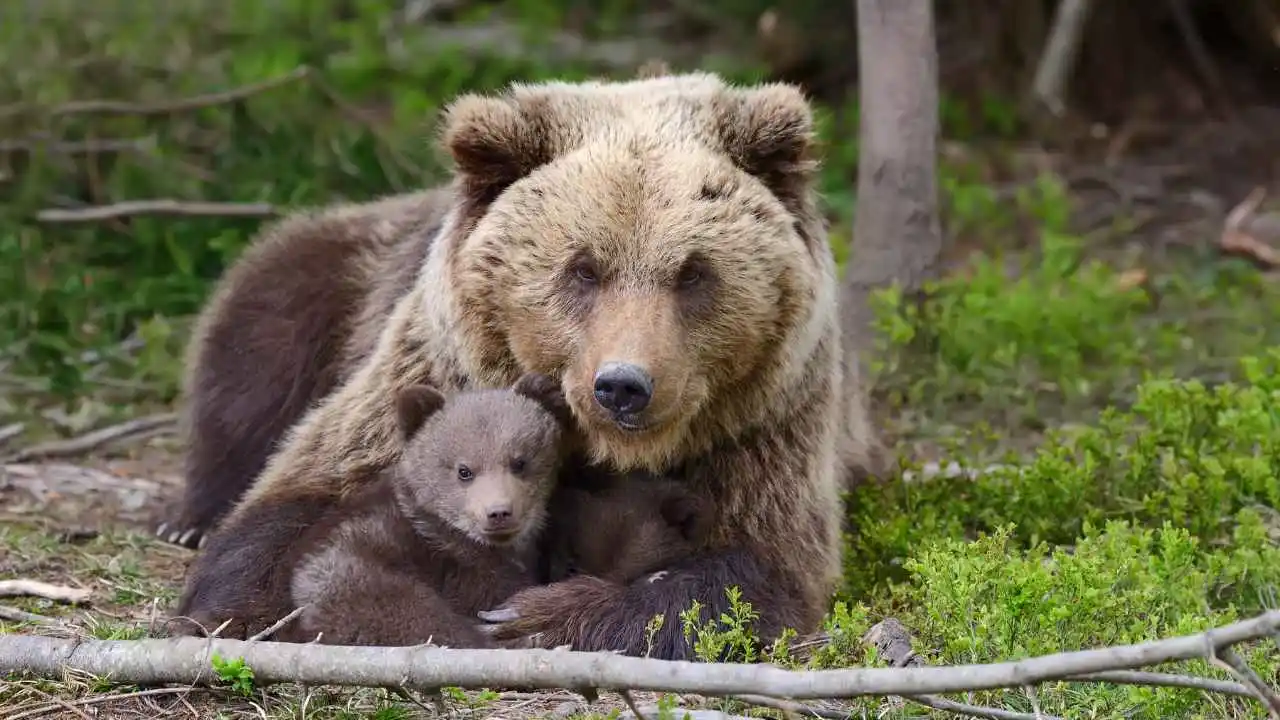
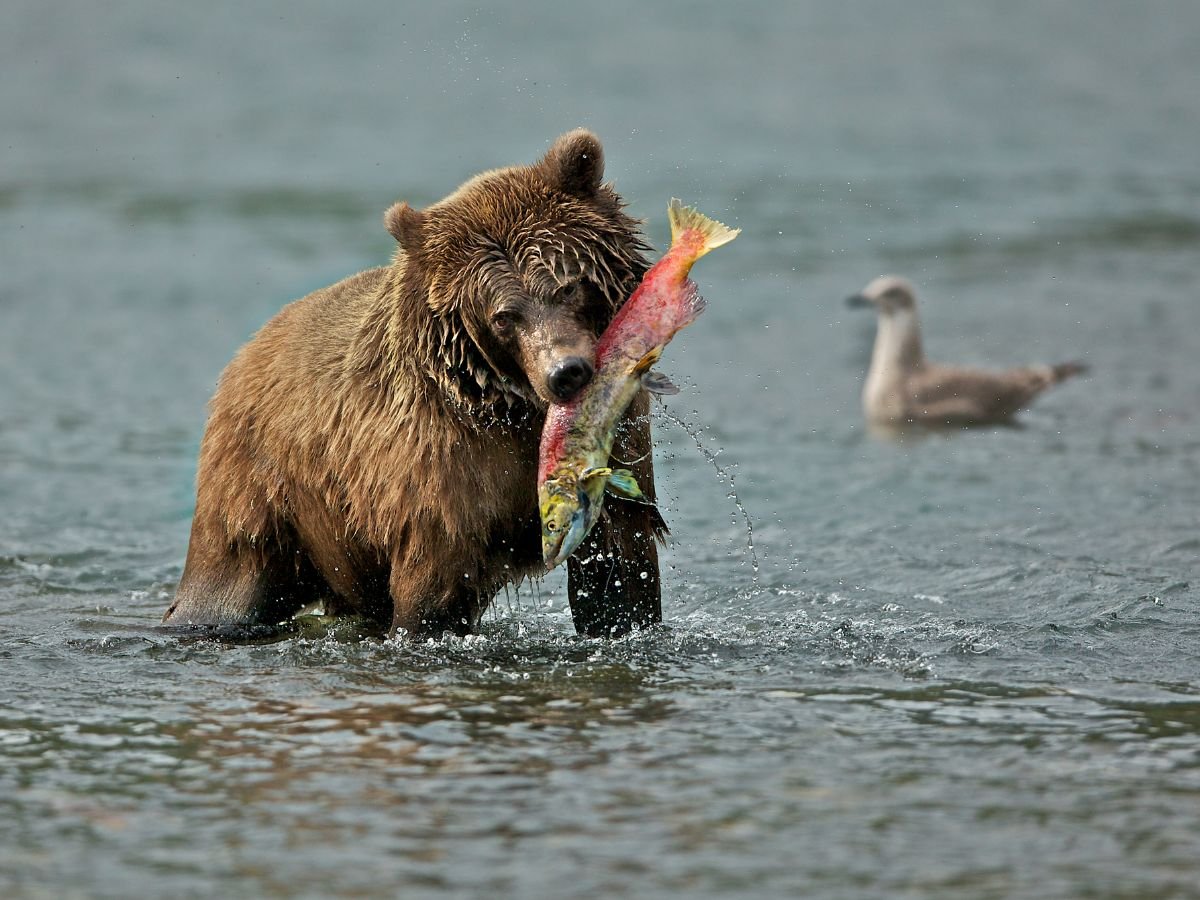
Brown bears eat almost anything: grasses, roots, berries, nuts, insects, fish, dead animals and newborn moose or deer. Most of what they eat is plants, but coastal bears feast on salmon. On Alaska’s Kodiak Archipelago, salmon make up about 64% of the brown bear diet, says the US Fish and Wildlife Service.
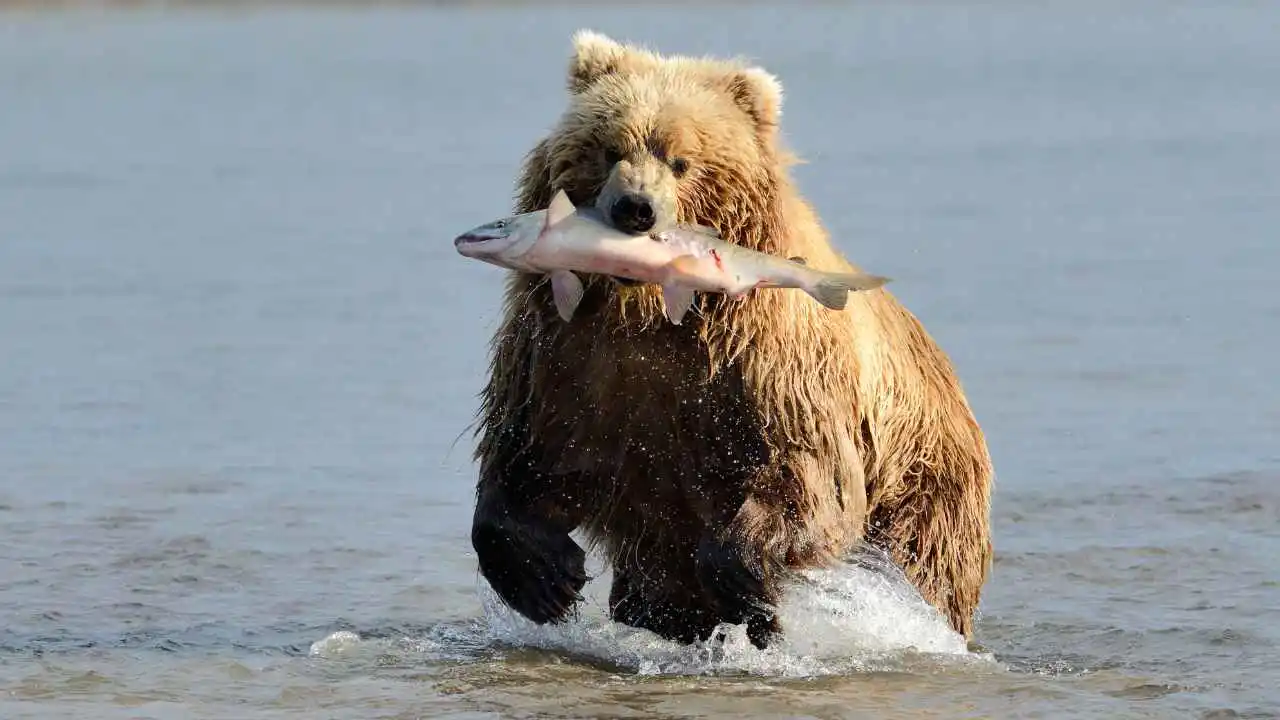
What does the brown bear eat in each season?
A brown bear’s menu follows the calendar. It leaves its den hungry in spring, feeds hard all summer and gorges in autumn to build fat for winter. The Alaska Department of Fish and Game lists salmon, berries, grasses, sedges, cow parsnip, ground squirrels, dead animals and roots as common foods.
What is on the menu also depends on where the bear lives. The table compares three well-studied places: Yellowstone in the USA, coastal Alaska, and central Sweden.
| Season | Yellowstone, USA | Coastal Alaska | Central Sweden |
|---|---|---|---|
| Spring | Elk and bison that died in winter, grasses, sedges, dandelion, clover, ants, pine seeds | Grasses, sedges and roots; newborn moose and caribou | Not covered by the study |
| Summer | Army cutworm moths, cutthroat trout, elk calves, roots, strawberries, huckleberries, false truffles | Salmon, plus berries and plants | Ants (about 30% of the diet) and moose calves (about 21%) |
| Autumn | Whitebark pine nuts in good years, roots, berries, bull elk | Salmon and berries | Berries, mostly bilberries (about 70%) |
| Winter | Nothing: bears are in their dens | Nothing: bears den from about October or November to late spring | Not covered by the study |
The Yellowstone column comes from the National Park Service. The Alaska column comes from the ADFG, the FWS and the US Department of the Interior. The Swedish shares are averages from a 2023 study by De Cuyper and colleagues, and single bears varied a lot.
Are brown bears carnivores or omnivores?
They are omnivores. The National Park Service describes a mixed diet of plants, berries, fish and small mammals. Brown bears belong to the order Carnivora, like wolves and cats, but they eat far more plants than those cousins.
How much meat a bear eats depends on where it lives. Inland bears in North America live mostly on fruit and juicy plants, says the International Association for Bear Research and Management. Coastal bears near salmon rivers eat far more fish and grow much bigger.
Do brown bears eat fish?
Yes, and salmon is their richest meal. At Katmai National Park in Alaska, some bears eat dozens of sockeye salmon a day. One bear was seen eating 40 in a single sitting, reports the US Department of the Interior. Each salmon holds about 4,000 calories.
When fish are plentiful, bears get choosy. They eat the fattiest parts first, the skin, brain and eggs, says the NPS. In Yellowstone, far from salmon rivers, grizzlies catch cutthroat trout instead. Kodiak bears live on salmon islands and are among the biggest bears on Earth; see how big is a Kodiak bear.
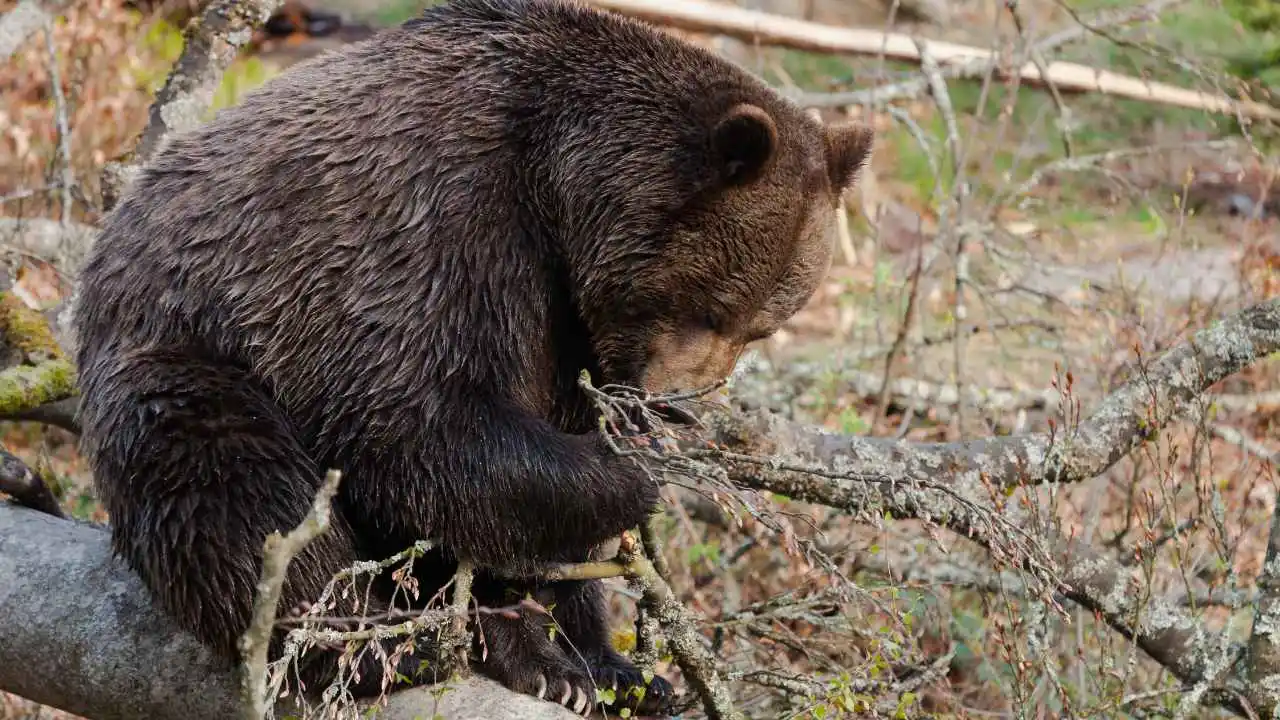
How do brown bears find food?
Mostly by smell. The ADFG says a brown bear’s sense of smell is better than a dog’s. That nose leads bears to dead animals, buried roots, ant nests and ripe berries.
You may read that a bear’s nose is “2,000 times” better than yours. We could not find a study behind that number, so we left it out. What is certain is that bears can smell food we cannot, including rubbish and pet food left outdoors.
Do brown bears eat deer and moose?
Yes, especially the young ones. In many parts of Alaska, brown bears are important hunters of newborn moose and caribou (ADFG). In Yellowstone they catch elk calves in early summer and sometimes kill bull elk in autumn (NPS). In central Sweden, moose calves made up about a fifth of the summer diet (De Cuyper and colleagues).
Healthy adult deer and moose are harder to catch. So bears often eat them as carrion, meaning animals that were already dead. The NPS lists winter-killed elk and bison, and carcasses left by wolves, among Yellowstone bears’ foods.
Do brown bears eat insects?
Yes, by the thousands. Swedish bears ate so many ants in summer that ants made up about 30% of their diet, according to De Cuyper and colleagues. In the mountains around Yellowstone, grizzlies climb rocky slopes and flip stones to lick up army cutworm moths (NPS). Our page on what grizzly bears eat has the moth numbers.
How much does a brown bear eat in a day?
A lot, and more on the coast. Yellowstone grizzlies eat up to about 14 kg (30 lb) of food a day, while Alaskan brown bears eat 36–41 kg (80–90 lb) a day in summer and autumn, says the NPS. At the peak, a bear can put on 1.4–2.7 kg (3–6 lb) of fat a day.
Katmai bears can gain up to 1.8 kg (4 lb) in a single day, says the US Department of the Interior. The fat carries them through winter, when they eat nothing at all in their dens. For weights, see how much a grizzly bear weighs.
Do brown bears eat humans?
People are not on a brown bear’s normal menu. The danger comes when bears learn to find human food. The ADFG says badly stored food, rubbish and pets can draw bears into towns. The NPS says never to let a bear get your food.
In bear country, the National Park Service advises hiking in groups, making noise and carrying bear spray. If a brown bear attacks, lie flat on your stomach with your hands clasped behind your neck, and fight back only if the attack goes on. Learn more in adaptations of a grizzly bear and where grizzly bears live.
Frequently asked questions
What is a brown bear's favourite food?
It depends on where the bear lives. Where salmon run, fish are the big prize: salmon make up about 64% of a Kodiak bear's diet, says the US Fish and Wildlife Service. Inland bears lean on berries, roots and plants. In central Sweden, bilberries made up about 70% of the autumn diet.
Are grizzly bears and brown bears the same?
Yes. Grizzlies are brown bears, Ursus arctos, that live inland in North America. Coastal Alaskan brown bears and Kodiak bears belong to the same species. Grizzlies are often smaller, because they eat more plants and less salmon than coastal bears.
Do brown bears eat berries?
Yes, and in some places berries are the main autumn food. Swedish bears got about 70% of their autumn diet from berries, mostly bilberries, in a 2023 study. Yellowstone grizzlies eat strawberries and huckleberries in late summer. Berries are full of sugar, which helps bears build fat for winter.
Do brown bears eat in winter?
No. Brown bears spend winter in dens and eat nothing at all. At Katmai National Park, bears go into their dens in October or November and come out in late spring, says the US Department of the Interior. They live on the fat they built up by eating so much in summer and autumn.
Sources
- US Fish and Wildlife Service. Kodiak brown bear (Ursus arctos middendorffi).
- Alaska Department of Fish and Game. Brown bear species profile.
- US National Park Service. Brown bears.
- US National Park Service. Food habits of bears in the Yellowstone ecosystem.
- US Department of the Interior. Everything you want to know about Katmai National Park's fat bears.
- Ecology and Evolution via PubMed Central (2023). Nutrient intake and its possible drivers in free-ranging European brown bears (De Cuyper et al., Ecology and Evolution, doi:10.1002/ece3.10091).
- International Association for Bear Research and Management. Ursus arctos (brown bear).
- US National Park Service. Staying safe around bears.
Sources checked 15 September 2026.

Keep the conversation curious