
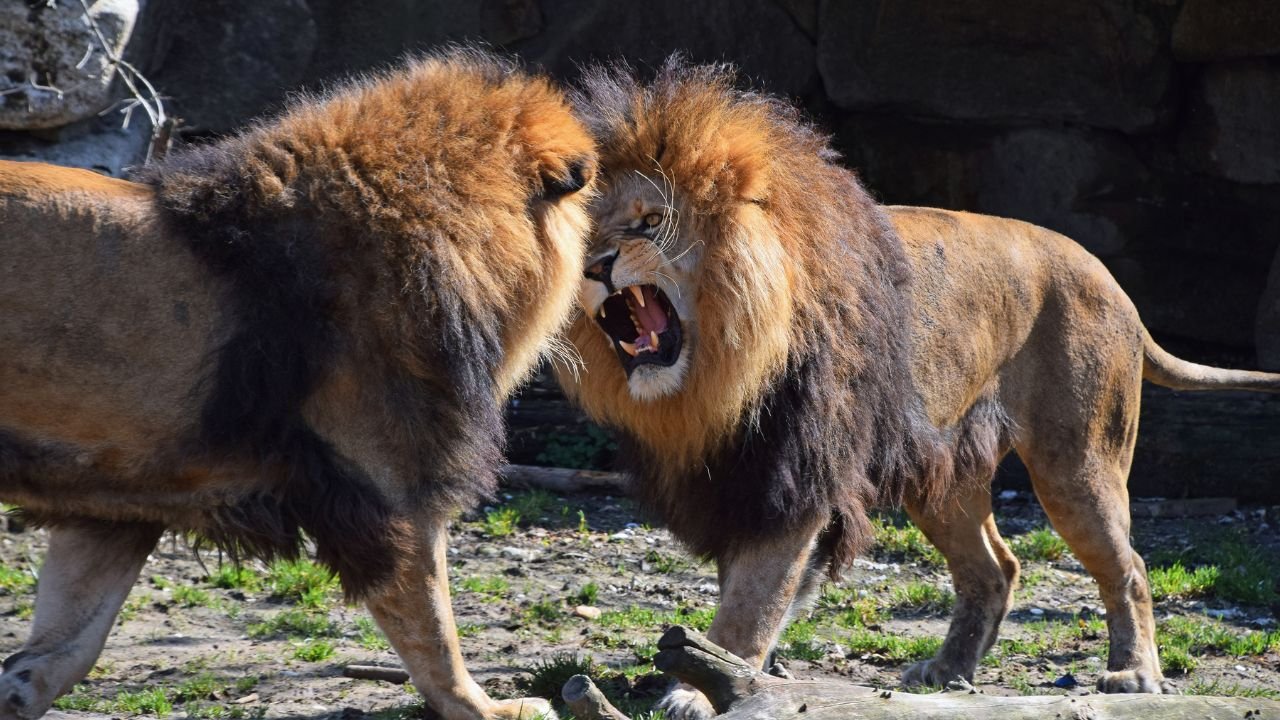
Two young males stride into a pride’s territory at dawn, roaring. If they drive out the old males, the next few days will be the most dangerous of any cub’s life.
Will a lion eat another lion? Rarely. Lions kill other lions fairly often, but they seldom eat them. Most killings happen when new males take over a pride and kill cubs too young to run away, says the Smithsonian’s National Zoo. A lion may sometimes eat part of a dead lion, but lions are not normal food, and nobody has counted how often it happens.
Key takeaways
- Killing is common, eating is rare: new males kill cubs that cannot run from them, but lions are not normal food for lions.
- The reason is breeding: with her cubs gone, a lioness is ready to mate again sooner, so the new male can father his own cubs.
- Up to 80% of cubs die in their first two years, mostly from hunger and attacks by newly arrived males (Smithsonian’s National Zoo).
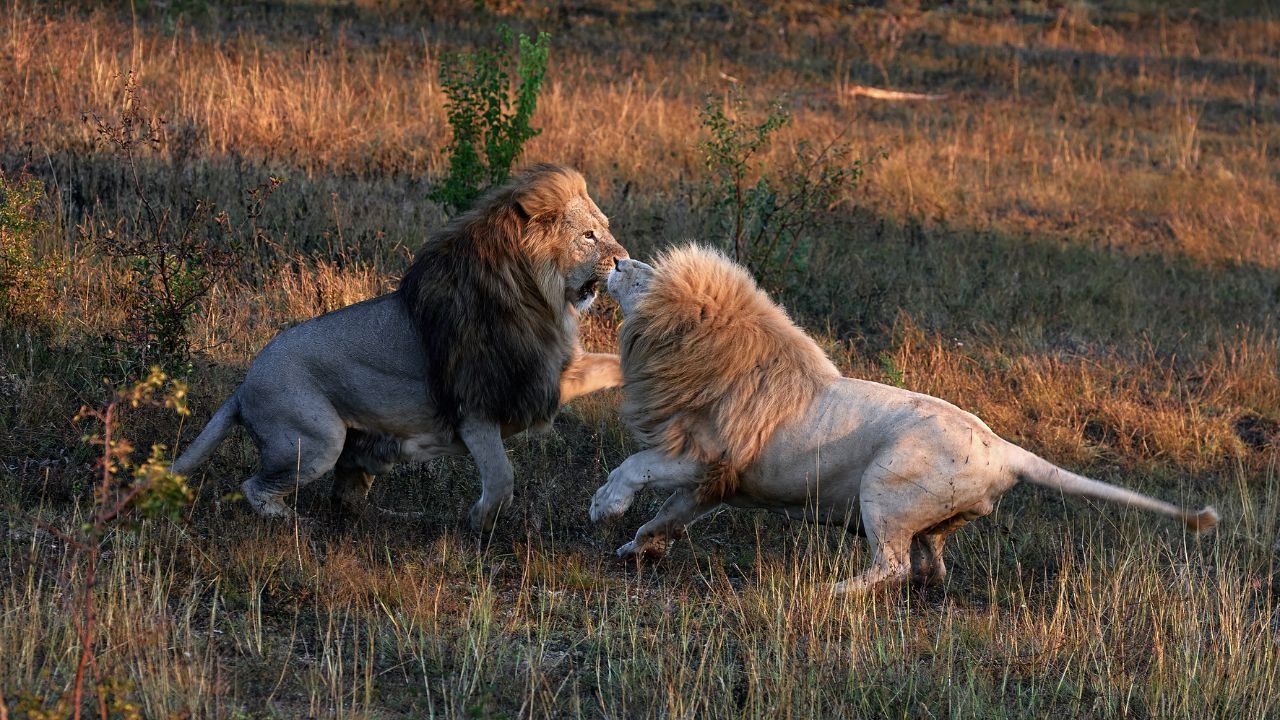
Why do lions kill other lions?
Lions eat meat, and their usual food is large grazing animals such as zebra, wildebeest and buffalo. When a lion kills another lion, the reason is almost never food. It is about who gets to live in a territory and who fathers the cubs. Scientists who have studied lions for decades, such as Craig Packer and Anne Pusey, describe these killings as part of the competition between groups of males.
The old version of this page said a winning lion may eat the loser “to show dominance”. There is no evidence for that. Eating a rival is rare, and when it happens there is no sign it sends any message to other lions. A dead lion is simply meat, and a hungry lion may take a few bites.
| Situation | Who dies | How common | Eaten? | Evidence |
|---|---|---|---|---|
| New males take over a pride | Cubs too young to run, usually under 1 year | Common at takeovers | Sometimes partly; not counted | Smithsonian; San Diego Zoo; Packer and Pusey 1983 |
| Fights over a pride or territory | Mostly adult males | Regular part of male life | Rarely; field reports only | San Diego Zoo |
| A cub dies of hunger or injury | Cubs | Up to 80% of cubs die by age 2, from all causes | Occasionally; field reports only | Smithsonian |
| Gir forest, India | Cubs of females that did not mate with the new males | Lower when mothers mate with several groups of males | Not reported | Chakrabarti and others, 2019, via National Geographic |
Why do male lions kill cubs?
Males entering a new pride kill all the cubs that cannot run from them, the Smithsonian says. San Diego Zoo Wildlife Alliance adds that these are usually cubs under a year old, and that the male does it so he can father his own cubs. Scientists call this behaviour infanticide.
The reason is time. A lioness who is feeding cubs does not breed again for many months. If her cubs die, she is ready to mate much sooner. Male lions only hold a pride for a few years before younger rivals push them out, so a male who waits may never father any cubs at all. It sounds harsh, but it is a pattern found in many animals, not a sign that lions are cruel.
This is one reason so few cubs grow up. Up to 80% of lion cubs die within their first two years, mostly from hunger and from attacks by newly arrived males, according to the Smithsonian.
How do lionesses protect their cubs?
Lionesses fight back. In a classic study, Packer and Pusey (1983) found that mothers defend their cubs against new males or keep away from them. Females who stay in a pride after a takeover breed less well for the first few months. Their findings suggest a mother needs protection from outside males for more than two years to raise her cubs, and only large groups of males tend to hold a pride that long.
Teamwork helps too. Cubs born in a pride are twice as likely to survive as cubs raised by a lioness on her own, San Diego Zoo says. Several lionesses together can drive off a male that one mother could not.
Asiatic lions in India have another trick. A study in the Gir forest by Stotra Chakrabarti and colleagues, published in 2019 and reported by National Geographic, followed nine prides and 11 groups of males for four years. Lionesses mated with males from several groups, so no male could be sure which cubs were his. No lioness lost cubs to a group of males she had mated with. The trick does not work against complete strangers, though.
Fathers help as well. A study of GPS-collared lions in Zimbabwe’s Hwange National Park from 2002 to 2016 found that when a pride had cubs, its males spent more time patrolling the edges of the territory and drove rival males farther away, report Dejeante and colleagues (2024). Mothers with cubs, meanwhile, kept away from waterholes and the edges of the territory, where rival males are more likely to roam.
Do lions eat dead lions?
Sometimes, but it is uncommon. Safari guides and park staff have described lions feeding on lions killed in fights, and a lioness eating a cub that has died. These accounts come from sightings rather than long-term studies, so we cannot say how often it happens. We found no long-term study that counts how often lions eat other lions, so treat any figure you see online with care.
A lion that kills a cub may also eat part of it, but many killed cubs are left uneaten. The main point of the killing is to clear the way for the new male’s own cubs, not to get a meal. Food is not the goal, so these cases do not count as hunting.
Do lions kill each other over territory?
Yes. When a new male or group of males challenges the males of a pride, the newcomers are either driven off or push the old males out, San Diego Zoo explains. These fights can leave lions badly hurt or dead. That is why wild male lions tend to live shorter lives than lionesses.
Other lions and people are the main killers of adult lions, as our page on what eats lions explains. To understand the teeth, claws and muscle behind these fights, read how strong a lion is. And for how lions keep track of rivals before a fight begins, see how far a lion can smell.
Picture it: a class of lion cubs
Imagine 10 lion cubs born in the same year. If up to 80% die within two years, as the Smithsonian’s National Zoo reports, as few as 2 of them would still be alive on their second birthday.
Hunger and attacks by newly arrived males cause most of those losses. That is why pride takeovers matter so much, and why lionesses raise cubs together.
Lions shape the whole savanna. As top predators, they hunt zebra, wildebeest and buffalo, and spotted hyenas sometimes take over their kills, says the Smithsonian’s National Zoo. Changes inside a pride, such as a takeover, affect how many lions an area can support in years to come.
Myths about lions killing lions
Myth: A winning lion eats the loser to show dominance.
Fact: There is no evidence for this. Lions rarely eat other lions, and no study shows it sends a message. Why people believe it: it makes a dramatic story.
Myth: Male lions kill cubs because they are hungry.
Fact: Males kill cubs fathered by other males so the mother can breed again sooner (Smithsonian; San Diego Zoo Wildlife Alliance). Many killed cubs are not eaten. Why people believe it: we assume predators kill to eat.
Myth: Lionesses can do nothing to stop it.
Fact: Mothers defend cubs together, avoid new males, and in India’s Gir forest mate with several groups of males to protect their cubs. Why people believe it: the males are bigger, so it seems hopeless.
Test yourself
1. Why do new male lions kill cubs?
So the mother can breed again sooner and the new male can father his own cubs.
2. What share of lion cubs can die in their first two years?
Up to 80%, according to the Smithsonian’s National Zoo.
3. How do lionesses in India’s Gir forest protect their cubs?
They mate with males from several groups, so those males don’t attack their cubs.
Where to next?
➡️ Go wider: lion adaptations, from pride life to hunting⬆️ Go deeper: animals that eat their young, and why🔀 Go sideways: what eats lions?
Frequently asked questions
Do male lions ever kill their own cubs?
Male lions normally aim at cubs fathered by other males, not their own. In India's Gir forest, no lioness lost cubs to a group of males she had mated with, according to a 2019 study reported by National Geographic. Mothers seem to use this, by mating with several groups of males.
How many lion cubs survive to adulthood?
Not many. Up to 80% of lion cubs die within their first two years, mostly from hunger and from attacks by new males, according to the Smithsonian's National Zoo. Cubs raised in a pride are twice as likely to survive as those raised by a lone lioness, San Diego Zoo says.
How long do male lions stay with a pride?
It varies, but usually only a few years before a stronger group of males takes over. Packer and Pusey found that a lioness needs more than two years of protection to raise her cubs, and that mainly large groups of males hold a pride for that long.
Do lions eat other predators?
Lions kill leopards, cheetahs and hyenas when they get the chance, mostly to remove rivals for food. They often do not eat them. Lions also steal kills from hyenas and other hunters. For them, other predators are competitors, not prey.
Sources
- Smithsonian's National Zoo and Conservation Biology Institute. Lion.
- San Diego Zoo Wildlife Alliance. Lion.
- Duke University Scholars (abstract) (1983). Adaptations of female lions to infanticide by incoming males (Packer and Pusey, American Naturalist 121: 716-728, doi:10.1086/284097).
- National Geographic (2019). How Asiatic lionesses shield their cubs from killer males (reporting Chakrabarti et al. 2019, Behavioral Ecology).
- Dejeante, R. et al. (2024). Counter-strategies to infanticide: the importance of cubs in determining lion habitat selection and social interactions. Journal of Animal Ecology.
Sources checked 12 October 2026.


Keep the conversation curious