
How many giraffes are there in the world? About 140,000 live in the wild, all in Africa, according to the Giraffe Conservation Foundation‘s State of Giraffe 2025 report. The IUCN lists the giraffe as Vulnerable. Some kinds are doing well, but others number only a few thousand, and one has fewer than 700 animals.
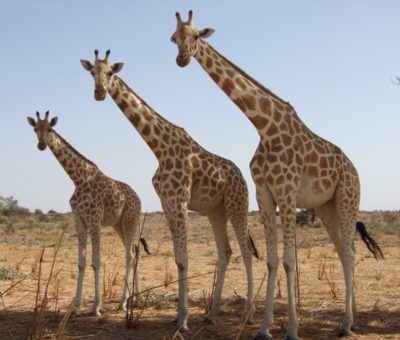
That total is an estimate, not a head count. Scientists add up surveys from many countries, often made from aircraft or by driving set routes. Researchers can also tell giraffes apart by their spot patterns, which are unique like fingerprints, says the Smithsonian’s National Zoo. That lets them follow thousands of animals over time.
How many giraffes are left of each species?
In August 2025, the IUCN officially recognised four giraffe species instead of one, reports the IUCN. Before that, scientists treated all giraffes as one species split into nine subspecies. Genetic studies led by the Giraffe Conservation Foundation (GCF) and Germany’s Senckenberg research centre showed four separate groups.
| Species | Subspecies | Estimated number | Trend (GCF) |
|---|---|---|---|
| Southern giraffe (Giraffa giraffa) | South African 53,174; Angolan 15,663 | 68,837 | Up about 50% in five years |
| Masai giraffe (Giraffa tippelskirchi) | Masai 43,162; Luangwa 764 | 43,926 | Stable in Kenya |
| Reticulated giraffe (Giraffa reticulata) | None | 20,901 | Appears to be increasing |
| Northern giraffe (Giraffa camelopardalis) | Nubian 3,977; Kordofan 2,391; West African 669 | 7,037 | Up nearly 20% since 2020 |
| All giraffes | About 140,000 | Three of four species rising |
Subspecies figures come from the GCF species page. The southern giraffe is the most common, with nearly half of all wild giraffes. The northern giraffe is the rarest species. Its West African subspecies, with 669 animals, is the rarest kind of giraffe on the list.
Is the giraffe population going up or down?
Both, depending on where you look. The long-term picture is a big fall. The IUCN says giraffe numbers dropped from about 151,702–163,452 in 1985 to 97,562 in 2015. That is a fall of 36 to 40% in 30 years.
The recent picture is better. GCF’s 2025 report says three of the four species now show positive trends. It credits conservation work, including moving giraffes to safe areas and better protection in parks. Southern giraffe numbers grew by about half in five years, and northern giraffes rose by nearly a fifth.
So why does the 2025 total look so much higher than the 2015 one? Part of the answer is real growth. Part may be better counting, since more areas are surveyed now. The two totals come from different reports, so compare them with care.
Are giraffes endangered?
Not officially, as a whole. In 2016 the IUCN moved the giraffe from Least Concern to Vulnerable. Vulnerable means a high risk of dying out in the wild, one step below Endangered. That 2016 listing still covers all giraffes as one species.
That will change. The IUCN says the new four-species system will guide upcoming Red List assessments. GCF says its data support listing three of the four species as Endangered or Vulnerable. Until the IUCN publishes those assessments, each species’ official status is not settled. Some subspecies were already assessed on their own under the old system, and several were listed as more threatened than the giraffe overall.
Why did giraffe numbers fall?
The IUCN names four main threats:
- Illegal hunting. Giraffes are killed for meat and body parts.
- Habitat loss. Farms, mines and roads take over the bush where giraffes feed.
- Conflict with people. As towns and farms grow, giraffes and people compete for land.
- Civil unrest. Wars make it hard to protect wildlife and easier to poach it.
GCF calls this a “silent extinction”, because giraffes vanished from some areas while few people noticed. It says numbers have fallen by up to 95% in some places. Giraffes are big and need wide spaces, which makes fenced or broken-up land a problem. An adult can eat up to 34 kg (75 lb) of leaves a day, according to San Diego Zoo Wildlife Alliance.
Where do giraffes live in the world today?
Giraffes live only in Africa, south of the Sahara. The Smithsonian notes they cope with a huge range of places, from the dry deserts of northwest Namibia to the scrub of northern Kenya and the Sahel of Niger.
- Southern giraffes live in southern Africa, including Namibia and South Africa.
- Masai giraffes live in East Africa, mainly Kenya and Tanzania.
- Reticulated giraffes live mostly in northern Kenya, with smaller groups in Ethiopia and Somalia.
- Northern giraffes live in scattered pockets from Niger to East Africa.
To keep track of them, GCF and partners have fitted more than 200 giraffes with GPS units in nine countries, the Smithsonian says. The collars sit around the ossicones, the horn-like knobs on the head, because neck collars slid off when giraffes bent down to drink.
How can you help giraffes?
You can learn which species you are looking at in a zoo or on a safari, and support groups that protect giraffe habitat. GCF says its work with partners covers over 100 million acres of giraffe range. World Giraffe Day, on 21 June, is a good time to share what you learn.
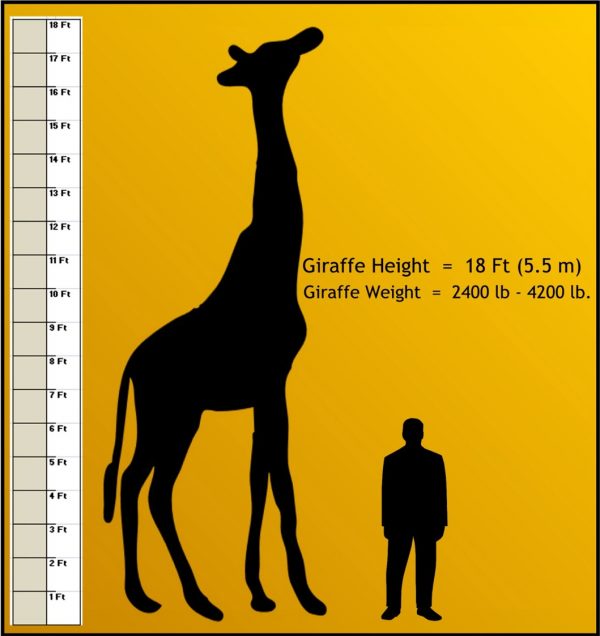
For more about the animal itself, read how tall a giraffe is and how giraffes are adapted to life on the savanna. The giraffe’s shy forest cousin, the okapi, is Endangered.
Quick facts: giraffe numbers
- Wild giraffes: about 140,000 (GCF, 2025).
- Species: four, recognised by the IUCN in August 2025.
- Most common: southern giraffe, 68,837.
- Rarest subspecies: West African giraffe, 669.
- IUCN status: Vulnerable (2016, whole giraffe).
Frequently asked questions
How many giraffes are left in 2025?
About 140,000 in the wild, according to the Giraffe Conservation Foundation's State of Giraffe 2025 report. That is the sum of its estimates for the southern (68,837), Masai (43,926), reticulated (20,901) and northern (7,037) giraffe. All of them live in Africa.
Which giraffe is the most endangered?
The northern giraffe is the rarest species, with about 7,037 animals. Within it, the West African giraffe has only 669, according to the Giraffe Conservation Foundation. It survives mainly in Niger. The IUCN has not yet published assessments for the four new species.
How many Rothschild's giraffes are left?
The Giraffe Conservation Foundation no longer lists Rothschild's giraffe separately. It now counts these giraffes as part of the Nubian giraffe, a subspecies of the northern giraffe, which numbers about 3,977. Many zoos still use the older Rothschild's name.
Will giraffes go extinct?
Not soon, if current trends hold. Three of the four species are rising, says the Giraffe Conservation Foundation. But some small groups, like West African and Luangwa giraffes, have fewer than 1,000 animals each, so they could disappear without protection.
Sources
- Giraffe Conservation Foundation (2025). State of Giraffe 2025.
- Giraffe Conservation Foundation. Giraffe species.
- IUCN (2025). Four giraffe species officially recognised in major conservation reclassification.
- IUCN (2016). New bird species and giraffe under threat – IUCN Red List.
- Smithsonian's National Zoo and Conservation Biology Institute. Giraffe conservation.
- San Diego Zoo Wildlife Alliance. Giraffe.
Sources checked 15 September 2026.
I love giraffes! They are my top 3 favorite animals! I have stuffed animal versions of giraffes and I love them!!!! Damn the poachers for killing all giraffes! They are gentle creatures and wouldn’t hurt anyone unless you got in their way while running but STILL!! THEY WOULD NEVER HURT ANYONE!!!!!!
why did you not mention droughts. Thats the number one reason. They do not get enough water. the constant increase of the desert and climate change is making the water situation for them really bad