
Vaquitas are endangered because they drown in gillnets, mostly illegal nets set for a fish called the totoaba. The 2025 survey found a 67% chance that scientists saw 7 to 10 vaquitas, according to the IUCN Cetacean Specialist Group report. The vaquita has been Critically Endangered on the IUCN Red List since 1996.
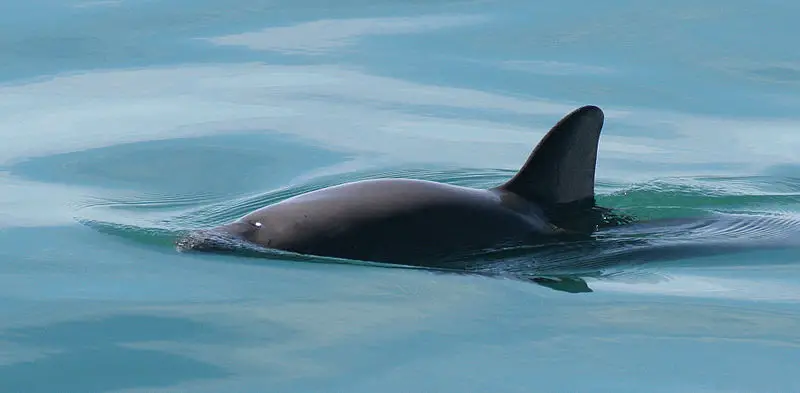
The vaquita (Phocoena sinus) is the smallest porpoise in the world. It lives only in the far northern Gulf of California, in Mexico. That is the smallest home range of any marine mammal, says NOAA Fisheries. Nothing else threatens it as much as fishing nets do, and it has almost nowhere else to go.
Why are vaquitas endangered? The short answer is gillnets
A gillnet is a wall of fine mesh that hangs in the water. Fish swim into it and get stuck by their gills. A vaquita is about the same size as the fish these nets are set for, so it gets tangled too. Like all porpoises, it has to breathe air. Trapped under the water, it drowns within minutes.
NOAA Fisheries calls entanglement in gillnets the vaquita’s only known threat. Older articles often blame pollution or coastal building as well. The scientists who study vaquitas do not list those as causes of the crash. The IUCN Cetacean Specialist Group names “incidental mortality in gillnets” as the greatest danger.
The totoaba trade
The worst nets are the illegal ones set for totoaba. The totoaba is a big fish that is endangered itself. Its dried swim bladder sells for huge sums in Asian markets. NOAA says fishermen can earn up to US$8,500 for each kilogram. That money keeps people setting nets even where fishing is banned.
Illegal totoaba fishing picked up again around 2015, says the IUCN Cetacean Specialist Group. That is when vaquita numbers began to fall fastest.
How many vaquitas are left?
Nobody can count every vaquita, so scientists give a range. In the 2025 survey, teams on two Sea Shepherd ships searched with big binoculars from 3 to 30 September. Underwater microphones listened for vaquita clicks at 66 sites. Then the observers agreed on how many different animals they had seen. That method is called expert elicitation.
The result was a 67% probability that they saw 7 to 10 different vaquitas. The 2025 survey report stresses that this means “at least this many” are alive. Vaquitas slip in and out of the survey area, and they are very hard to spot. In the windy weather of 2025, the chance of seeing a vaquita right on the ship’s path fell to about 20%.
| Year | Estimate | How it was measured |
|---|---|---|
| 1997 | 567 | Ship survey, estimated (IUCN Cetacean Specialist Group) |
| 2008 | 245 | Ship and acoustic survey, estimated (IUCN Cetacean Specialist Group) |
| 2015 | About 60 | Ship and acoustic survey, estimated (NOAA Fisheries) |
| 2016 | About 30 | Acoustic monitoring, estimated (NOAA Fisheries) |
| 2018 | Fewer than 19; best guess 9 | Acoustic trend model (Jaramillo-Legorreta et al. 2019) |
| 2023 | 8 to 12 seen (67% probability) | Animals seen in the survey area (2025 report) |
| 2024 | 6 to 8 seen (75% probability) | Animals seen in the survey area (2025 report) |
| 2025 | 7 to 10 seen (67% probability) | Animals seen in the survey area (2025 report) |
The 2023 to 2025 figures are counts of animals seen, not full population estimates. A few more vaquitas may be living outside the area searched.
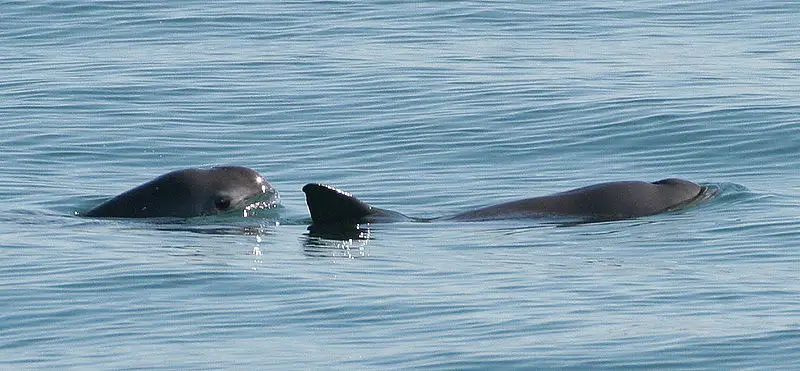
How fast did the vaquita population fall?
Very fast. A 2019 study in Royal Society Open Science used underwater sound recorders to follow vaquita clicks from 2011 to 2018. The team found a 99% drop over those years. On average, the population shrank by 47% every year. That means almost half the vaquitas died each year.
The same study counted ten dead vaquitas found in gillnets between March 2016 and March 2019. That happened even though Mexico had banned gillnets across the vaquita’s range in 2015. NOAA says a permanent ban followed in July 2017, with exemptions for two fish, curvina and sierra.
Why can’t vaquitas bounce back quickly?
Vaquitas breed slowly. According to NOAA Fisheries, a female is ready to breed at 3 to 6 years old. She is pregnant for 10 to 11 months and has one calf, usually every other year. A vaquita can live about 20 years.
Put those numbers together and even a healthy population grows only slowly. When nets kill adults faster than calves are born, numbers can only go down. Losing even one breeding female now matters a great deal.
| Fact | Figure |
|---|---|
| Length | 1.2–1.5 m (4–5 ft) |
| Weight | 29–54 kg (65–120 lb) |
| Calf at birth | About 76 cm (2.5 ft) and 7 kg (16 lb) |
| Home range | About 3,930 km² (1,519 sq mi) in the northern Gulf of California |
| Food | Small fish, shrimp, squid and octopus |
| Lifespan | About 20 years |
| Status | Critically Endangered (IUCN, since 1996); Endangered under the US Endangered Species Act |
Figures are from NOAA Fisheries, with metric conversions added. NOAA says the vaquita’s whole range is less than a quarter of the size of metropolitan Los Angeles.
Is there any good news for vaquitas?
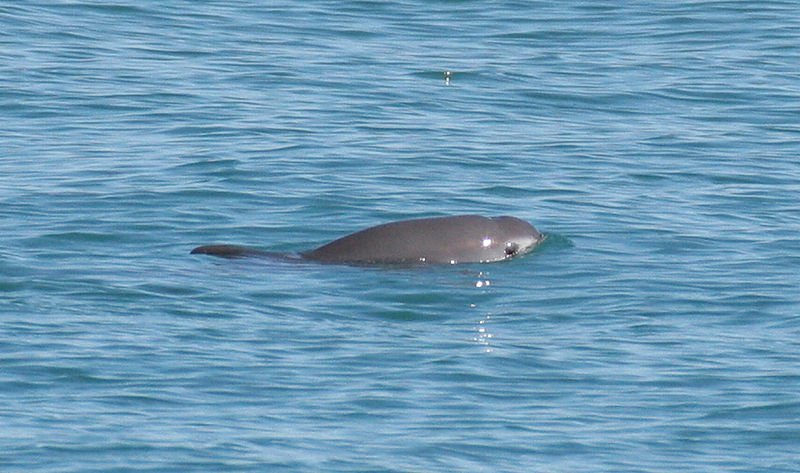
Yes, a little. The 2025 report found “no evidence of a decline” as steep as the 45% a year seen a few years earlier, at least in the area surveyed. Observers saw at least one or two calves. One mother, nicknamed Frida for her bent fin, had a calf in 2023 and another by 2025. Another mother had calves two years in a row.
Drones measured one or two young vaquitas at about 132 cm (4.3 ft) long. That size fits animals born after about March 2022. So vaquitas are still breeding, and some young ones are surviving.
The Zero Tolerance Area
Since 2019, protection has focused on a small patch of sea near the town of San Felipe. It is about 24 by 12 km (15 by 7.5 miles), says the IUCN Cetacean Specialist Group. Concrete blocks with hooks sit on the seabed there to snag illegal nets. This Zero Tolerance Area and a nearby extension cover only 12% of the area vaquitas used in 2015.
In 2025, recorders picked up vaquitas outside the protected blocks, all the way to the edge of the Vaquita Refuge. The report says the waters northwest of the protected zone need “immediate protection”.
What would save the vaquita?
The fix is simple to say and hard to do. The International Committee for the Recovery of the Vaquita (CIRVA) says vaquita bycatch “must be reduced to zero as soon as possible”. It also says gillnets should be banned in protected areas. That means no gillnets anywhere vaquitas swim, and real enforcement against totoaba poaching.
Fishing families in the Upper Gulf also need other ways to earn a living. Scientists are testing vaquita-safe gear for catching shrimp and fish. Young people from San Felipe are being trained to spot vaquitas, too. In 2025, seventeen local trainees joined the survey ships.
Other ocean animals face similar problems with nets and plastic. You can read about them in why leatherback sea turtles are endangered. For a very different freshwater story from Mexico, see why axolotls are endangered. To learn how the vaquita’s dolphin cousins are built for the sea, read adaptations of dolphins.
Frequently asked questions
Is the vaquita extinct?
No. The 2025 survey saw between 7 and 10 different vaquitas, with a 67% probability, and at least one or two calves. That makes it the rarest marine mammal on Earth, but it is not extinct. The survey team says the real number could be a little higher, because vaquitas also swim outside the area they searched.
What does the word vaquita mean?
Vaquita is Spanish for 'little cow'. The name suits a small, round animal with dark patches around its eyes and mouth. The dark eye rings look a bit like eyeliner, which makes vaquitas easy to recognise in good photos.
What do vaquitas eat?
Vaquitas eat small fish, shrimp and other crustaceans, and squid and octopuses, according to NOAA Fisheries. They find much of their food near the sea floor in the shallow, murky water of the northern Gulf of California. Food is not what limits them. Their numbers are falling because of nets, not hunger.
What is a totoaba?
The totoaba is a large fish that also lives only in the Gulf of California. It is endangered and protected. Its swim bladder, the gas-filled sac that helps a fish float, is dried and sold illegally in Asia. Gillnets set to catch totoaba are the main reason vaquitas die.
How can kids help vaquitas?
You can learn about the vaquita and share what you know, since many people have never heard of it. Families can choose seafood from fisheries that don't use gillnets in the Upper Gulf of California. Supporting groups that fund vaquita surveys also helps.
Sources
- NOAA Fisheries. Vaquita (Phocoena sinus) species profile.
- IUCN SSC Cetacean Specialist Group. Vaquita.
- IUCN SSC Cetacean Specialist Group / CONANP (2025). Vaquita Research Campaign 2025: Report of the September Vaquita Survey (Cárdenas-Hinojosa, Rojas-Bracho, Taylor et al.).
- Royal Society Open Science (PubMed Central copy) (2019). Decline towards extinction of Mexico's vaquita porpoise (Phocoena sinus) (Jaramillo-Legorreta et al.), DOI 10.1098/rsos.190598.
Sources checked 15 September 2026.

Keep the conversation curious