
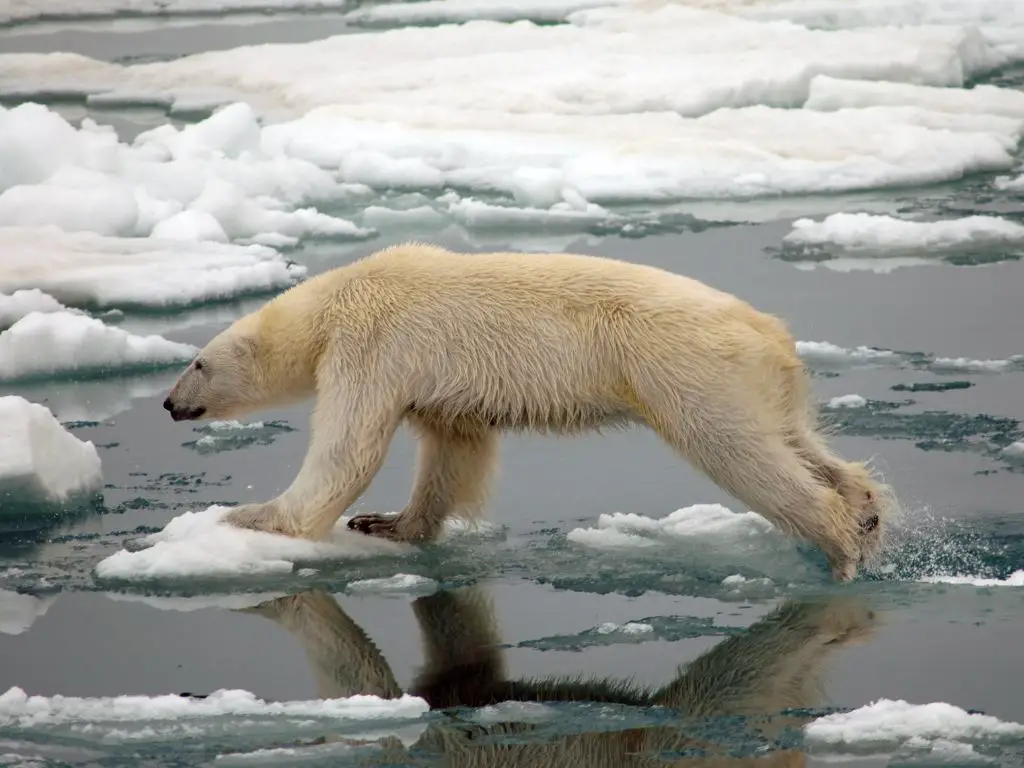
A polar bear can run at about 40 km/h (25 mph), but only for short distances, says McGill University’s Office for Science and Society. Young, lean bears can keep going for about 2 km; big adults overheat quickly. Nobody has timed many wild polar bears, so treat 40 km/h as a rough top speed, not a measured record.
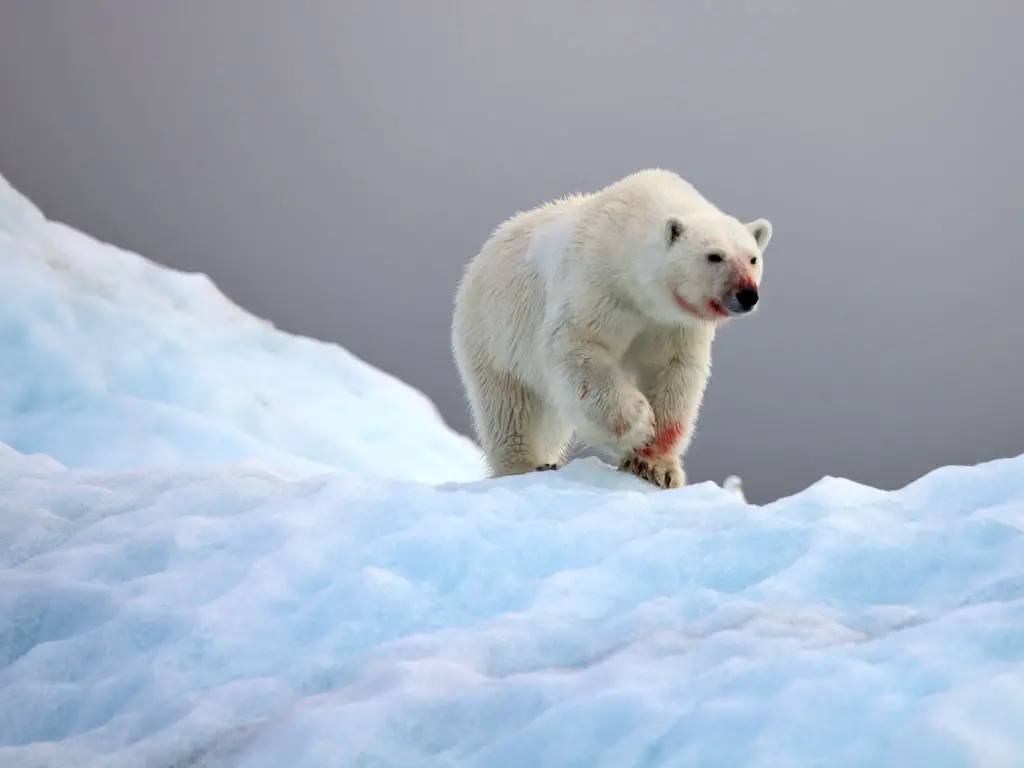
How fast can a polar bear run, and for how long?
Fast for a short dash, slow over a long distance. The figure of 40 km/h (25 mph) is the one most often quoted, and McGill gives it for short bursts only. A 2016 study by Gormezano and colleagues gives a lower top speed of about 29 km/h (18 mph). The honest answer is that polar bears sprint somewhere in that range.
Most of the time they walk. A polar bear wandering the sea ice moves at a steady plod, saving energy for the hunt. Younger, leaner bears can run about 2 km (1.2 miles) without stopping, says McGill, while older and larger bears overheat much sooner.
| Movement | Speed | How we know | Source |
|---|---|---|---|
| Sprint, often quoted | Up to about 40 km/h (25 mph) | Estimate, short distances only | McGill University |
| Sprint, lower estimate | Up to about 29 km/h (18 mph) | Figure cited in a 2016 study | Gormezano and others, 2016 |
| Longest run by young bears | About 2 km (1.2 miles) | Observation | McGill University |
| Treadmill tests | 1.8–7.9 km/h (1.1–4.9 mph) | Measured on young bears | Gormezano and others, 2016 |
| Swimming | Up to about 10 km/h (6 mph) | Estimate | San Diego Zoo Wildlife Alliance |
| Brown (grizzly) bear sprint, for comparison | Up to 64 km/h (40 mph) | Estimate, short bursts | Alaska Dept. of Fish and Game |
Why do polar bears overheat when they run?
A polar bear is built to keep heat in, not to let it out. Its thick fur and fat work like a sleeping bag on the ice. That is great at -30 °C, but a running bear makes a lot of heat and has trouble getting rid of it. Our page on polar bear adaptations explains the fur and fat.
Walking is costly too. Treadmill studies in the 1970s and 1980s found that a walking polar bear uses more than twice the energy predicted for a mammal of its size, as Gormezano and colleagues summarise. The same studies found the bears’ body temperature rose steeply as they moved faster. So long chases make little sense for a polar bear.
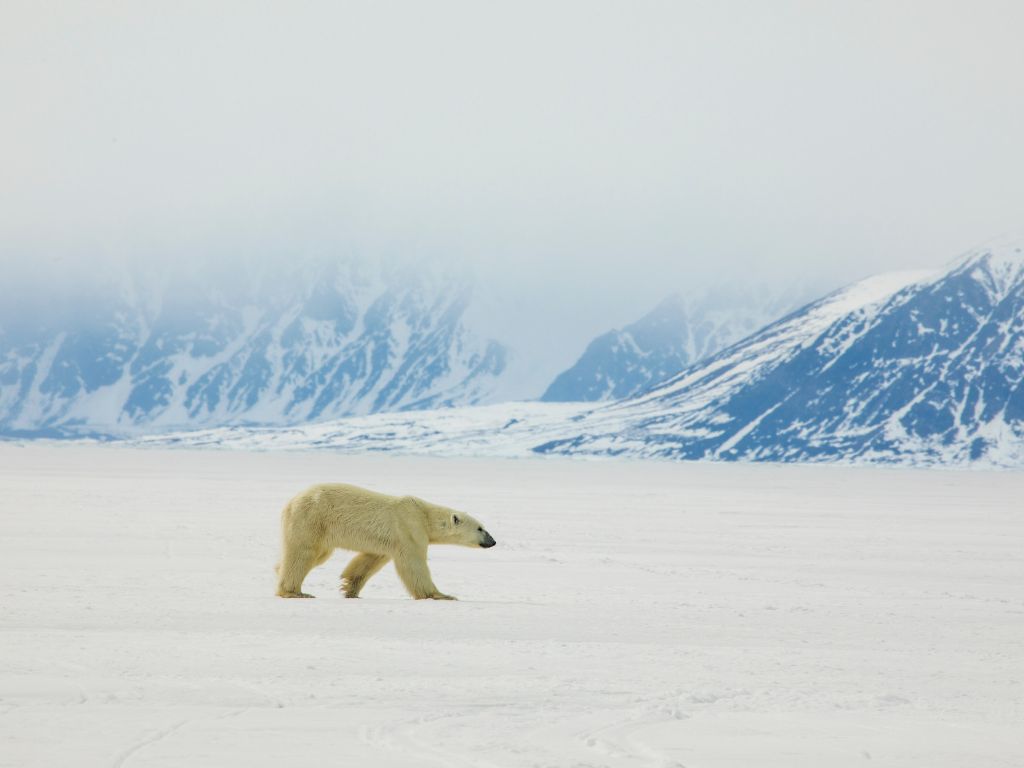
Can a polar bear outrun a human?
Yes, easily over a short distance. Even the lower estimate of 29 km/h is faster than most people can sprint, and bears reach top speed within a few strides. The National Park Service warns that bears can run as fast as a racehorse and will chase things that run away, as dogs do.
That is why the first rule in bear country is never to run. Stay in a group, back away slowly while facing the bear, and follow the advice of local guides and rangers. In Arctic towns, people also keep food and rubbish away from bears so they are not drawn in.
Is a polar bear faster than a grizzly bear?
Probably not. Brown bears, including grizzlies, can run in short bursts at up to 64 km/h (40 mph), says the Alaska Department of Fish and Game. That is well above the usual 40 km/h figure for polar bears. Grizzlies are lighter and have a hump of shoulder muscle for bursts of speed.
Polar bears are heavier and built for cold. Males usually weigh 350 to 590 kg (772 to 1,300 lb), says Polar Bears International. Our page on polar bear vs grizzly bear size compares the two. For other speedy animals, see the fastest animals in the world.
How fast can a polar bear swim?
About 10 km/h (6 mph), according to San Diego Zoo Wildlife Alliance. That is slower than running, but polar bears can keep swimming for much longer. They paddle with their big front paws and steer with their back legs.
Swimming is how many bears cross open water between ice floes. PBI says a polar bear may travel more than 1,000 km (620 miles) in one season. Our page on how fast a polar bear can swim has more on their long swims.

How do polar bears hunt if they can’t run far?
Mostly by waiting. A polar bear sits still beside a seal’s breathing hole in the ice, sometimes for hours, then grabs the seal when it comes up. It also creeps up on seals resting on the ice and makes a short rush at the end. Our guide to what polar bears eat covers these hunts.
On land in summer, some bears chase snow geese. The 2016 study worked out that a 125 kg bear could chase a goose for up to 754 m before the chase cost more energy than the goose gives. For a heavier 235 kg bear, the limit was 468 m. The authors add that overheating on warm days may cut chases even shorter.
Frequently asked questions
What is the top speed of a polar bear in mph?
About 25 mph (40 km/h) is the figure usually quoted, for short distances only. A 2016 study cites a lower top speed of about 18 mph (29 km/h). Nobody has timed enough wild polar bears to set a firm record, so both figures are estimates.
Can polar bears run on ice?
Yes. Polar bears have large paws with fur and small bumps on the soles that help them grip ice and snow. Sea ice is where they spend much of their lives, so they walk and run on it all the time, though they usually move at a slow, steady walk.
Why can't polar bears run for long?
They overheat. Thick fur and fat keep heat in, which is perfect in the cold but a problem when running. Treadmill studies found that walking polar bears use more than twice the energy expected for their size, and their body temperature climbs quickly as they speed up.
Are polar bears faster than wolves?
Over long distances, no. Polar bears are sprinters that overheat within a couple of kilometres. For the fastest land animals, sprinting and running long distances, see our page on the fastest animals in the world, which compares many species.
Sources
- McGill University Office for Science and Society. Polar bears can run up to 40 km per hour.
- Conservation Physiology via PubMed Central (2016). Costs of locomotion in polar bears: when do the costs outweigh the benefits of chasing down terrestrial prey? (Gormezano et al., Conservation Physiology, doi:10.1093/conphys/cow045).
- San Diego Zoo Wildlife Alliance. Polar bear.
- Alaska Department of Fish and Game. Brown bear: Wildlife Notebook Series.
- National Park Service. Staying safe around bears.
- Polar Bears International. Polar bear facts.
Sources checked 15 September 2026.

Keep the conversation curious