
An elephant can run at about 25 km/h (15 mph). That is the fastest speed ever measured, reached by Asian elephants in a 2003 study in Thailand. African elephants are often said to hit 40 km/h (25 mph), but nobody has measured that. The best African figure is about 21 km/h (13 mph).
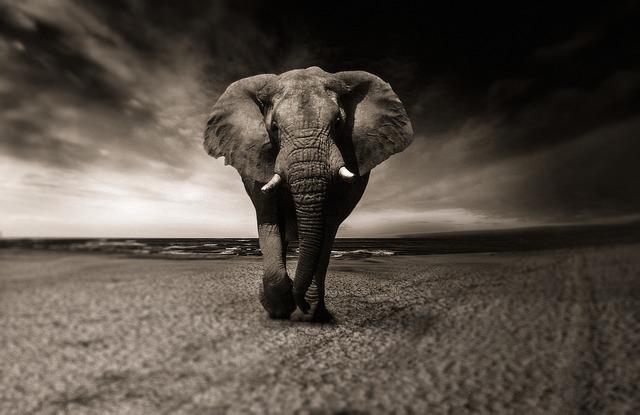
That is fast for an animal that can weigh 6,800 kg (15,000 lb), says San Diego Zoo Wildlife Alliance. It is also far faster than you would want to test. But an elephant “running” is not like a horse galloping, and the speed you read online is often bigger than the speed anyone has timed.
How fast can an elephant run, and how do we know?
John Hutchinson and his team filmed 42 Asian elephants in Thailand for a paper in Nature in 2003. They marked the elephants’ joints with water-based paint and timed them over a 30 m (100 ft) course, reports ScienceDaily. Three elephants went faster than 24 km/h (15 mph). The top speed was 6.8 m/s, or about 25 km/h.
In 2006 the same group published a bigger study in the Journal of Experimental Biology. It covered more than 2,400 strides by 48 Asian and 14 African elephants. The fastest Asian elephant again reached 6.8 m/s. The fastest African elephant reached 5.9 m/s, about 21 km/h (13 mph).
| What was timed | Speed | Type of figure | Source |
|---|---|---|---|
| Normal walking | About 4 km/h (2.5 mph) | Measured | Nature news, 2007 |
| Switch to a running gait | About 8 km/h (5 mph) | Measured | Nature news, 2007 |
| Fastest of 5 UK safari-park elephants | 12.6 km/h (7.8 mph) | Measured | Nature news, 2007 |
| Fastest African elephant in a study | 5.9 m/s, about 21 km/h (13 mph) | Measured | Hutchinson et al. 2006 |
| Fastest Asian elephant in a study | 6.8 m/s, about 25 km/h (15 mph) | Measured | Hutchinson et al. 2003, 2006 |
| “African elephants reach 40 km/h” | 40 km/h (25 mph) | Popular claim, not measured | Discussed in Hutchinson et al. 2006 |
So the honest answer has two parts. Elephants have been timed at up to 25 km/h. Faster claims may be true for a wild elephant in a charge, but no one has timed one.
Do elephants really run?
Yes, in a special way. A running horse has a moment when all four feet are off the ground. An elephant never does. At every point in its stride, at least one foot stays planted, says the 2006 study.
So why call it running? Scientists look at the body, not only the feet. In a walk, the body vaults over stiff legs like a pole-vaulter. In a run, the body bounces down and up like a ball. Fast elephants show that bounce. Hutchinson told ScienceDaily it is “an intermediate sort of gait” that biomechanically looks like running.
A later study on five elephants in UK safari parks went further, reports Nature. It found elephants start this bouncy gait at only about 8 km/h. The back legs work like pogo sticks, while the front legs stay stiffer.
Are African elephants faster than Asian elephants?
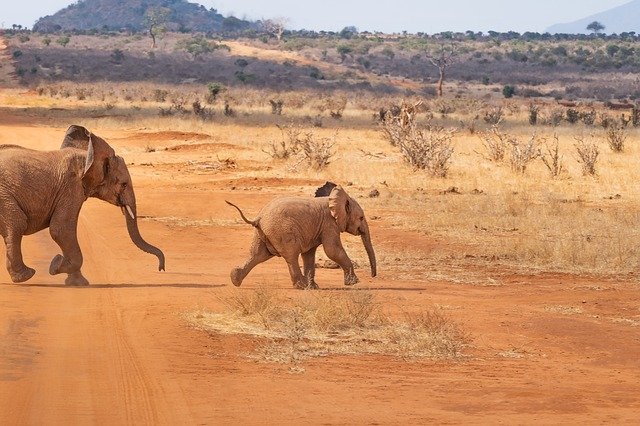
We don’t know. African elephants are bigger, and many books and websites say they reach 40 km/h. But the 2006 study authors wrote that near-top speeds for African elephants are undocumented. They suggested that very high figures may come from reading a car’s speedometer while chasing an elephant, which is easy to get wrong.
In their data, the two species moved in the same way at the same speeds. The African elephants they filmed were slower, but that may simply be because the fastest African elephants were not tested. For now, 25 km/h is the top speed measured for any elephant.
Can you outrun an elephant?
Don’t count on it. A speed of 25 km/h (15 mph) is like running 100 m in about 14 seconds. Some fit people can match that for a short dash on a track. Very few can do it on rough ground, in heat, while scared, and with a head start of only a few metres.
That is why people on safari are told to stay in the vehicle and follow the guide’s instructions. Giving elephants plenty of space is far safer than any plan that involves running. Most elephants that rush at people are warning them off, but that is not something to test.
For a sense of scale, a large male African elephant stands 3 to 3.2 m (10 to 10.5 ft) tall at the shoulder, says San Diego Zoo Wildlife Alliance. That is taller than a basketball hoop.
How long can an elephant run?
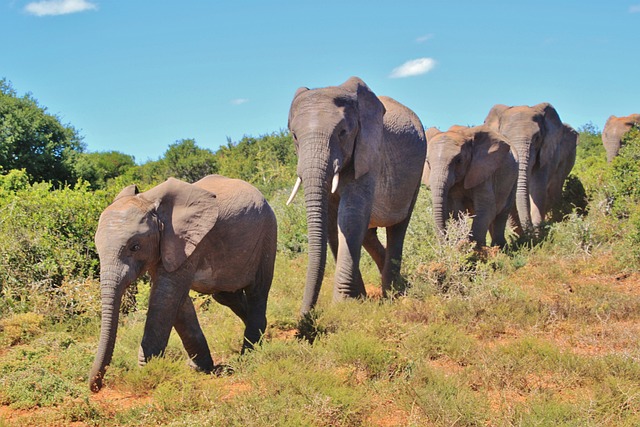
Not for long at top speed. The fastest runs in the studies were over short courses of about 30 m (100 ft). Nobody has measured how far an elephant can keep up 25 km/h. Big animals heat up quickly when they work hard, so long sprints are unlikely.
Walking is another story. Elephants at San Diego Zoo Safari Park walked an average of 5 to 11 km (3 to 7 miles) a day, says San Diego Zoo Wildlife Alliance. Wild elephants often walk further to reach food and water. They spend about 16 hours a day eating, so most of their moving is slow and steady.
Why can’t elephants gallop or jump?
Size is the main reason. An elephant’s leg bones stand in a nearly straight column under the body, which is good for holding up several tonnes. Landing from a gallop or a jump would put huge forces on those legs.
Their feet help too. Elephants walk on their tiptoes, with a thick fat pad behind the toes that spreads out their weight. You can read more in adaptations of an elephant. Because an elephant always keeps a foot on the ground, it cannot jump. A deep ditch can stop one.
How does an elephant’s speed compare?
Elephants are quick for their size but slow next to real sprinters. Big cats and antelopes are far faster over short distances. See our list of the fastest animals in the world, or compare another heavyweight in how fast a hippo can run.
Elephants trade speed for other strengths: size, a strong memory for routes, and a herd that protects its calves. Their long, slow life starts with a record-breaking pregnancy; see how long an elephant is pregnant.
Frequently asked questions
How fast can an elephant run in mph?
About 15 mph at most, based on measurements. Asian elephants in Thailand were timed at 6.8 m/s, which is about 15 mph or 25 km/h (Hutchinson et al. 2003). You will often read 25 mph for African elephants, but that figure has never been measured.
How fast does an elephant walk?
An elephant's normal walk is about 4 km/h (2.5 mph), similar to a person's easy walking pace, according to a 2007 study reported by Nature. Elephants switch to their bouncy running gait at about 8 km/h (5 mph).
Can an elephant jump?
No. Studies of elephant movement found that an elephant always keeps at least one foot on the ground, even at top speed. With legs built as straight pillars to hold up several tonnes, an elephant cannot launch its whole body into the air.
Is an elephant faster than a human?
Faster than most people. The measured top speed of about 25 km/h (15 mph) matches a good sprint on a track, and few people can hold that on rough ground. That is why safari guides tell visitors to stay in the vehicle and keep their distance.
Sources
- ScienceDaily (2003). Speedy elephants use a biomechanical trick to 'run' (report on Hutchinson, Famini, Lair & Kram, 'Are fast-moving elephants really running?', Nature).
- Journal of Experimental Biology (2006). The locomotor kinematics of Asian and African elephants: changes with speed and size (Hutchinson et al., doi:10.1242/jeb.02443).
- Nature News (2007). Elephants run in slow motion.
- San Diego Zoo Wildlife Alliance. Elephant.
- Smithsonian's National Zoo and Conservation Biology Institute. Asian elephant.
Sources checked 15 September 2026.

Keep the conversation curious