
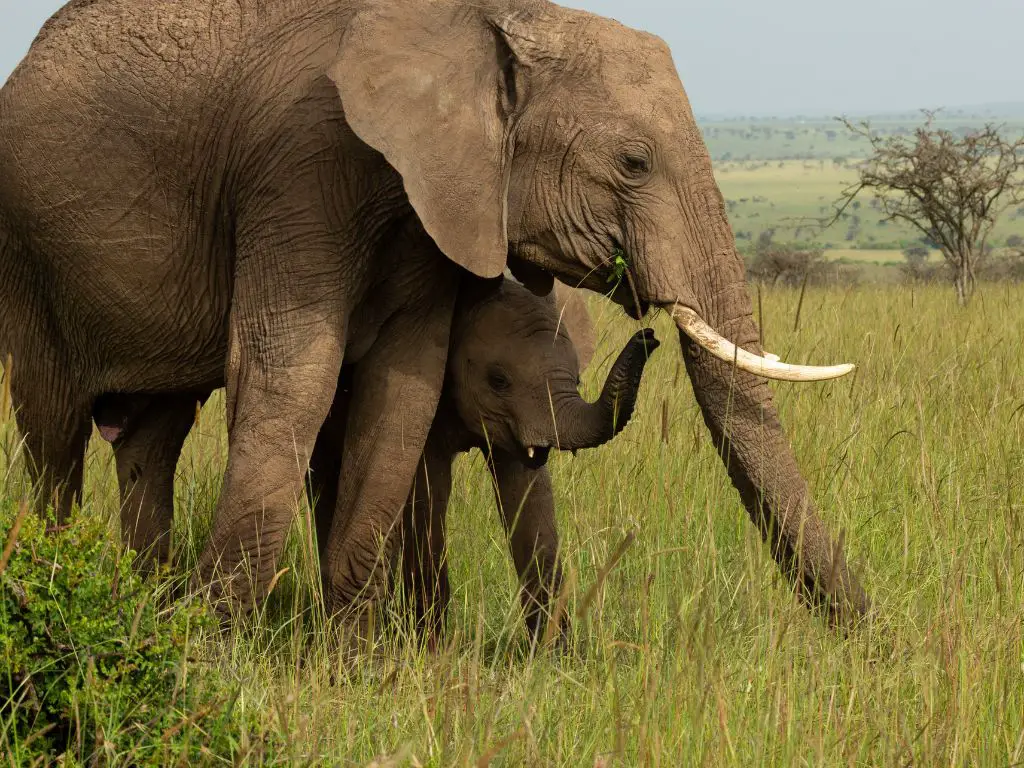
An elephant is pregnant for about 18 to 22 months, usually close to 22. A 2012 hormone study measured an average of about 640 days. That is the longest pregnancy of any living mammal, and it usually ends with a single calf weighing 50 to 120 kg (110 to 264 lb), says San Diego Zoo Wildlife Alliance.
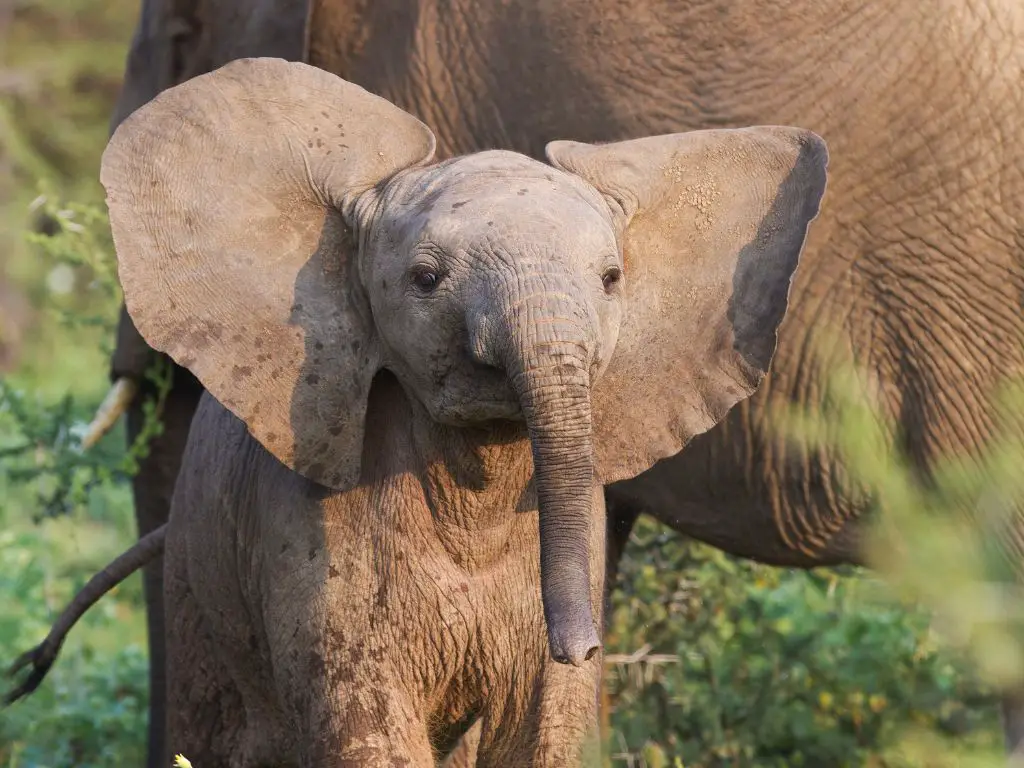
Picture a pregnancy that starts one summer, runs through the whole of the next year and ends the spring after that. That is an elephant pregnancy. It is more than twice as long as a human one, and the calf that comes out can walk within hours.
How long is an elephant pregnant for?
Zoos and scientists give slightly different numbers, because every elephant is a little different:
- San Diego Zoo Wildlife Alliance gives 20 to 22 months for elephants in general.
- Its African elephant fact sheet says about 22 months on average, with a range of 17 to 25 months.
- The Smithsonian’s National Zoo gives 21.5 to 22 months for Asian elephants, and “18 to 22 months on average” in a 2026 birth announcement.
So the safest answer is about 18 to 22 months, usually close to 22. Very short or very long pregnancies do happen, but they are unusual.
Elephant gestation period: African vs Asian
You might expect the bigger African elephants to stay pregnant much longer. They don’t. All three species land close to 22 months. The bigger differences are in calf size and how often mothers give birth.
| Species | Typical gestation | Calf at birth | Usual gap between calves |
|---|---|---|---|
| African savanna elephant | About 22 months (range 17–25) | 90–120 kg (200–270 lb); 80–90 cm (31–35 in) tall | About 3–5 years (range 3–9.5) |
| African forest elephant | About 22 months | About 60 cm (24 in) tall | About 5 years (range 1.5–11) |
| Asian elephant | 18–22 months | 68–158 kg (150–350 lb) | 3–8 years |
African figures come from the San Diego Zoo Wildlife Alliance fact sheet, and Asian figures from the Smithsonian’s National Zoo. Treat them as typical values, not strict limits.
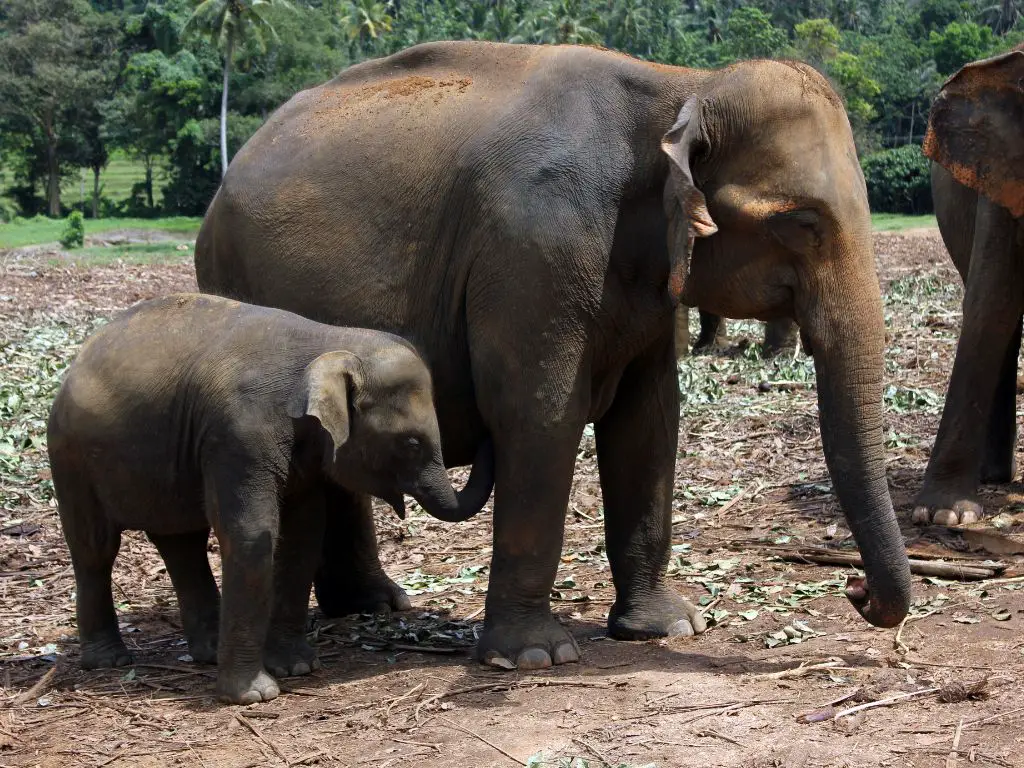
How long is an elephant pregnant in days?
Months are easy to picture, but days are more exact. Using an average month of about 30.4 days:
- 18 months is about 550 days.
- 21 months is about 640 days.
- 22 months is about 670 days.
One of the best measurements comes from Lueders and colleagues, writing in Proceedings of the Royal Society B in 2012. They followed 17 pregnant zoo elephants, 15 Asian and 2 African, with ultrasound scans and blood tests. Their abstract gives an average of 640 days. That is a measured average, not a guess.
A human pregnancy lasts about 40 weeks, or 280 days. So an elephant pregnancy is about 2.3 times longer.
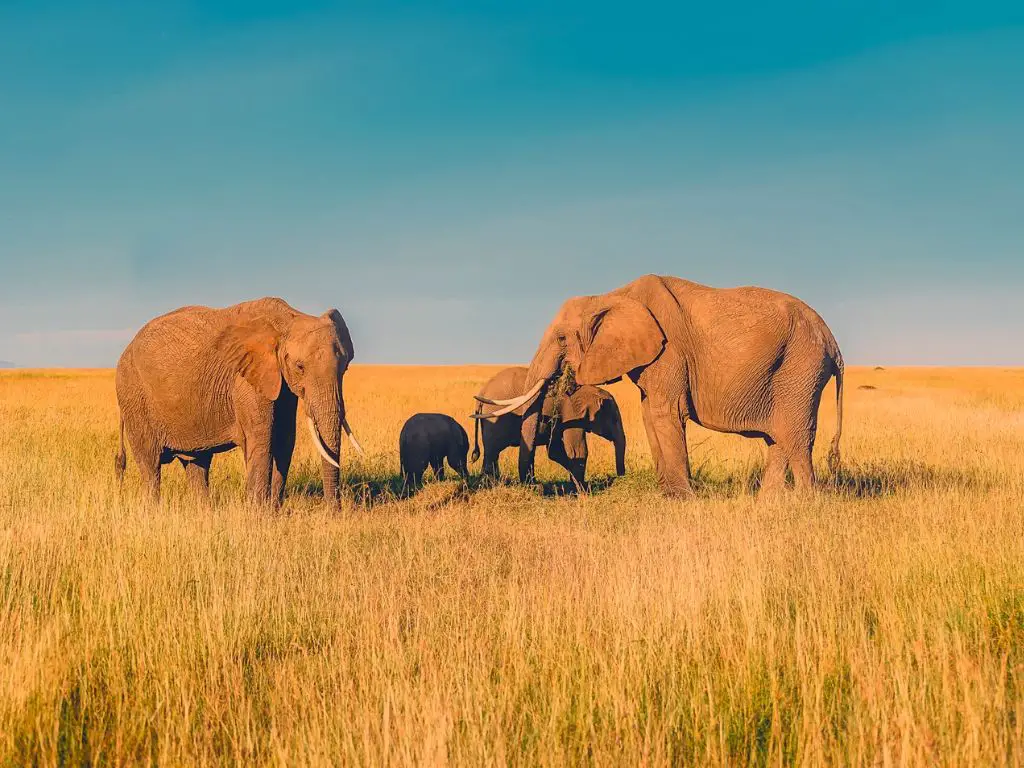
Elephant gestation vs other big mammals
Big animals tend to have long pregnancies, but elephants beat even giant whales.
| Animal | Typical pregnancy | Source |
|---|---|---|
| Human | About 40 weeks (just over 9 months) | Standard medical figure |
| Blue whale | About 10–12 months | NOAA Fisheries |
| Giraffe | About 14 months | San Diego Zoo Wildlife Alliance |
| Killer whale (orca) | 15–18 months | NOAA Fisheries |
| Elephant | About 18–22 months | San Diego Zoo Wildlife Alliance, Smithsonian |
Here is a surprise. The blue whale, the largest animal on Earth, is pregnant for less than a year. A killer whale takes 15 to 18 months and a giraffe about 14. So body size alone doesn’t explain the elephant’s record. See how big a blue whale is and how tall a giraffe is for the size side of the story.
Why is an elephant pregnant for so long?
Scientists don’t have one final answer yet, but two ideas lead.
A calf that is ready to go. Elephants live in herds that keep moving to find food and water, so a newborn has to keep up. An African calf can stand about 15 minutes after birth, says the San Diego Zoo Wildlife Alliance fact sheet. Researchers also suspect the long pregnancy gives the calf’s brain more time to grow. That brain idea is a likely explanation, not a proven fact.
A clever hormone trick. To stay pregnant, a mammal needs a hormone called progesterone. Most mammals make it from one small structure on the ovary, called a corpus luteum, which forms after an egg is released. Elephants release one egg too. But in the 2012 study they grew several of these structures, about five on average, and kept them working all the way to birth.
The same team found that the embryo only shows up on ultrasound around day 49. For the first seven weeks, an elephant pregnancy looks almost like an ordinary cycle.
What happens when a baby elephant is born?
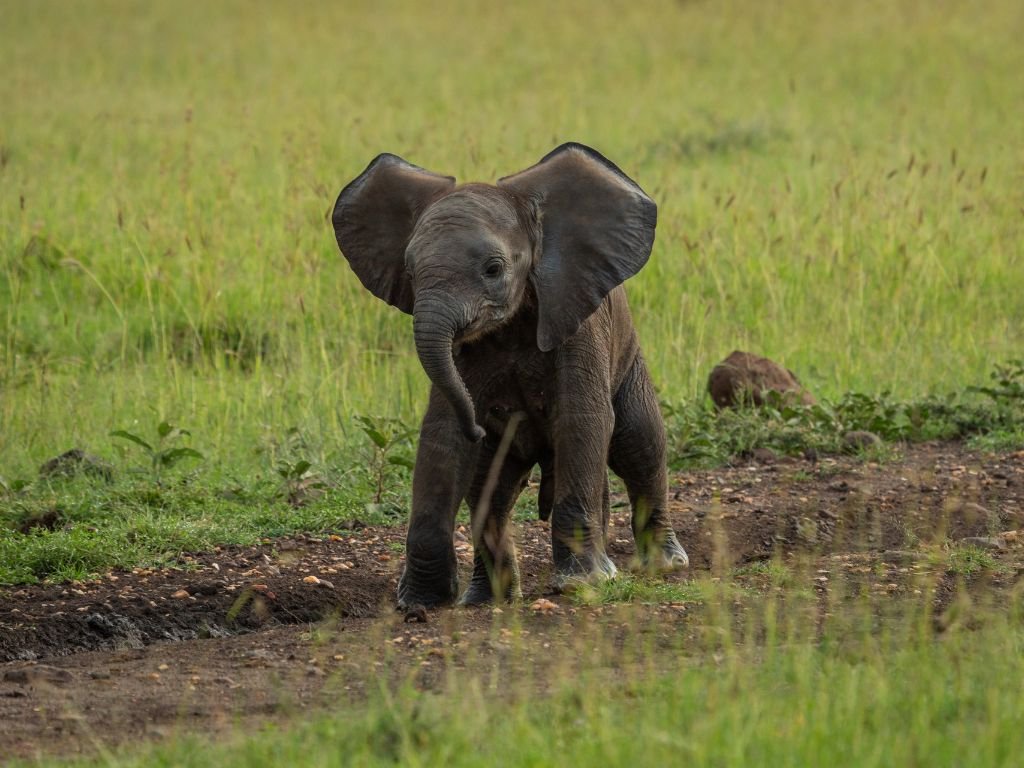
An elephant birth is a family event. Family members usually stay close, help the newborn and call out, says the San Diego Zoo Wildlife Alliance fact sheet. Then the calf gets moving fast. For its first three months it drinks only its mother’s milk.
A real example: on 2 February 2026 an Asian elephant calf was born at the Smithsonian’s National Zoo after a 21-month pregnancy. She weighed 140 kg (308 lb), stood 98 cm (38.5 in) tall and was walking on her own within five hours.
Other females help raise the calf too. Scientists call this allomothering. The fact sheet says this care gives calves a strong survival advantage.
How often do elephants have babies?
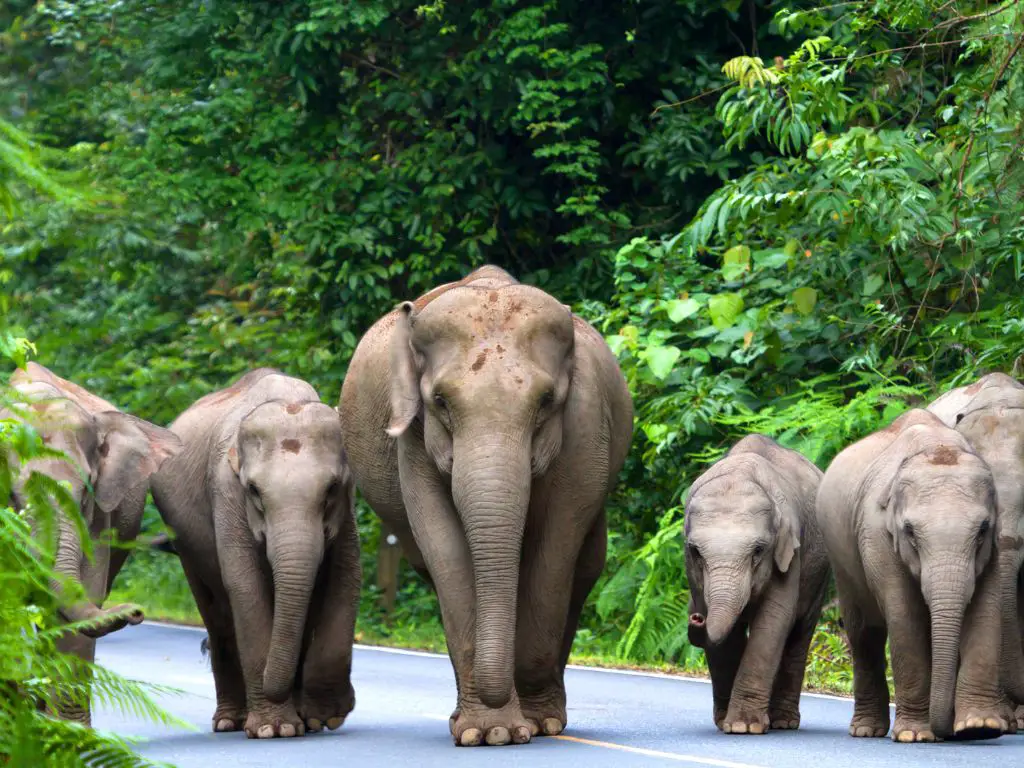
Because pregnancy is so long and calves nurse for years, elephants breed slowly:
- African savanna females are mature by about 12 years old and have their first calf at about 14.
- The gap between calves is usually 3 to 5 years for African savanna elephants and 3 to 8 years for Asian elephants.
- Savanna calves depend on milk for about 2 years and are fully weaned at about 4.5 years.
So each calf matters a lot to the herd. That matters even more because all three species are in trouble. Asian and African savanna elephants are listed as Endangered, and African forest elephants as Critically Endangered, says San Diego Zoo Wildlife Alliance. Read why Asian elephants are endangered.
Quick facts: elephant pregnancy
- Gestation: about 18–22 months, most often close to 22.
- Measured average: about 640 days (Lueders et al. 2012).
- Babies per pregnancy: 1; twins are very rare.
- Calf weight: 50–120 kg (110–264 lb); some Asian calves reach 158 kg (350 lb).
- First steps: often within about 15 minutes to a few hours.
Try this: if an elephant became pregnant on the first day of 6th grade, the calf would arrive about 21 to 22 months later. That is around the summer after 7th grade. For more about how elephants are built for life on the move, see adaptations of an elephant and how fast an elephant can run.
Frequently asked questions
Can elephants have twins?
Yes, but it is very rare. Elephants almost always have one calf per pregnancy. The Smithsonian's National Zoo says an Asian elephant usually has one calf and occasionally two, and San Diego Zoo Wildlife Alliance's fact sheet calls twins very rare in African elephants.
How big is a baby elephant?
Most weigh 50 to 120 kg (110 to 264 lb) at birth, says San Diego Zoo Wildlife Alliance, and some Asian calves reach about 158 kg (350 lb). An African savanna calf stands 80 to 90 cm (31 to 35 in) tall at the shoulder, about as high as a kitchen counter.
Is the elephant the longest pregnancy of any animal?
It is the longest of any living mammal. Elephants carry their calves longer than giraffes, rhinos and even the biggest whales. Some animals that are not mammals, such as certain sharks and salamanders, may carry young for longer, but those cases work very differently and are harder to measure.
How can you tell if an elephant is pregnant?
In zoos, keepers use blood tests for hormones and ultrasound scans. In the 2012 study by Lueders and colleagues, the embryo first showed up on ultrasound around day 49. A pregnant elephant's belly grows slowly, so it can be hard to tell just by looking until late in the pregnancy.
Sources
- San Diego Zoo Wildlife Alliance. Elephant.
- San Diego Zoo Wildlife Alliance Library. African elephants fact sheet: reproduction and development.
- Smithsonian's National Zoo and Conservation Biology Institute. Asian elephant.
- Smithsonian's National Zoo and Conservation Biology Institute (2026). Female Asian elephant calf born at the Smithsonian's National Zoo and Conservation Biology Institute.
- Proceedings of the Royal Society B (PubMed Central copy) (2012). Gestating for 22 months: luteal development and pregnancy maintenance in elephants (Lueders et al., doi:10.1098/rspb.2012.1038).
- NOAA Fisheries. Blue whale.
- NOAA Fisheries. Killer whale.
- San Diego Zoo Wildlife Alliance. Giraffe.
Sources checked 15 September 2026.

Keep the conversation curious