
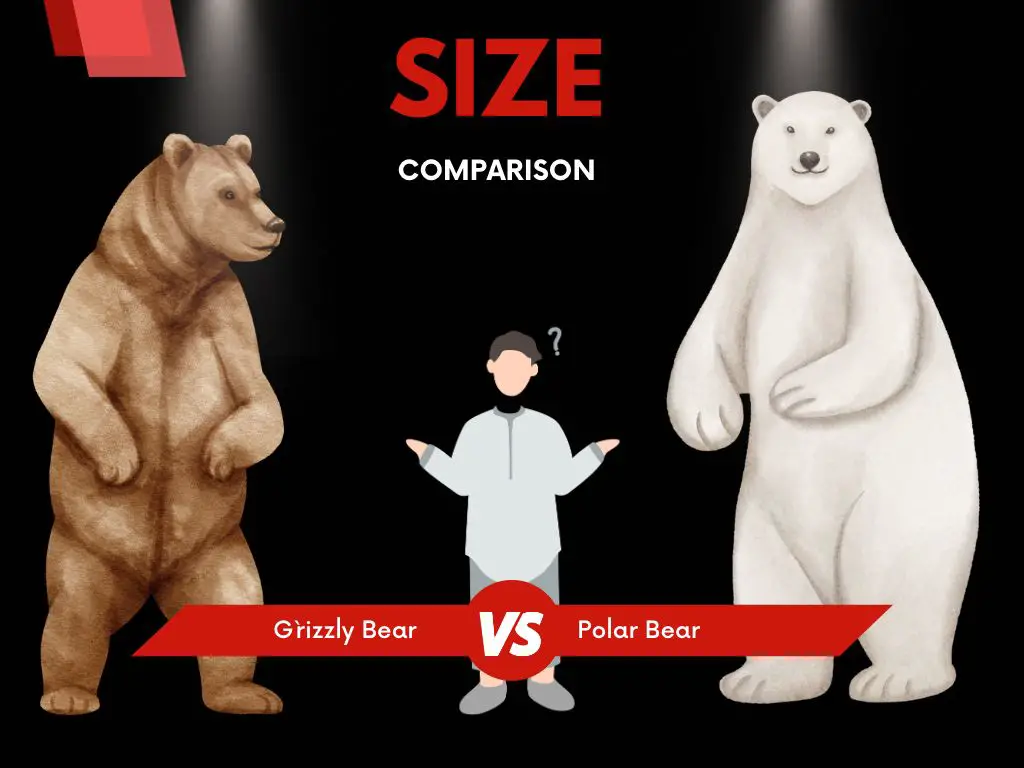
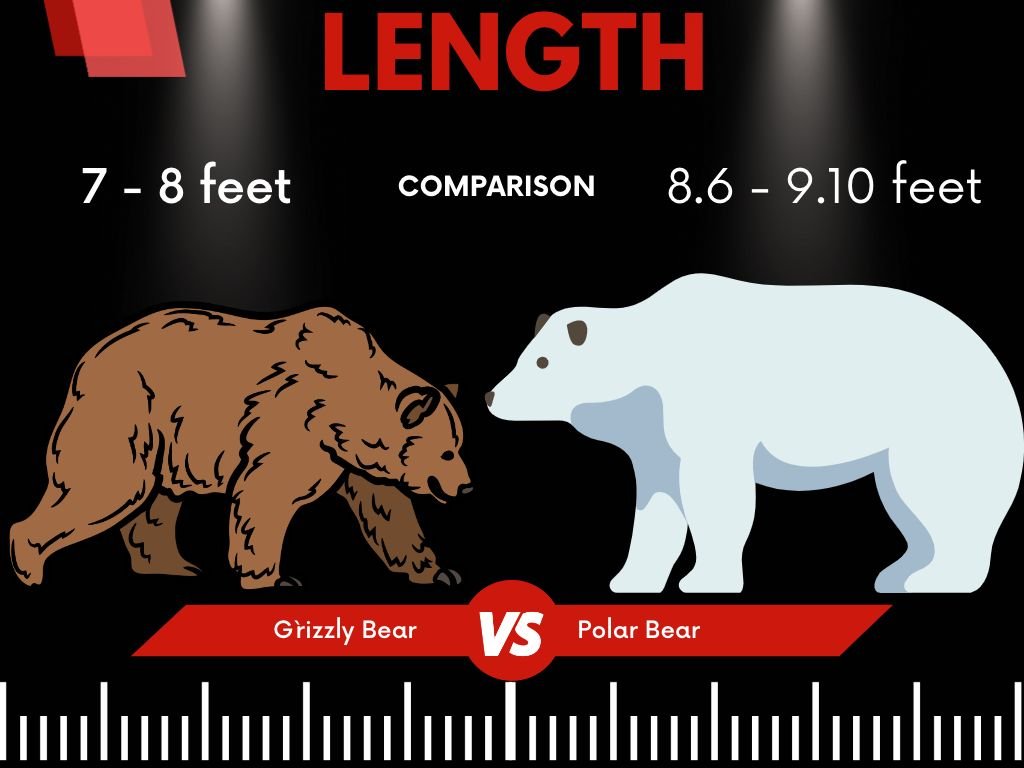
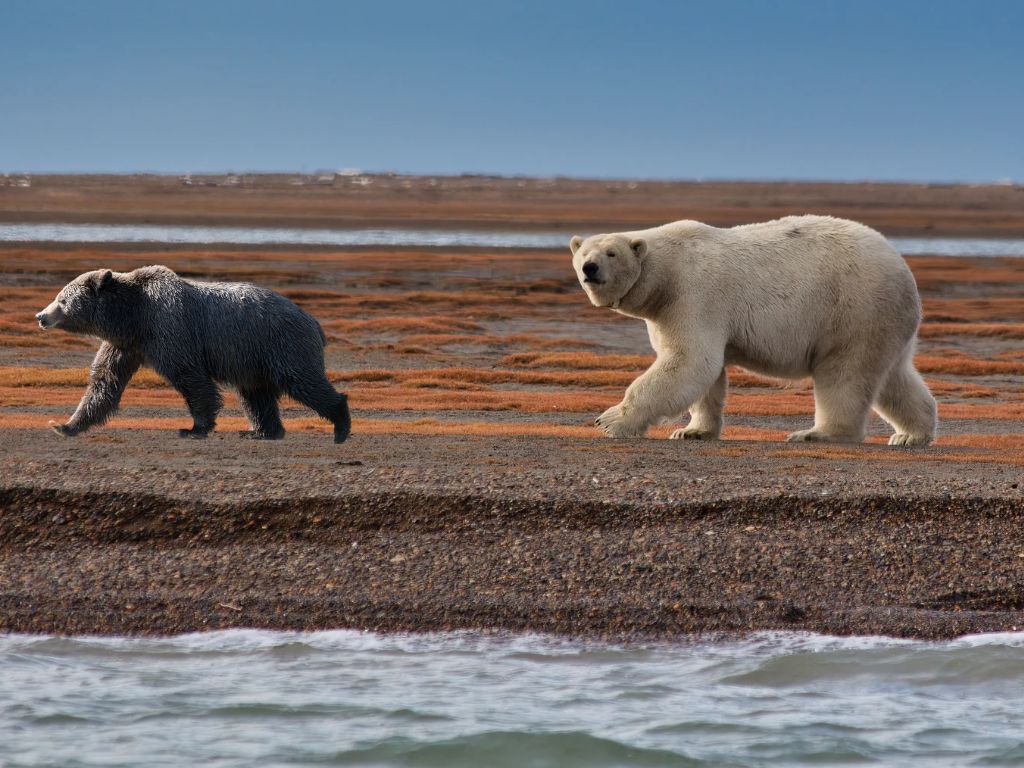
Polar bears are bigger. An adult male polar bear usually weighs 350 to 590 kg (772 to 1,300 lb), says Polar Bears International. Male grizzlies in the lower 48 US states average 180 to 270 kg (400 to 600 lb), says the US Fish and Wildlife Service. Only coastal Alaskan brown bears come close.
Polar bear vs grizzly bear size at a glance
The table puts the main measurements side by side. “Grizzly” here means inland North American brown bears; coastal Alaskan brown bears are listed separately because they are so much bigger.
| Measure | Polar bear | Grizzly bear |
|---|---|---|
| Adult male weight | 350–590 kg (772–1,300 lb) (PBI) | 180–270 kg (400–600 lb) average, lower 48 US (FWS) |
| Adult female weight | 150–295 kg (331–650 lb) (PBI) | 110–160 kg (250–350 lb) average, lower 48 US (FWS) |
| Biggest recorded | More than 770 kg (1,700 lb) (San Diego Zoo) | Up to 227 kg (500 lb) inland Alaska; up to 680 kg (1,500 lb) coastal Alaska (ADFG) |
| Head and body length | Males 2.4–2.6 m (7.9–8.5 ft); females 1.9–2.1 m (6.2–6.9 ft) (San Diego Zoo) | 1.5–2.1 m (5–7 ft) (NPS) |
| Height at the shoulder | Up to 1.7 m (5.6 ft) (San Diego Zoo) | 0.9–1.5 m (3–5 ft) (NPS) |
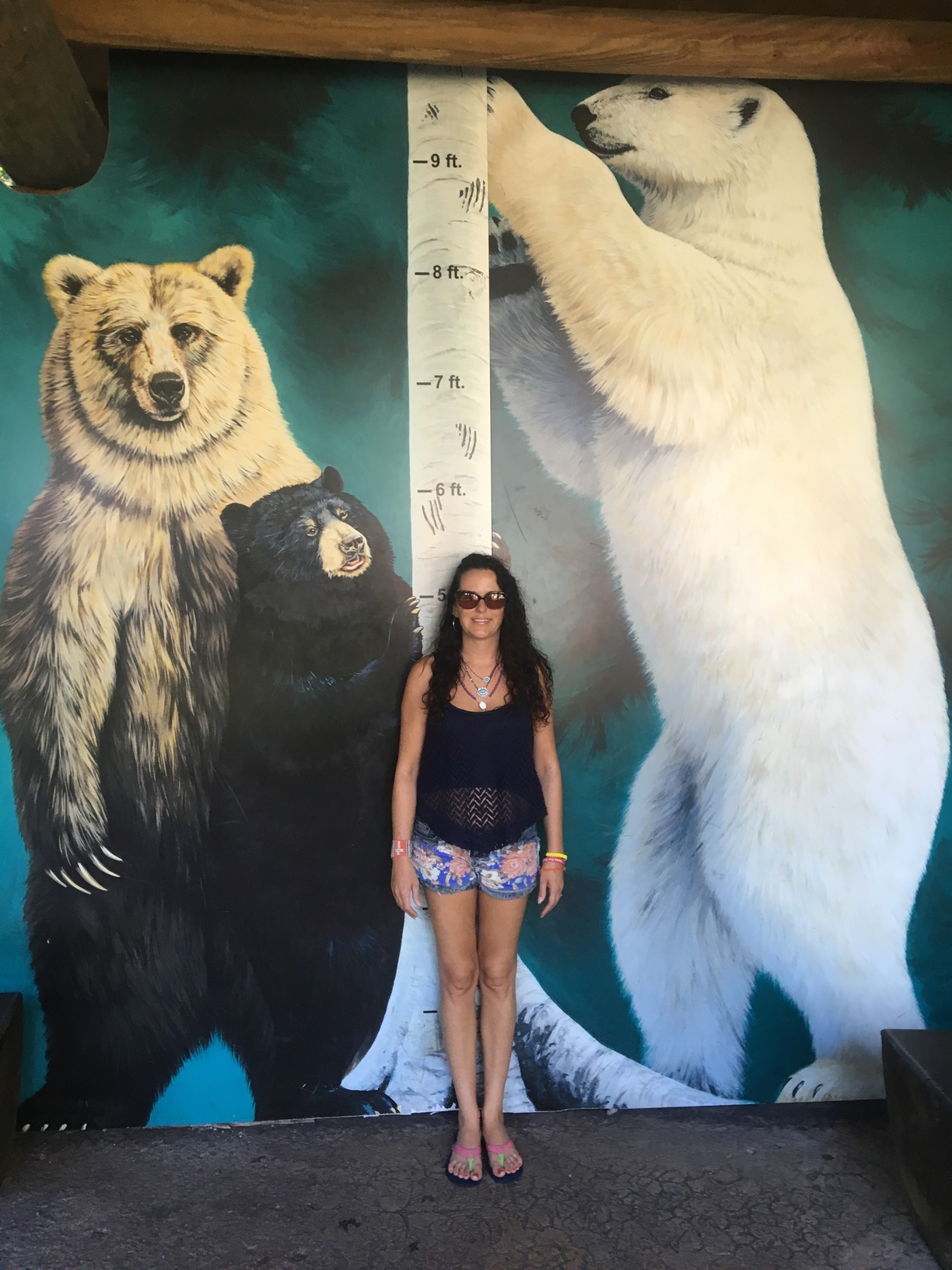
| Height standing on hind legs | Up to about 3 m (10 ft) (PBI) | Almost 2.7 m (9 ft) for very large bears (NPS) |
| Tail | 7–12 cm (3–5 in) (San Diego Zoo) | 6–20 cm (2–8 in) (San Diego Zoo, brown bear) |
| Front claws | Short and curved | 5–10 cm (2–4 in), long and straighter (San Diego Zoo) |
Weights change a lot through the year. Bears are lightest in spring and heaviest in autumn, and a brown bear can put on more than 50% of its weight between late summer and fall, says the Alaska Department of Fish and Game. So always compare bears from the same season if you can.
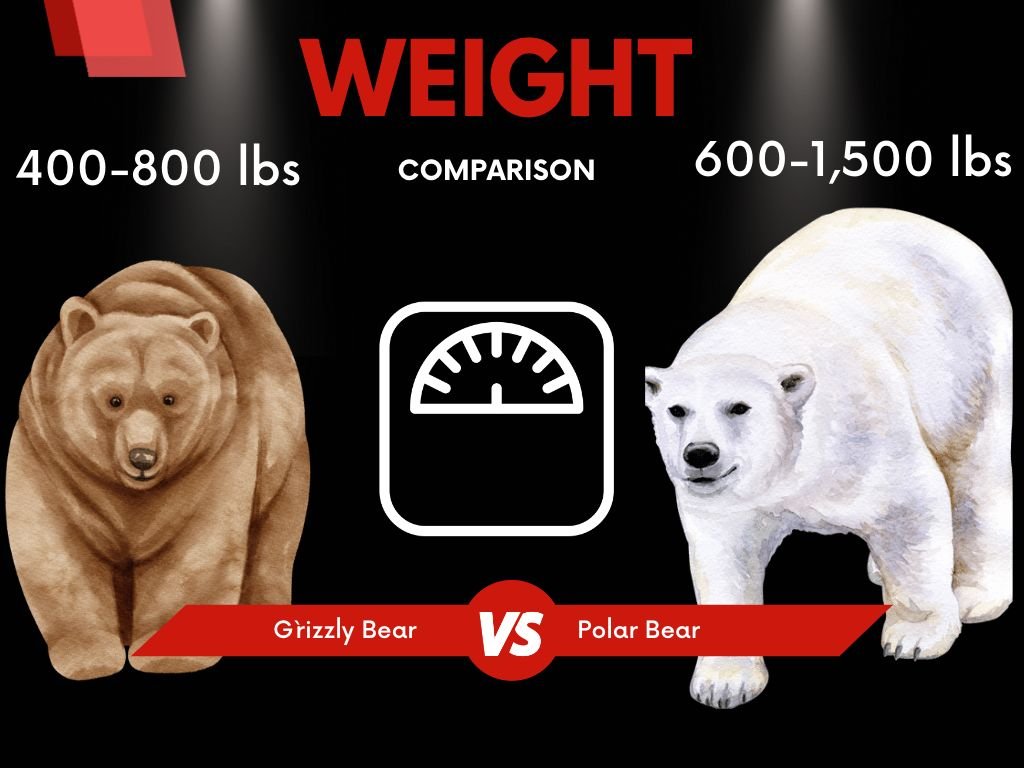
Which is heavier, a polar bear or a grizzly?
The polar bear, for both males and females. A typical male polar bear is about twice as heavy as a typical male grizzly from Montana or Wyoming. Female polar bears weigh 150 to 295 kg (331 to 650 lb), says PBI, and pregnant females can top 450 kg (1,000 lb) before they enter their dens, according to San Diego Zoo Wildlife Alliance.
A big male polar bear weighs about the same as a small car. Grizzlies are still heavy by any normal measure: a female grizzly weighs as much as two grown men. For the full polar bear numbers, see our main page on how big a polar bear is, and for grizzlies, how much a grizzly bear weighs.
Which is taller when standing up?
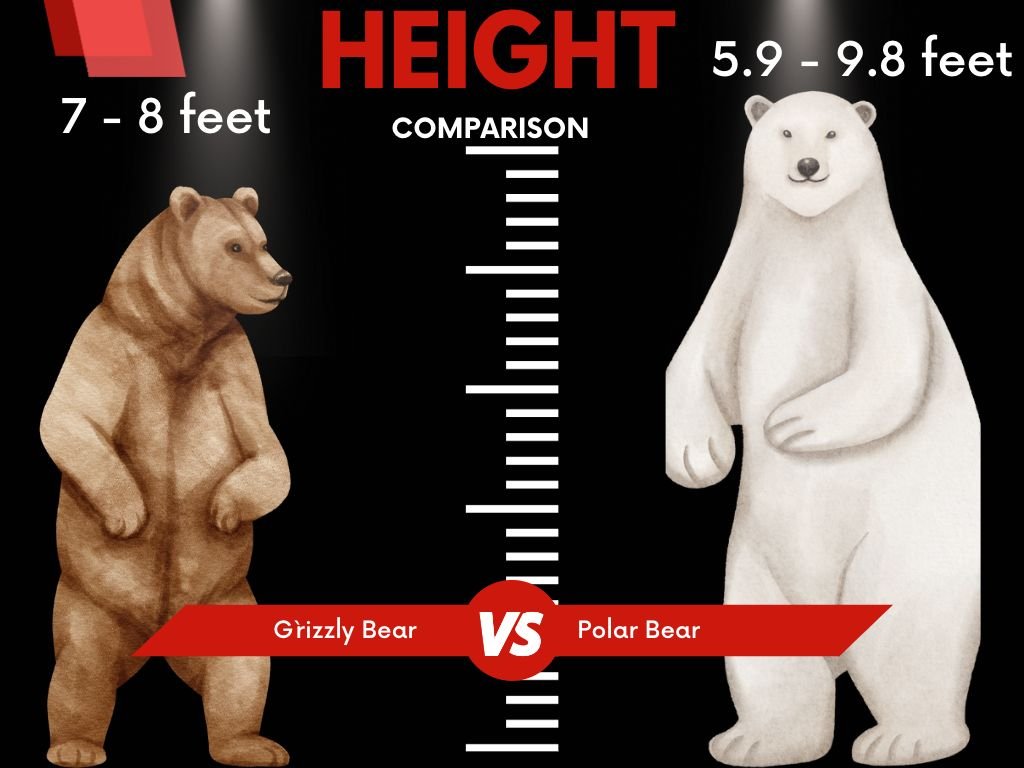
The polar bear again. A big male can stand about 3 m (10 ft) tall on his hind legs, says PBI. That is higher than a basketball hoop. Very large brown bears reach almost 2.7 m (9 ft), says the National Park Service, but most inland grizzlies are smaller.
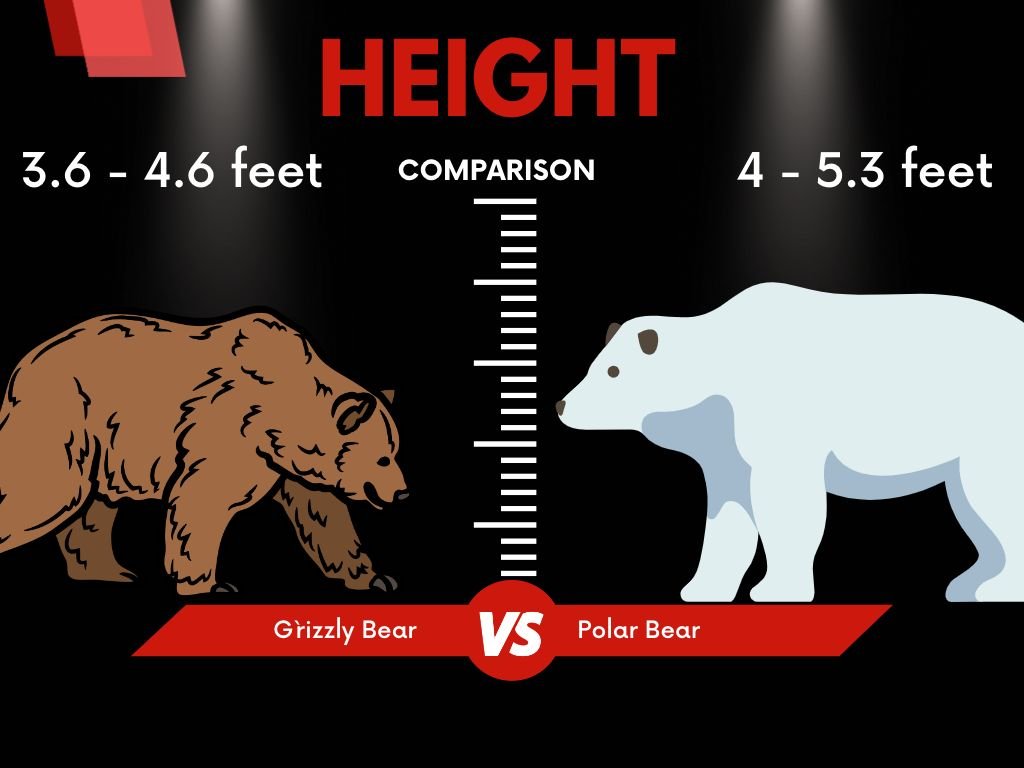
On all fours, a polar bear stands up to 1.7 m (5.6 ft) at the shoulder, according to the San Diego Zoo fact sheet, while brown bears stand 0.9 to 1.5 m (3 to 5 ft). Polar bears also have longer necks and bodies, which makes them look long and low. Grizzlies look chunkier, with a big shoulder hump.
Are polar bears bigger than grizzly bears everywhere?
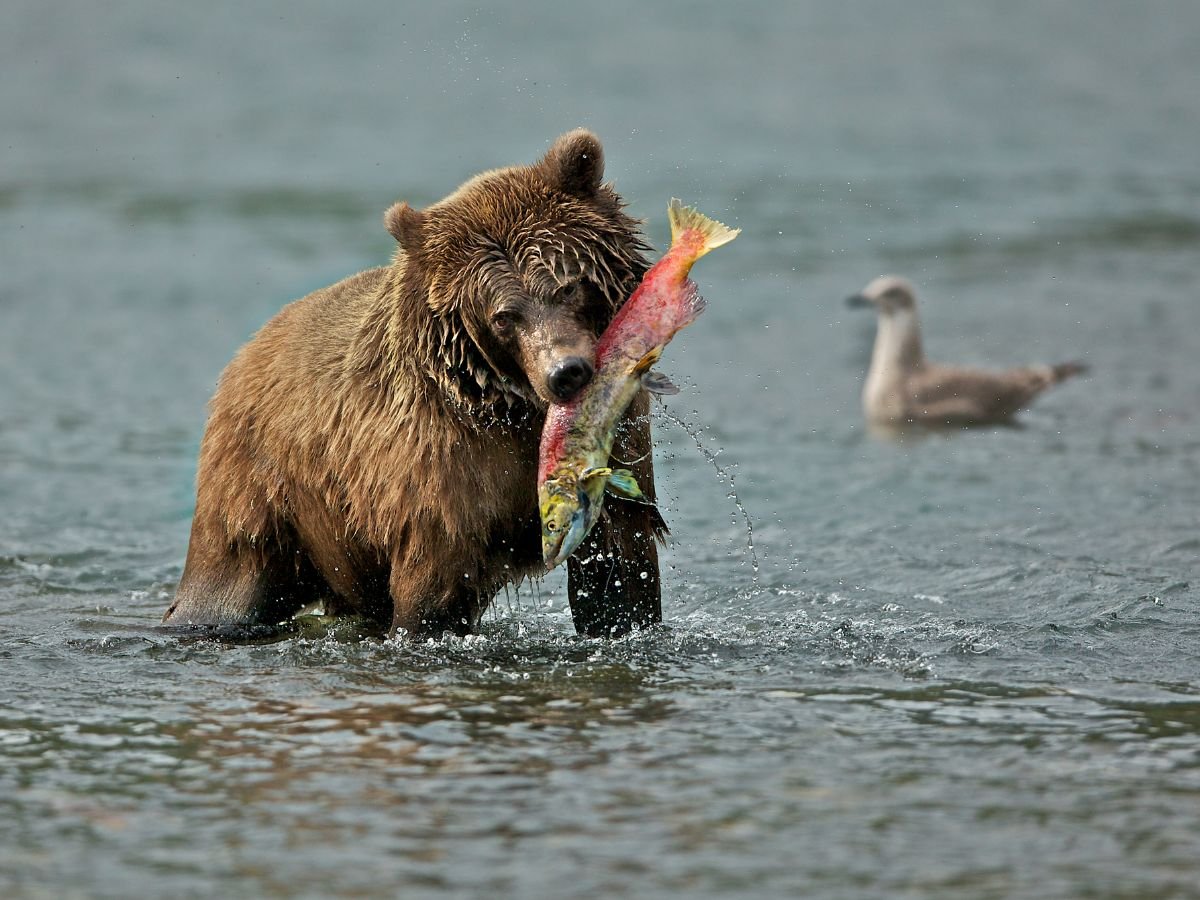
Not always. Brown bears on the coast of Alaska eat rich salmon and grow huge. The Alaska Department of Fish and Game says a large coastal male may weigh up to 680 kg (1,500 lb), but an inland male only up to 227 kg (500 lb). The biggest coastal brown bears, such as those on Kodiak Island, can match an average male polar bear.
So the fair answer is: polar bears are bigger on average, and the heaviest polar bears outweigh the heaviest brown bears. Our pages on the Kodiak bear and the biggest bear in the world look at the record holders.
Are polar bears and grizzly bears the same species?
No, but they are close cousins. Grizzlies are brown bears, the species Ursus arctos; the National Park Service explains that “grizzly” usually means inland brown bears in North America. Polar bears are a separate species, Ursus maritimus.
They are close enough to have cubs together. Wild hybrids have been found where their ranges meet in the Canadian Arctic; read the story in can polar bears and grizzly bears mate? Their bodies differ because their lives differ: polar bears hunt fatty seals on sea ice, while grizzlies dig for roots and eat plants, fish and meat. Compare what polar bears eat with what grizzly bears eat.
How can you tell a polar bear from a grizzly?
Colour is the obvious clue, but not the only one. Grizzlies have a large shoulder hump of digging muscle and long front claws of 5 to 10 cm (2 to 4 in), says San Diego Zoo Wildlife Alliance. Polar bears have no hump, a longer neck and a narrower head.
Where they live helps too. Polar bears live around the Arctic sea ice, while grizzlies live in forests, mountains and tundra. If you ever see either one in the wild, give it plenty of space and follow local bear safety rules. For power rather than size, see how strong a grizzly bear is.
Frequently asked questions
Who would win in a fight, a polar bear or a grizzly?
Nobody knows, because they rarely meet and no one has recorded a fair fight. Polar bears are usually heavier, which helps in a struggle. Grizzlies have longer claws and powerful digging muscles. Real meetings where their ranges overlap more often end with one bear walking away.
Is a Kodiak bear bigger than a polar bear?
They are close. Kodiak bears are coastal brown bears, and large coastal males can reach 680 kg (1,500 lb), according to the Alaska Department of Fish and Game. The heaviest recorded polar bear topped 770 kg (1,700 lb), so polar bears hold the record, but the two overlap a lot.
What is the largest land carnivore?
The polar bear is usually named the largest land carnivore. Males weigh 350 to 590 kg (772 to 1,300 lb), and one weighed more than 770 kg (1,700 lb), according to San Diego Zoo Wildlife Alliance. Large coastal brown bears are close behind.
Are polar bear cubs bigger than grizzly cubs?
Both are tiny at birth. A newborn polar bear weighs little more than half a kilogram (1 lb) and is about 30 to 35 cm long, says Polar Bears International. Brown bear cubs are also born small in the den and weigh up to 7 kg (15 lb) by June.
Sources
- Polar Bears International. Polar bear facts.
- San Diego Zoo Wildlife Alliance Library. Polar bear fact sheet: physical characteristics.
- San Diego Zoo Wildlife Alliance. Polar bear.
- US Fish and Wildlife Service. Grizzly bear (Ursus arctos horribilis).
- Alaska Department of Fish and Game. Brown bear: Wildlife Notebook Series.
- National Park Service. Brown bears.
- San Diego Zoo Wildlife Alliance Library. Brown bear fact sheet: physical characteristics.
- Alaska Department of Fish and Game. Polar bear species profile.
Sources checked 15 September 2026.
Keep the conversation curious