
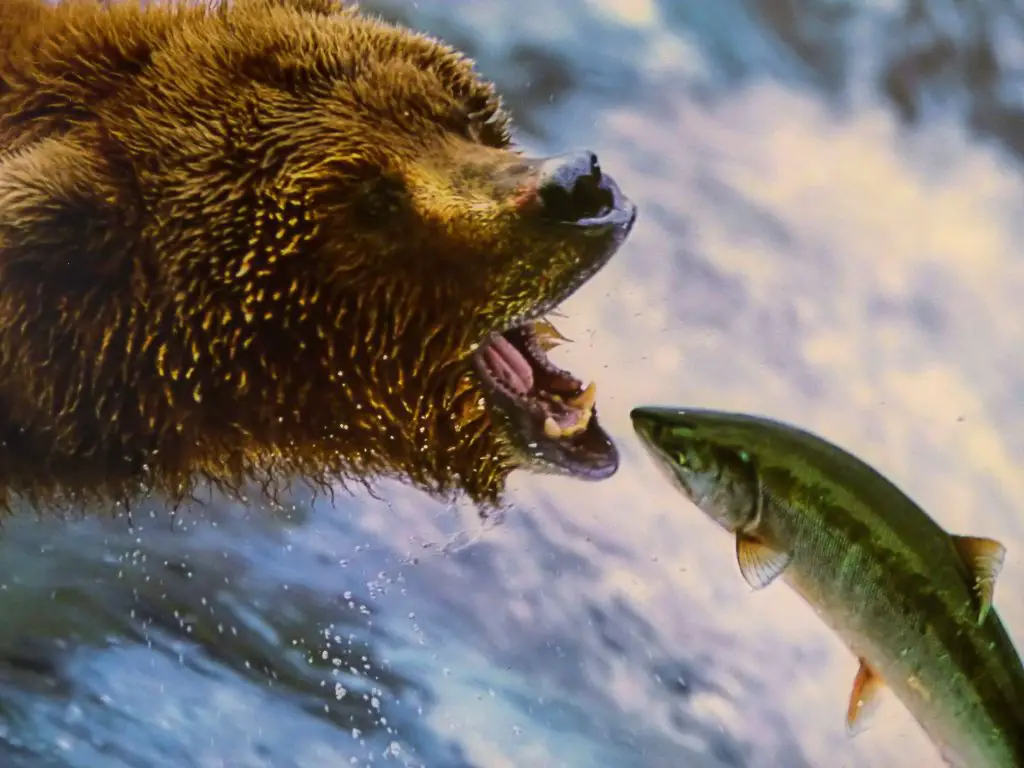
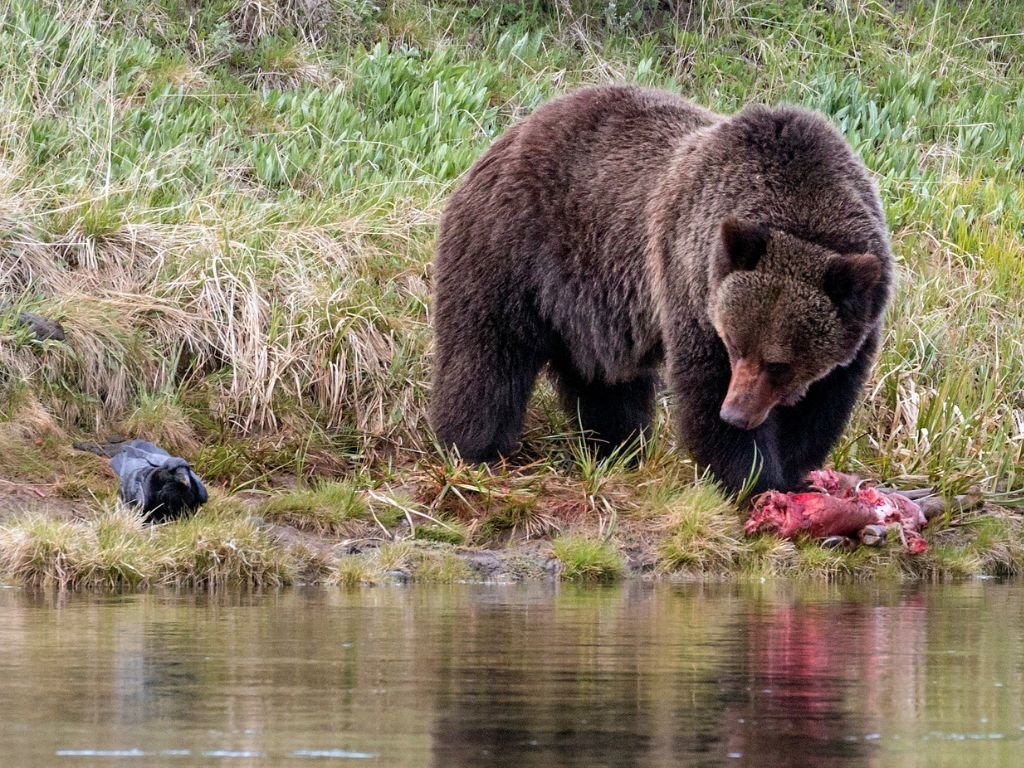
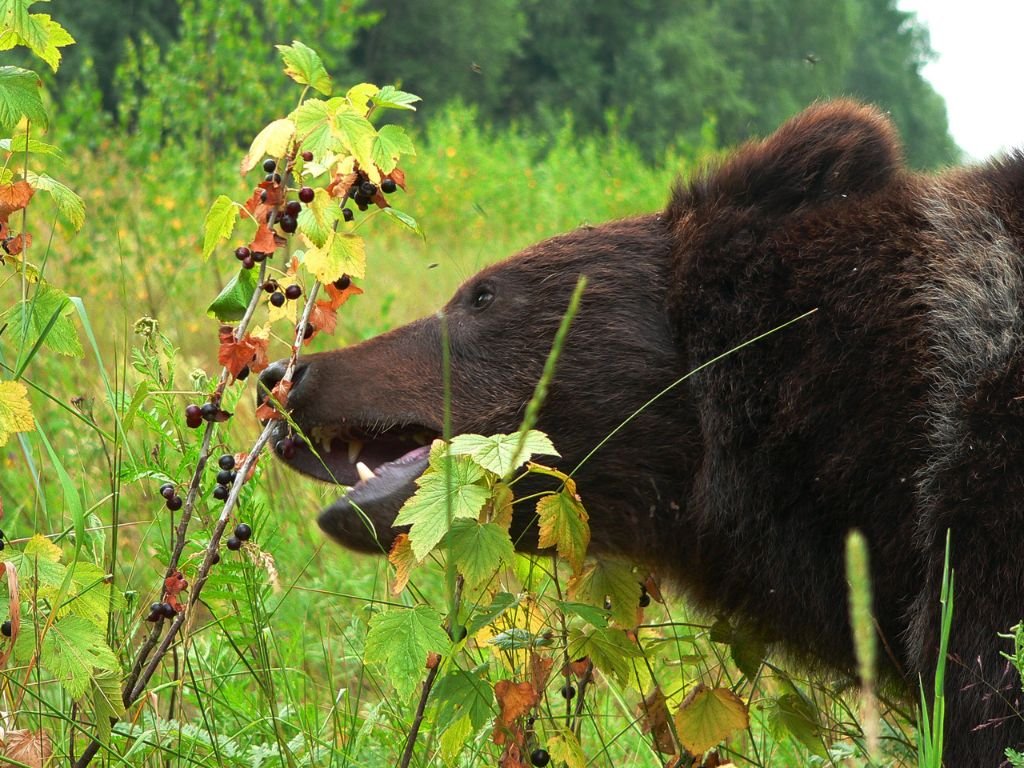
Grizzly bears eat almost anything: grasses, roots, berries, pine nuts, insects, fish and meat. The US Fish and Wildlife Service calls them highly adaptable omnivores. What a grizzly eats depends on the season and where it lives. Yellowstone bears feast on moths and pine nuts, while coastal Alaskan bears fill up on salmon.
What do grizzly bears eat in the wild?
A grizzly’s menu changes through the year. The National Park Service tracks what Yellowstone grizzlies eat season by season. The table below sums it up, with coastal Alaska added for contrast.
| Season | Main foods in Yellowstone | Coastal Alaska |
|---|---|---|
| Spring (March–May) | Elk and bison that died in winter, elk calves, grasses, sedges, dandelions, clover, pine seeds from squirrel stores | Sedges, grasses and roots |
| Summer (June–August) | Army cutworm moths, cutthroat trout, thistle, roots, berries, false truffles | Salmon, plus berries and plants |
| Autumn (September–October) | Whitebark pine nuts in good years, roots, berries, bull elk during the rut | Salmon and berries |
| Winter | Nothing: bears are in their dens | Nothing, though some Kodiak males stay active |
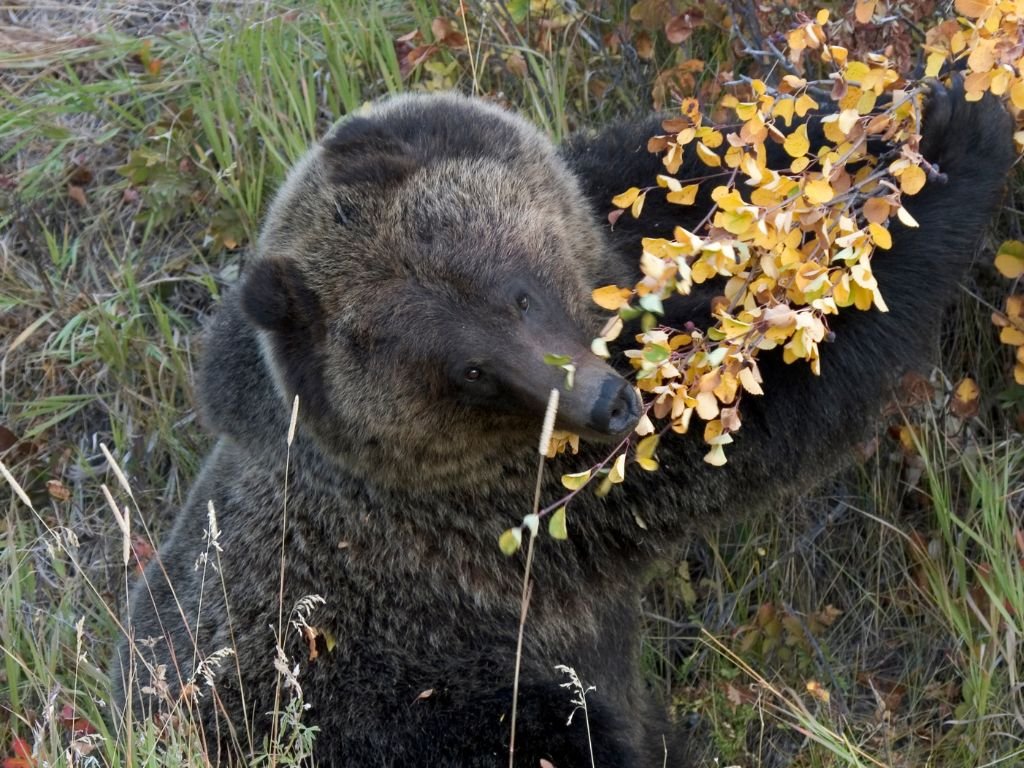
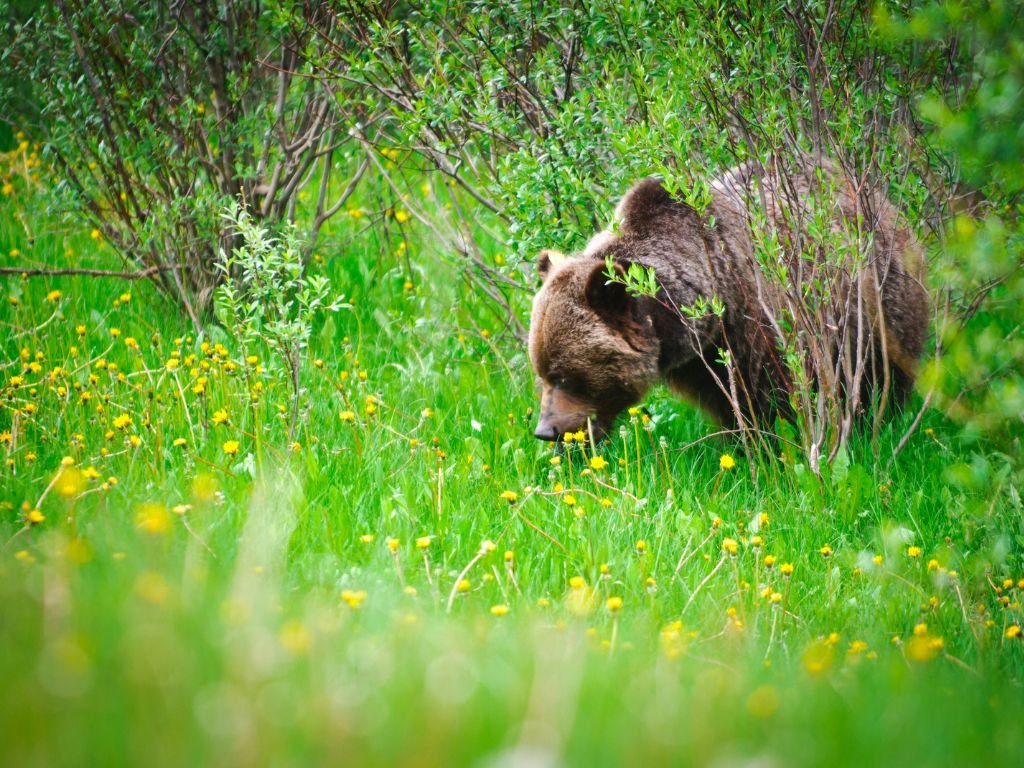
Plants and fungi make up a large share. Yellowstone grizzlies dig roots of biscuit root, yampa and bistort, graze clover and dandelion, and eat berries in late summer. Meat comes mostly as animals that died in winter, which the bears find by smell. The Alaska Department of Fish and Game says a bear’s sense of smell is better than a dog’s.
Do grizzly bears eat moths?
Yes, by the tens of thousands. Each summer, army cutworm moths gather under loose rocks on mountain slopes at about 3,200 m (10,500 ft). Grizzlies climb up, flip the rocks and lick up the moths. A bear can eat 40,000 to 60,000 moths in one day, says the National Park Service.
Tiny moths are worth the climb. At 8 kilocalories per gram, they are the richest food known for Yellowstone grizzlies. A month of moth feeding can supply about half of a bear’s calories for the whole year. There is so much food that grizzlies at moth sites often put up with each other, feeding in groups of a dozen or more.
Do grizzly bears eat fish?
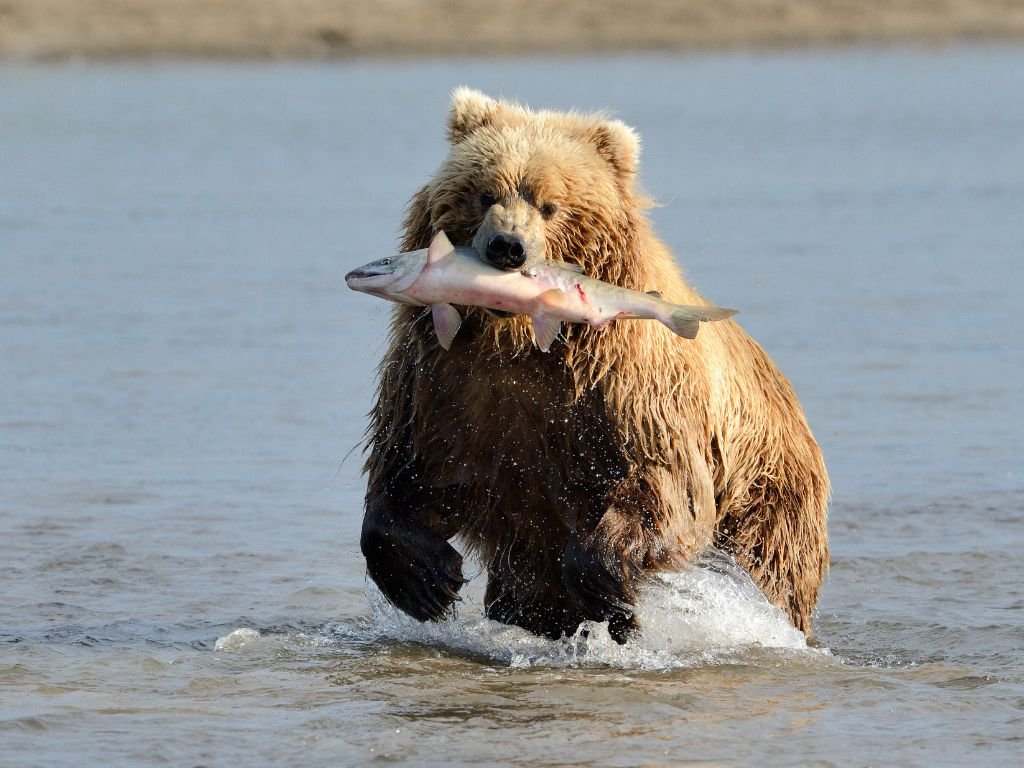
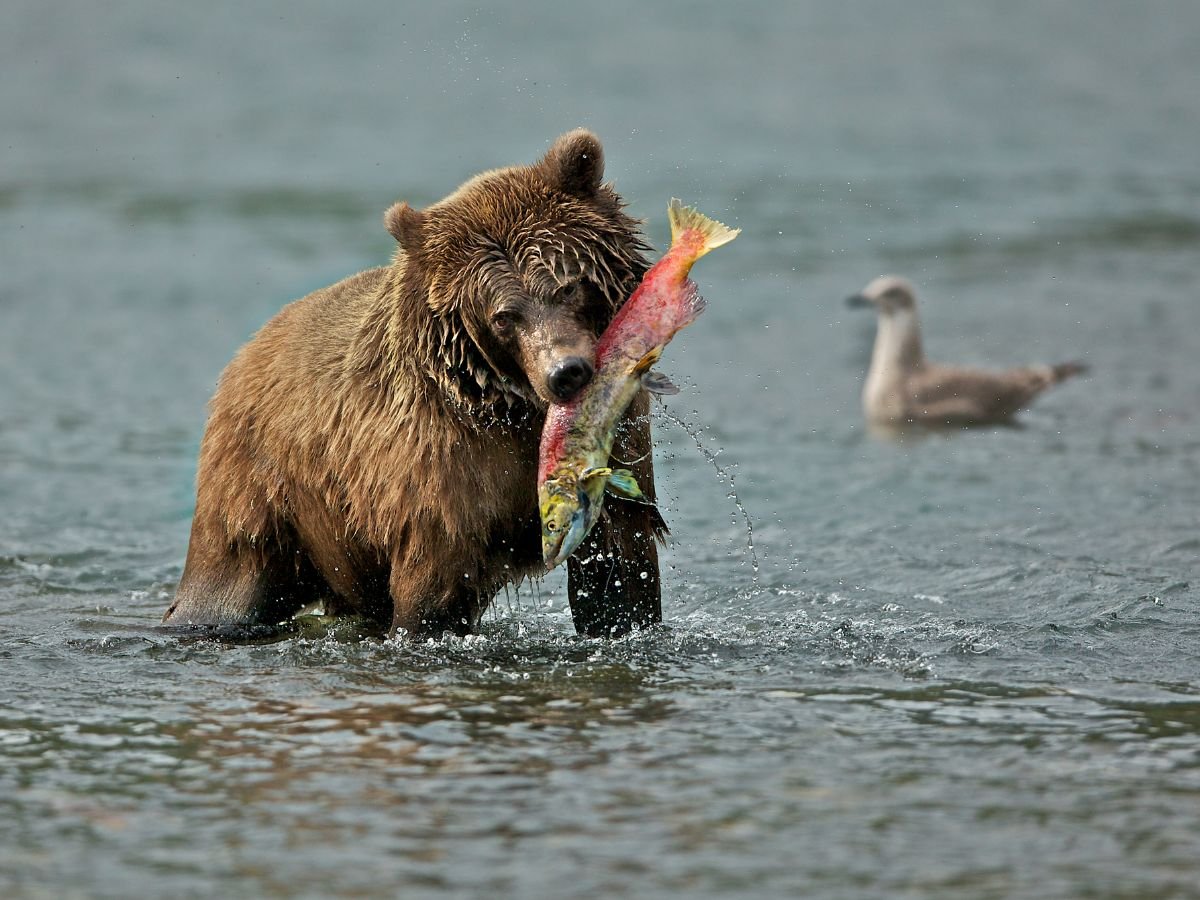
Yes, where fish are easy to catch. In coastal Alaska, salmon are the big prize. Some bears in Katmai National Park eat dozens of sockeye salmon a day, each packing about 4,000 calories, reports the US Department of the Interior. One bear was seen eating 40 salmon in a single sitting.
When fish are plentiful, bears get picky. They eat the fattiest parts first, the brain, skin and eggs, and leave the rest. Around Yellowstone Lake, grizzlies catch spawning cutthroat trout in summer. Inland grizzlies far from salmon rivers eat far more plants, which is one reason they are smaller than coastal bears. See our brown bear diet page for Europe and Asia.
How do grizzly bears hunt?
Grizzlies are mostly foragers, but they do hunt. In Yellowstone they catch newborn elk calves in spring and early summer, and sometimes kill bull elk worn out by the autumn rut, says the NPS. The Alaska Department of Fish and Game says the shoulder hump helps grizzlies make bursts of speed to catch moose or caribou, and they can run at up to 64 km/h (40 mph).
Long claws help with smaller prey. Grizzlies dig ground squirrels and pocket gophers out of their burrows, and raid the pine seed stores that red squirrels hide. Our page on how strong a grizzly bear is explains the muscles behind all that digging. Elk are a key food; learn what elk eat in turn.
How much do grizzly bears eat a day?
It depends on the food. Yellowstone grizzlies eat up to 14 kg (30 lb) of food a day, while Alaskan brown bears can eat 36 to 41 kg (80 to 90 lb) a day in summer and autumn, says the National Park Service. Salmon and moths are rich, so coastal bears can pack in far more energy.
All that eating has a purpose. Bears weigh the least when they leave their dens in spring and can gain more than 50% of their weight by late autumn, says the Alaska Department of Fish and Game. Katmai bears can gain up to 1.8 kg (4 lb) in a single day. The fat then keeps them alive through five to eight months in the den. See how much a grizzly bear weighs for the numbers.
Do grizzly bears eat human food?
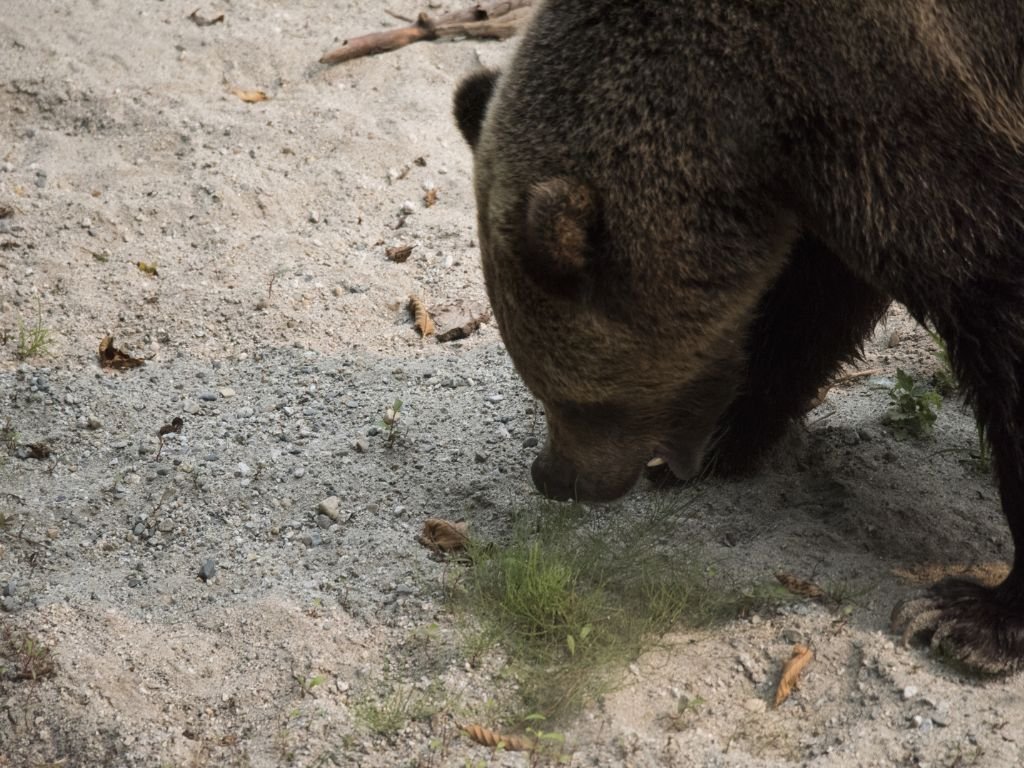
They will if they get the chance, and that is a problem. The FWS lists human-related foods and garbage among the things grizzlies eat. A bear that learns to raid bins or campsites can become dangerous and may have to be removed.
The National Park Service says never to let bears get human food. In grizzly country, store food in bear-resistant containers, keep a clean camp, hike in groups and carry bear spray. Bears can run as fast as a racehorse, so never run from one. Where grizzlies live, and why food matters there, is covered in where grizzly bears live.
Frequently asked questions
Are grizzly bears carnivores or omnivores?
Omnivores. Grizzlies belong to the Carnivora, the order of meat-eating mammals, but they eat plants, fungi, insects, fish and meat. The US Fish and Wildlife Service describes them as highly adaptable omnivores that will eat almost any food available, from roots and grass to elk.
What is a grizzly bear's favourite food?
It depends where the bear lives. In coastal Alaska, salmon are the top food, and bears pick out the fattiest parts. In Yellowstone, the richest foods are army cutworm moths, whitebark pine nuts, cutthroat trout and elk, according to the National Park Service.
What do grizzly bear cubs eat?
Cubs are born in the den in January or February and live on their mother's milk at first. After they leave the den in spring, they follow their mother and learn which plants, insects and animals to eat by watching her. Cubs usually stay with their mother for two or more years.
Do grizzly bears eat people?
People are not grizzly food, and attacks are rare. Most grizzlies avoid people. Problems start when bears get human food and lose their fear. The National Park Service advises hiking in groups, storing food safely, carrying bear spray and never running from a bear.
Sources
- National Park Service. Food habits of bears in the Yellowstone ecosystem.
- National Park Service, Yellowstone. Yellowstone shorts: grizzly bears and army cutworm moths.
- National Park Service. Brown bears.
- US Fish and Wildlife Service. Grizzly bear (Ursus arctos horribilis).
- Alaska Department of Fish and Game. Brown bear: Wildlife Notebook Series.
- Alaska Department of Fish and Game. Brown bear species profile.
- US Department of the Interior. Everything you want to know about Katmai National Park's fat bears.
- National Park Service. Staying safe around bears.
Sources checked 15 September 2026.
Keep the conversation curious