
A grizzly bear is strong enough to flip rocks all day and kill elk calves, but nobody has measured its lift or bite. The best numbers are indirect: grizzlies sprint at up to 64 km/h (40 mph), says the Alaska Department of Fish and Game, and bear-proof bins must survive 60 minutes of grizzly attack.
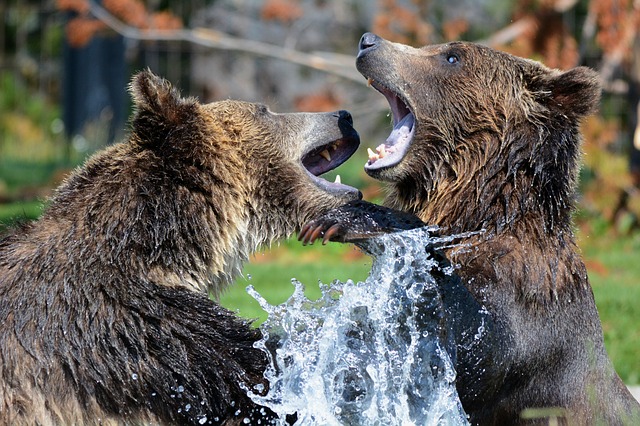
Where does a grizzly bear’s strength come from?
Look for the hump. A grizzly has a big mound of muscle over its shoulders. The Alaska Department of Fish and Game says the hump and the bear’s shape are adaptations for digging and for the bursts of speed needed to catch moose or caribou. Those shoulder muscles power the front legs like a digger’s arm.
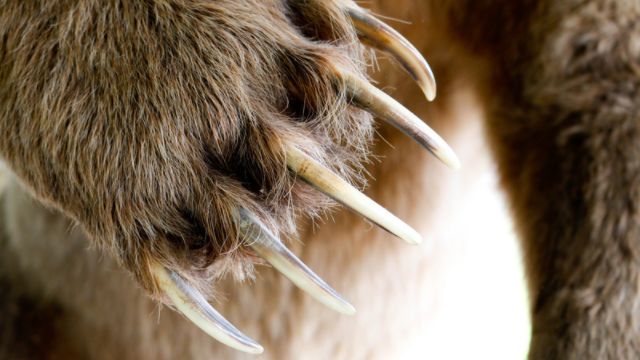
Then look at the claws. A brown bear’s front claws are 5 to 10 cm (2 to 4 in) long, according to San Diego Zoo Wildlife Alliance. That is about as long as your finger. Grizzlies use them like garden forks to rip up roots, tear open logs and dig ground squirrels out of their burrows.
Size matters too. In the lower 48 US states, adult males average 180 to 270 kg (400 to 600 lb) and females 110 to 160 kg (250 to 350 lb), says the US Fish and Wildlife Service. Coastal Alaskan brown bears grow much bigger, up to 680 kg (1,500 lb). Our page on how much a grizzly bear weighs has the full figures.
| Measure | Figure | Measured or estimated? | Source |
|---|---|---|---|
| Adult male weight (lower 48 US) | 180–270 kg (400–600 lb) on average | Measured | US Fish and Wildlife Service |
| Adult female weight (lower 48 US) | 110–160 kg (250–350 lb) on average | Measured | US Fish and Wildlife Service |
| Largest coastal Alaskan males | Up to 680 kg (1,500 lb) | Measured | Alaska Dept. of Fish and Game |
| Front claw length | 5–10 cm (2–4 in) | Measured | San Diego Zoo Wildlife Alliance |
| Top sprint speed | Up to 64 km/h (40 mph) in short bursts | Estimated | Alaska Dept. of Fish and Game |
| Moths eaten by flipping rocks | 40,000–60,000 in one day | Estimated from watching bears | National Park Service, Yellowstone |
| Bear-resistant container test | Must survive 60 minutes with captive grizzlies | Tested | Interagency Grizzly Bear Committee |
| Bite force | Never measured in a grizzly | Unknown | See the bite section below |
| How much it can lift | Never measured | Unknown | No reliable study |
How strong is a grizzly bear compared with a human?
Much stronger, but you will not find an honest number. You may read online that a grizzly is “as strong as six men” or can lift 500 kg. We could not find any study behind those claims. No one can ask a bear to do a bench press, so treat such figures as guesses.
What we can compare is size and what bears do. An average lower-48 male grizzly weighs as much as three or four grown men. It can dig a den into a hillside, and in Yellowstone it kills elk calves in spring and sometimes bull elk in autumn, reports the National Park Service. A person could do none of that with bare hands.
Grizzlies also turn over rocks all day in summer. In the mountains around Yellowstone, bears climb to rock slopes at about 3,200 m (10,500 ft) to eat army cutworm moths hiding under the stones. By moving rocks and licking up the moths, a bear can eat 40,000 to 60,000 moths in a day, says the National Park Service. That is hours of lifting and flipping without a break.
How hard does a grizzly bear bite?
Nobody knows exactly. Numbers like “1,160 psi” appear on many websites, but they do not come from a grizzly biting a sensor. Most published bear bite forces are worked out from skull measurements, and different studies give very different answers for the same species.
Real measurements exist only for smaller bears. In a 2023 study, zoo bears bit a padded sensor to get a food reward. Two sun bears bit with up to 1,860 and 1,955 newtons, and two spectacled bears with up to 2,141 and 2,197 newtons, report van der Meijden and colleagues. Those bears weigh far less than a grizzly, so a grizzly’s bite is very likely stronger. For other animals, see which animal has the strongest bite.
Can a grizzly bear break into a locked bin?
Often, yes, which is why bear-resistant bins exist. To earn a “bear-resistant” label from the Interagency Grizzly Bear Committee, a bin, cooler or food box is tested with captive grizzlies. Tests happen at the Grizzly and Wolf Discovery Center in West Yellowstone, Montana, and at Washington State University.
Staff fill the container with tempting food and put it in the bear enclosure. The Grizzly and Wolf Discovery Center says the bears then try to get in for 60 minutes. If they cannot open it or reach the food, it passes. Many products fail, which tells you how much biting, clawing and pounding a grizzly can do.
Is a grizzly stronger than a polar bear or a gorilla?
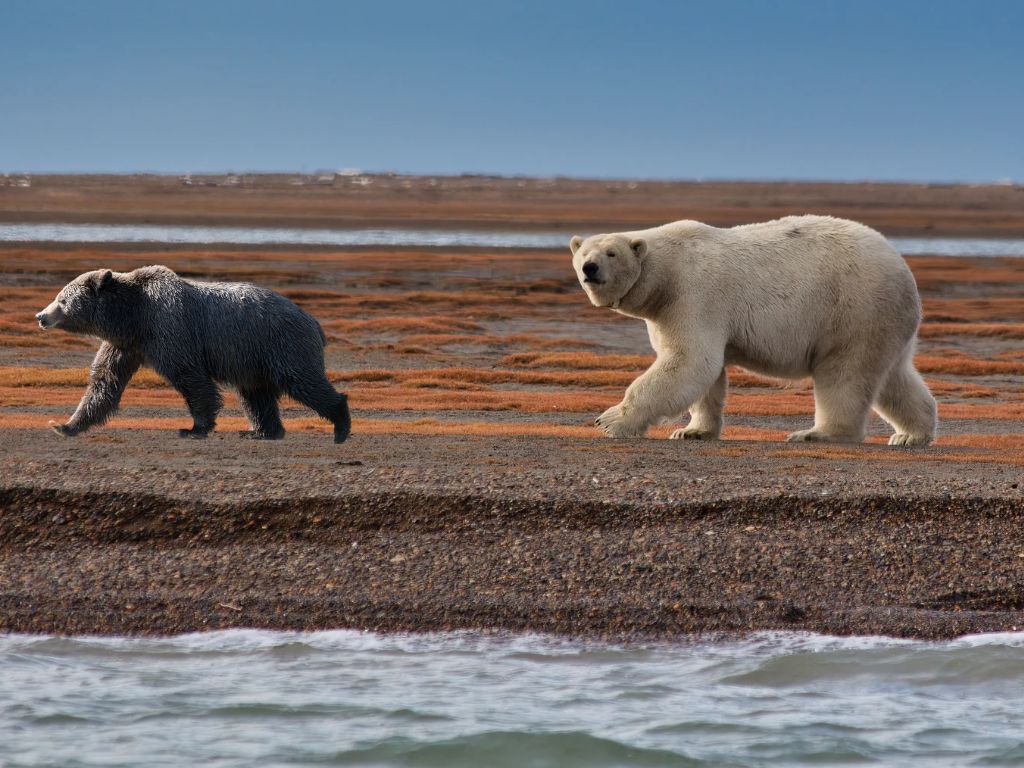
Nobody has tested them side by side. Polar bears are usually heavier: our page on polar bear vs grizzly bear size compares them, and how strong is a polar bear covers polar bear power. Heavier animals usually have more muscle, but weight is only one clue.
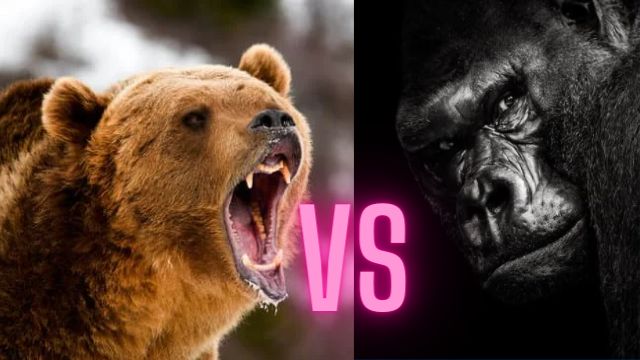
Gorillas and grizzlies never meet, because gorillas live in African forests and grizzlies in North America. A male grizzly is much heavier than a gorilla. Read how strong gorillas are for their side of the story, and tiger vs grizzly bear for another match-up people like to imagine.
How can you stay safe around grizzly bears?
Grizzly strength is a good reason for respect, not panic. Most grizzlies avoid people. The National Park Service advises hiking in groups, talking calmly if you see a bear, and never running, because bears can run as fast as a racehorse. Carry bear spray, which is proven to stop aggressive bears.
If a grizzly attacks, the NPS says to lie flat on your stomach with your hands clasped behind your neck. Keep food and rubbish away from bears, since that is why bear-resistant bins exist. Learn more in where grizzly bears live and grizzly bear adaptations.
Frequently asked questions
Can a grizzly bear kill a moose?
Yes. The Alaska Department of Fish and Game says the grizzly's shoulder hump helps it make the bursts of speed needed to catch moose or caribou. Calves are the usual targets. In Yellowstone, grizzlies kill elk calves in spring and sometimes adult bull elk during the autumn rut.
How strong is a grizzly bear cub?
Cubs are small at first. Grizzly cubs are born in the den in January or February, and by June they may weigh up to 7 kg (15 lb), according to the Alaska Department of Fish and Game. Old claims that a young grizzly is stronger than any athlete have no study behind them.
What is the strongest part of a grizzly bear?
Its front half. The shoulder hump is a mass of muscle that powers the front legs for digging, and the front claws are 5 to 10 cm (2 to 4 in) long. Together they let a grizzly tear up the ground, flip rocks and dig dens into hillsides.
How much weight can a grizzly bear lift?
No one knows. Figures like 500 kg appear online, but we found no study that measured a grizzly lifting anything. What is known is that grizzlies spend whole summer days flipping rocks to eat moths, and can tear apart containers that are not built to resist bears.
Sources
- Alaska Department of Fish and Game. Brown bear: Wildlife Notebook Series.
- US Fish and Wildlife Service. Grizzly bear (Ursus arctos horribilis).
- San Diego Zoo Wildlife Alliance Library. Brown bear fact sheet: physical characteristics.
- National Park Service, Yellowstone. Yellowstone shorts: grizzly bears and army cutworm moths.
- National Park Service. Food habits of bears in the Yellowstone ecosystem.
- Interagency Grizzly Bear Committee. Bear resistant products.
- Grizzly and Wolf Discovery Center. Product testing.
- Journal of Experimental Biology (2023). Measurement of voluntary bite forces in large carnivores using a semi-automated reward-driven system (van der Meijden et al., doi:10.1242/jeb.245255).
- National Park Service. Staying safe around bears.
Sources checked 15 September 2026.
That makes no sense just because one thing is taller and weighs more but can only lift 200kg vs a another living thing that is shorter and weighs less but can lift 300kg does it make the taller heavier living thing wrong max amount of weight they can lift makes one of them stronger than the other get what I said is it clear this is for whoever wrote that gorilla versus grizzly bear or vice versa strength against against each other that made no sense the bite force stronger stronger Just because big Grizzly is heavier and taller does not make it stronger I’m a marine biologist I don’t even study land animals and I know that much
IT seems that when a bear charges a human, they kill the human quickly.wikipedia has a listing of maybe a hundred fatal attacks on humans . Can going for a walk in the woods be like russian roulette. Cyclists, hikers, hunters,fishermenonrivers,campers,,outdoor hobbyists all need better answers.
most bear articles, say bear are omnivores, at the same time they say bears travel hundreds of miles to find food,referring to black bears, living mostly in boreal forests,Why travel far for food if theyare predominantly omnivores, there is grass everywhere..if we post comments there is now way to follow up. It seems emails are not acknowledged.
Hi,I believe a large grizzly bear is more like 4-7 times stronger than a fit man.A tiger or lion could only defeat a grizzly if amushed from behind,even that is ify.The kodiak,s are even stronger,polar bear as well,Thanks!