
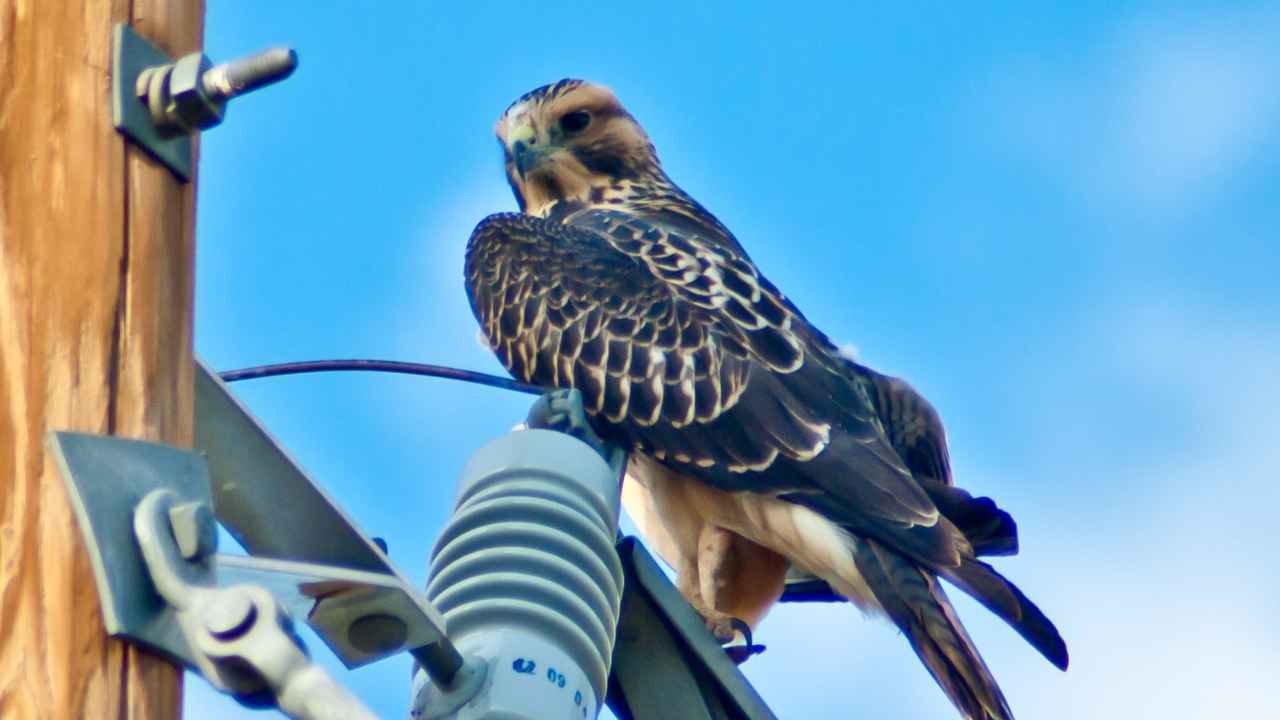
A shadow sweeps across a backyard. The hens scatter and someone shouts “chicken hawk!” But which bird was it?
There is no single bird called a chicken hawk. It is an old, informal name, not a species. In North America people use it mostly for three hawks: the Cooper’s hawk, the sharp-shinned hawk and the red-tailed hawk. University of Maryland Extension lists “chicken hawk” as one of the Cooper’s hawk’s nicknames. The three look quite different once you know what to check.
Key takeaways
- Not a species: “chicken hawk” is a nickname for several hawks, mainly Cooper’s, sharp-shinned and red-tailed.
- Quick ID: red-tailed hawks are big and chunky with a reddish tail; Cooper’s and sharp-shinned hawks are slimmer, long-tailed bird hunters.
- Chickens are rare prey: Cooper’s and sharp-shinned hawks eat mostly wild birds, and red-tailed hawks eat mostly rodents and rabbits.
- Protected by law: in the United States all birds of prey are protected, so the answer to a hawk problem is a covered run.
What is a chicken hawk?
A chicken hawk is any hawk that people blame for taking poultry. It is not a scientific name, and no bird guide lists a species with that name. University of Maryland Extension notes that the Cooper’s hawk has several aliases, including quail hawk, swift hawk and chicken hawk. In many places people also give the name to the red-tailed hawk and the smaller sharp-shinned hawk.
Because the name covers more than one bird, a better question is: which hawk am I looking at? The table below is the fastest way to find out.
| Feature | Sharp-shinned hawk | Cooper’s hawk | Red-tailed hawk |
|---|---|---|---|
| Length | 25–36 cm (10–14 in) | Males 37–39 cm (15–16 in); females 42–45 cm (17–18 in) | Males 43–56 cm (17–22 in); females 48–66 cm (19–26 in) |
| Wingspan | About 53 cm (21 in) | 62–90 cm (2 ft to 2 ft 11 in) | About 114–132 cm (45–52 in) |
| Shape | Small head, thin legs, long tail with a squared-off tip | Bigger head, thicker legs, longer rounded tail with a wider white tip | Broad wings, short wide tail, heavy body |
| Adult colours | Blue-grey above, pale reddish below | Blue-grey above, pale reddish below | Brown above, often a pale chest with a dark band of streaks across the belly; tail reddish above |
| Main food | Small birds, sparrow to robin size | Medium birds such as robins, jays, starlings and doves | Mammals such as voles, rats, rabbits and ground squirrels |
Sizes and diets from the Audubon Guide to North American Birds. Females are bigger than males in all three species.
What does a Cooper’s hawk look like?
A Cooper’s hawk is a medium-sized, slim hawk with a long tail. Adults are blue-grey above and pale reddish below, says Audubon. Young birds are brown above with streaks below. The tail tip often shows a wide white band, and the head looks large for the body.
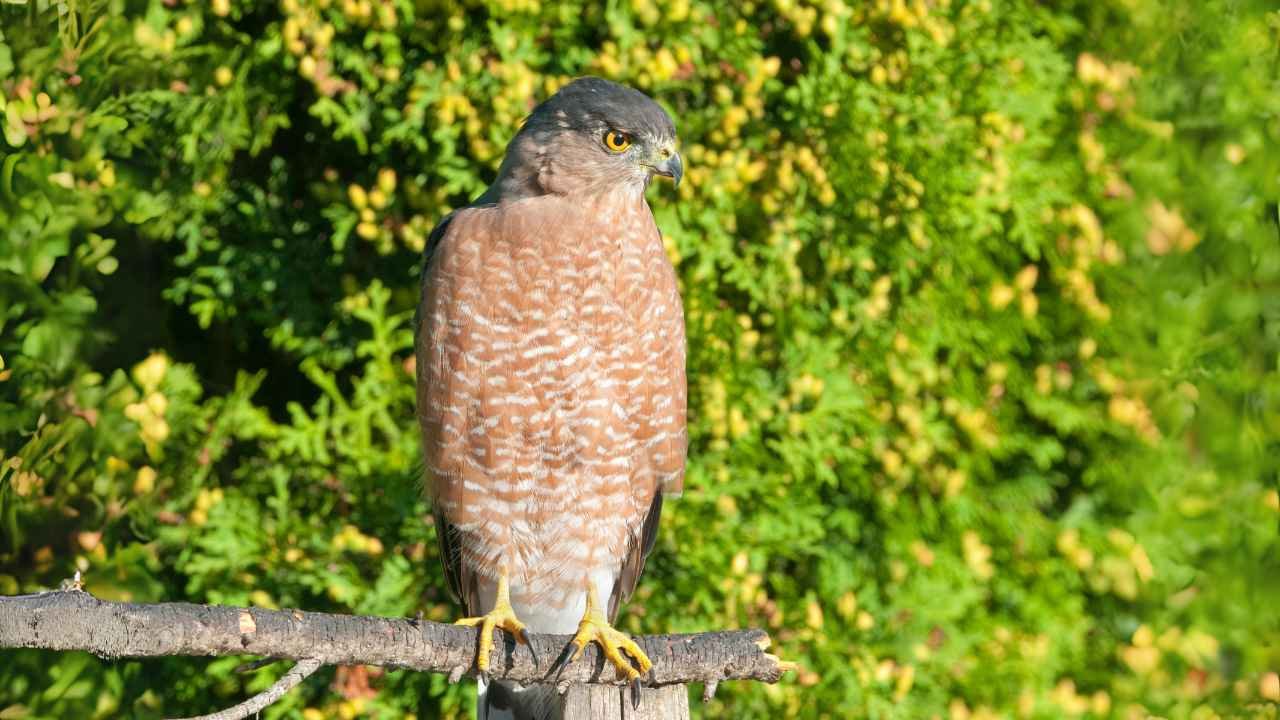
This is the bird most often called a chicken hawk. An adult male is about 38 cm (15 in) long and weighs about 230 g (8 oz), and females can be up to 30% larger, according to University of Maryland Extension. In flight its long neck and long tail make a shape some birders call a “flying cross”.
How do you tell a Cooper’s hawk from a sharp-shinned hawk?
Look at the head, the tail tip and the legs. A sharp-shinned hawk has a small head, thin legs and a tail that often looks squared off at the end. A Cooper’s hawk has a bigger head, thicker legs and a rounder tail with a wider white tip. Size helps too, but not always, warns Audubon.
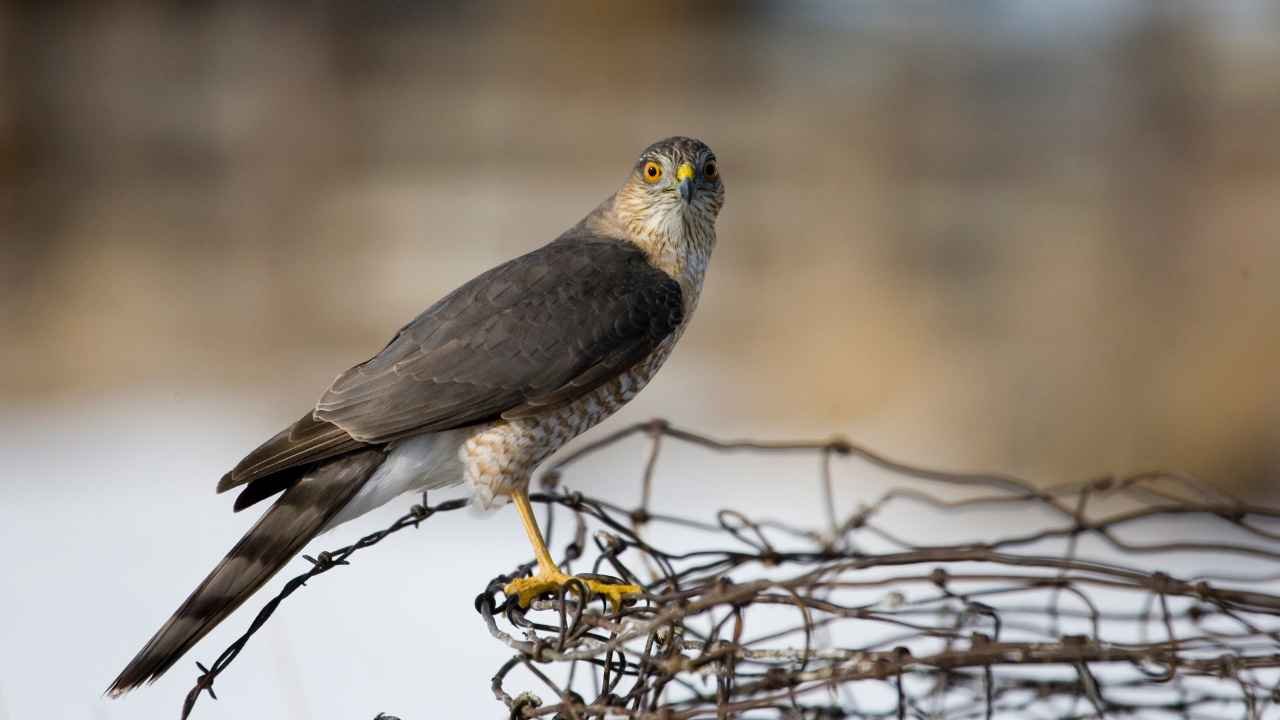
Size is a trap because the females are bigger than the males. A female sharp-shinned hawk can be nearly as large as a male Cooper’s hawk. So a “small” hawk could be either. Young sharp-shinned hawks also tend to have blurrier streaks on the chest than young Cooper’s hawks.
Picture it: how long is each hawk?
Typical body length in cm, beak to tail tip. Bars drawn to scale.
Sharp-shinned hawk: 25–36 (about the length of a school ruler)
Cooper’s hawk: 37–45
Red-tailed hawk: 43–66
Source: Audubon Guide to North American Birds. Each bar shows the top of the range.
What does a red-tailed hawk look like?
A red-tailed hawk is a big, broad-winged hawk with a short, wide tail. Adults usually have a reddish tail above that looks whitish from below. In the eastern United States most have a white chest and a dark “belly band” of streaks, says Audubon. Western birds vary from pale to almost black.
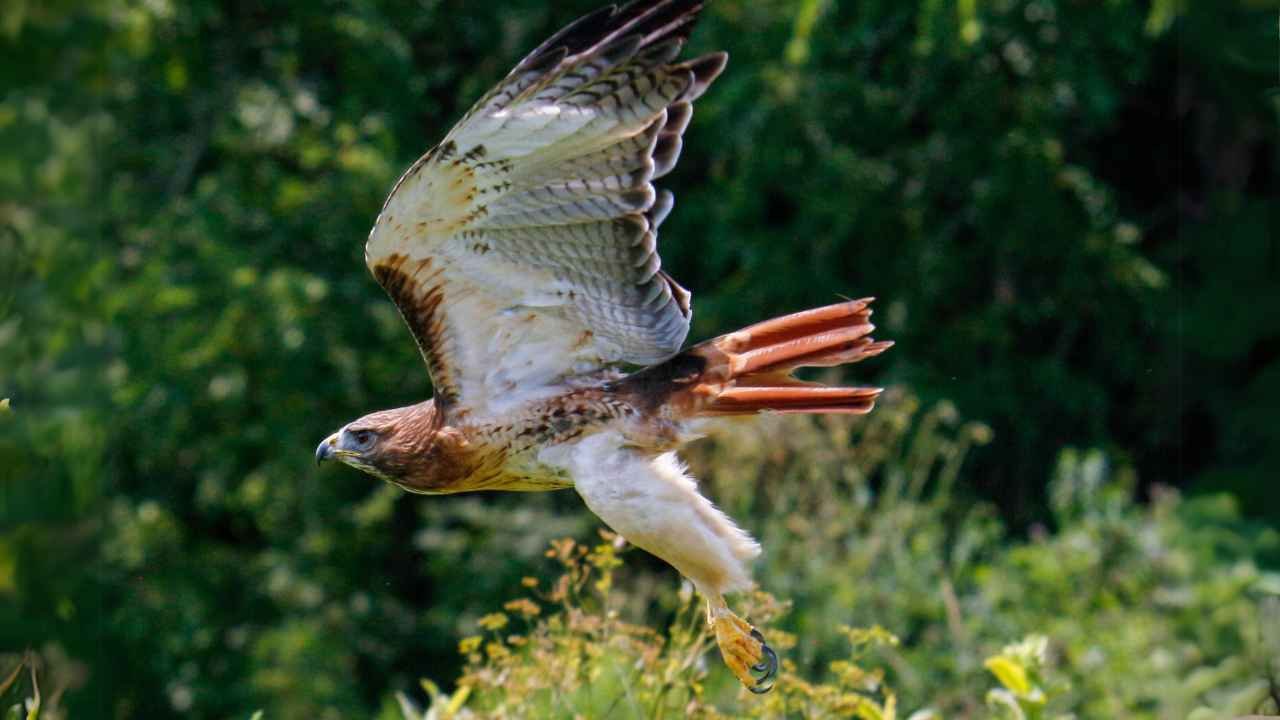
It is also the heaviest of the three. Females weigh about 0.9–1.5 kg (32–52 oz) and males about 0.7–1.3 kg (24–46 oz). You often see red-tailed hawks in open country, on roadsides and on prairies, where they hunt from a perch.
Do chicken hawks really eat chickens?
Sometimes, but chickens are not their main food. Cooper’s hawks eat mostly medium-sized wild birds, and sharp-shinned hawks eat mostly small birds. Red-tailed hawks eat mainly mammals such as voles, rats and rabbits, and take birds “up to the size of a pheasant”, says Audubon. A loose hen is within that size range.
Connecticut’s wildlife agency says larger hawks will attack chickens from above in daylight, and great horned owls take them at night (CT DEEP). Its advice is simple: good fencing, a pen covered with wire or mesh, coops away from trees that hawks can perch in, and low evergreen cover where free-range birds can hide.
Are chicken hawks protected?
Yes. All birds of prey in the United States are protected as migratory birds under the Migratory Bird Treaty Act, says Connecticut DEEP. Killing one is a crime, and permits to kill hawks that take backyard chickens are not issued. Protecting the flock with a covered run is the legal and lasting fix.
Why do hawks matter to the ecosystem?
These hawks are predators in the middle of busy food webs. Red-tailed hawks eat large numbers of voles, rats and ground squirrels, so they help keep rodents in check on farms and roadsides. Cooper’s and sharp-shinned hawks hunt songbirds, and University of Maryland Extension notes that some Cooper’s hawks have learned that suburbs with bird feeders are good hunting grounds. Hawks are also prey for bigger hunters; see which animals eat hawks.
Myths about chicken hawks
Myth: The chicken hawk is a type of bird.
Fact: It is a nickname shared by several hawks, mainly Cooper’s, sharp-shinned and red-tailed. Why people believe it: the name is common in rural speech and in cartoons.
Myth: Chicken hawks live mostly on chickens.
Fact: Their main foods are wild birds (Cooper’s and sharp-shinned) or rodents and rabbits (red-tailed), says Audubon.
Myth: You can shoot a hawk that takes your chickens.
Fact: In the US all birds of prey are federally protected, and permits to kill them over backyard chickens are not issued, says Connecticut DEEP.
Test yourself
1. Is “chicken hawk” a real species?
No. It is a nickname for several hawks, mainly Cooper’s, sharp-shinned and red-tailed.
2. You see a slim hawk with a long tail that has a squared-off tip and a small head. Which is it most likely to be?
A sharp-shinned hawk. A Cooper’s hawk has a bigger head and a more rounded tail.
3. What is the main food of the red-tailed hawk?
Mammals such as voles, rats, rabbits and ground squirrels.
Where to next?
➡️ Go wider: explore our animal guides⬆️ Go deeper: which animals eat hawks🔀 Go sideways: how big is the golden eagle?
Frequently asked questions
What is the real name of a chicken hawk?
There isn’t one, because “chicken hawk” is a nickname rather than a species. It usually means a Cooper’s hawk (Accipiter cooperii), a sharp-shinned hawk (Accipiter striatus) or a red-tailed hawk (Buteo jamaicensis). University of Maryland Extension lists it as one of the Cooper’s hawk’s aliases.
How big is a chicken hawk?
It depends which hawk you mean. A sharp-shinned hawk is 25–36 cm (10–14 in) long, a Cooper’s hawk 37–45 cm (15–18 in), and a red-tailed hawk 43–66 cm (17–26 in), according to Audubon. In all three, females are larger than males.
Can a hawk carry off a chicken?
Larger hawks do attack chickens, usually from above in daylight, and often eat them where they fall, says Connecticut’s wildlife agency. Red-tailed hawks can take birds up to the size of a pheasant. A pen covered with wire or mesh is the best protection.
Are chicken hawks dangerous to people?
No. None of these hawks hunts people. Their prey is birds and small mammals. Like any wild bird, a hawk should be left alone, and injured hawks should be handled only by a licensed wildlife rehabilitator.
Sources
- University of Maryland Extension. Woodland wildlife spotlight: Cooper’s hawk.
- National Audubon Society. Guide to North American Birds: Cooper’s Hawk.
- National Audubon Society. Guide to North American Birds: Sharp-shinned Hawk.
- National Audubon Society. Guide to North American Birds: Red-tailed Hawk.
- Connecticut Department of Energy and Environmental Protection. Conflicts with birds of prey and backyard livestock.
Sources checked 12 October 2026.

is it common to see a lot of them together at one time I just saw at least 12 in my trees