
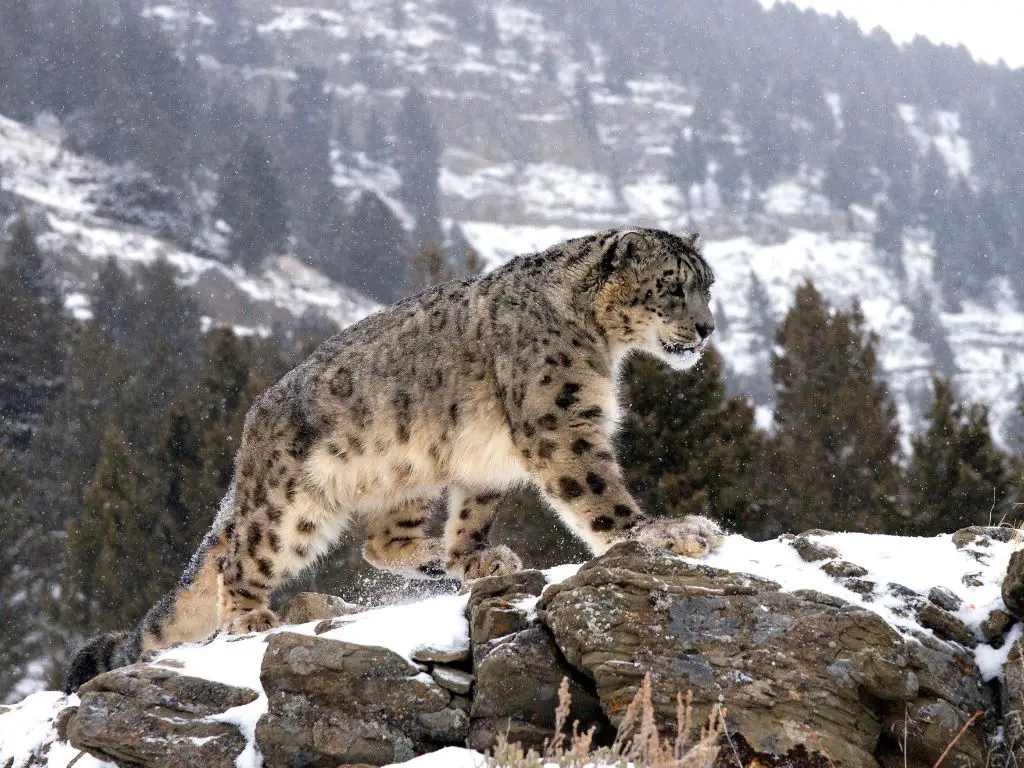
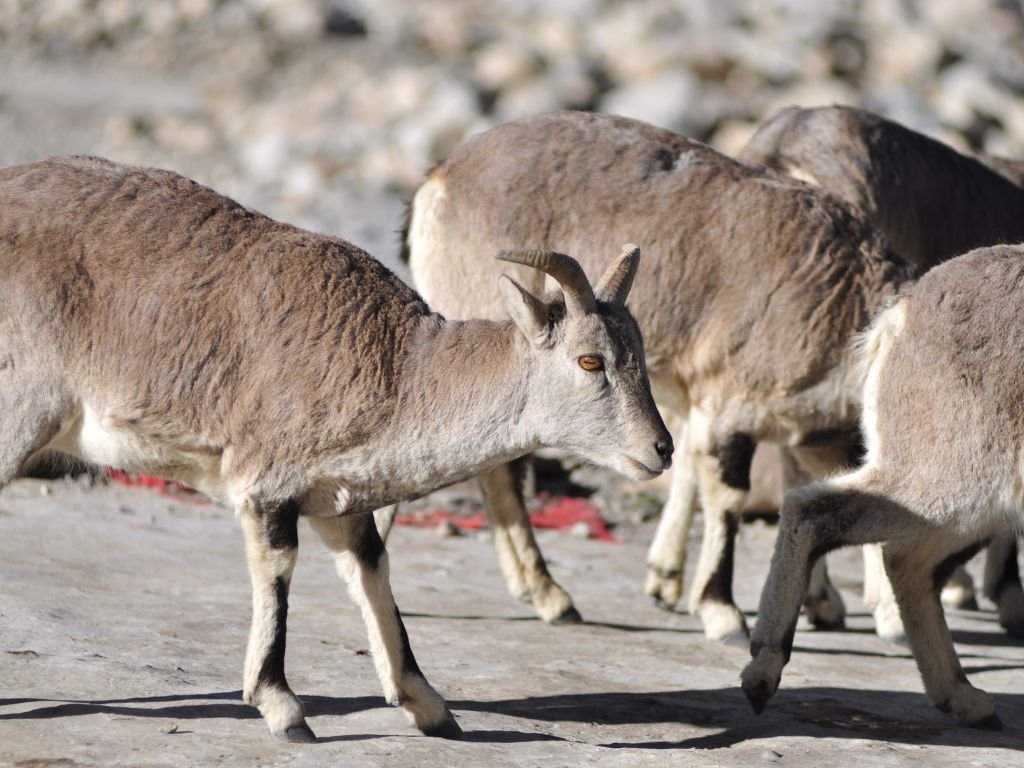
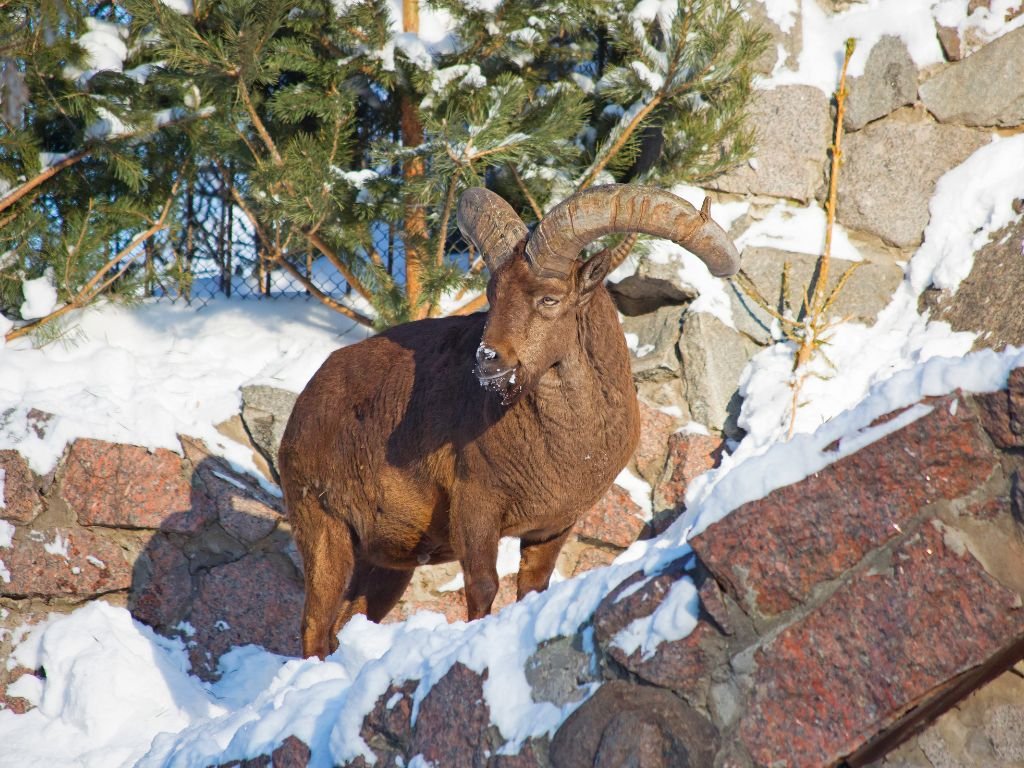
Snow leopards eat mostly wild sheep and goats: blue sheep, Siberian ibex, argali and Himalayan tahr. A lone snow leopard kills a large animal about every 8 days and takes 3 or 4 days to eat it, says the Snow Leopard Trust. Marmots, hares and birds fill the gaps, and livestock is under 8% of the diet.
What do snow leopards eat in the wild?
The best picture comes from a big review by Lyngdoh and colleagues (2014). They pulled together 25 diet studies from across the snow leopard’s range, covering 1,696 droppings (scats). The main prey were Siberian ibex, blue sheep, Himalayan tahr, argali and marmots.
What a snow leopard eats depends on where it lives. The study split the range into zones, and the top prey changed from zone to zone. The table shows the biggest items.
| Prey | Share of the diet where it matters most | Notes |
|---|---|---|
| Blue sheep (bharal) | About 31% in one zone; 14% in another | One of the two most preferred prey |
| Himalayan tahr | About 23% in the same zone as blue sheep | A wild goat of the Himalaya |
| Argali | About 33% in one zone (one study) | The largest wild sheep |
| Siberian ibex | About 18% in that zone | One of the two most preferred prey |
| Marmots | About 47% in parts of central China | Large ground squirrels |
| Livestock | Less than 8% in every zone | Goats, sheep, horses, young yaks |
Snow leopards pick prey of a certain size. The review found they preferred animals of 36 to 76 kg (79 to 168 lb), about the weight of a grown person. Blue sheep and ibex fit that range well.
How big are the animals snow leopards catch?
Often bigger than the snow leopard itself. San Diego Zoo Wildlife Alliance says snow leopards can kill prey two to three times their own weight. The Snow Leopard Trust describes a female of about 35 kg (80 lb) that killed an argali that may have weighed around 160 kg (350 lb).
Snow leopards even seem to go for the biggest animals in a herd. Researchers found they target large, mature males, which can weigh more than twice as much as the cat. Big males may be easier to catch on steep slopes, where a snow leopard’s ambush works best.
How often do snow leopards eat?
A single snow leopard hunts a large animal about every 8 days on average, says the Snow Leopard Trust. Mothers with cubs probably hunt more often, because they are feeding a family. San Diego Zoo gives a longer gap, of 10 to 15 days, which shows how hard these cats are to study.
Snow leopards eat slowly. They may take 3 or 4 days to finish a large prey animal. A blue sheep can keep a snow leopard going for most of a week.
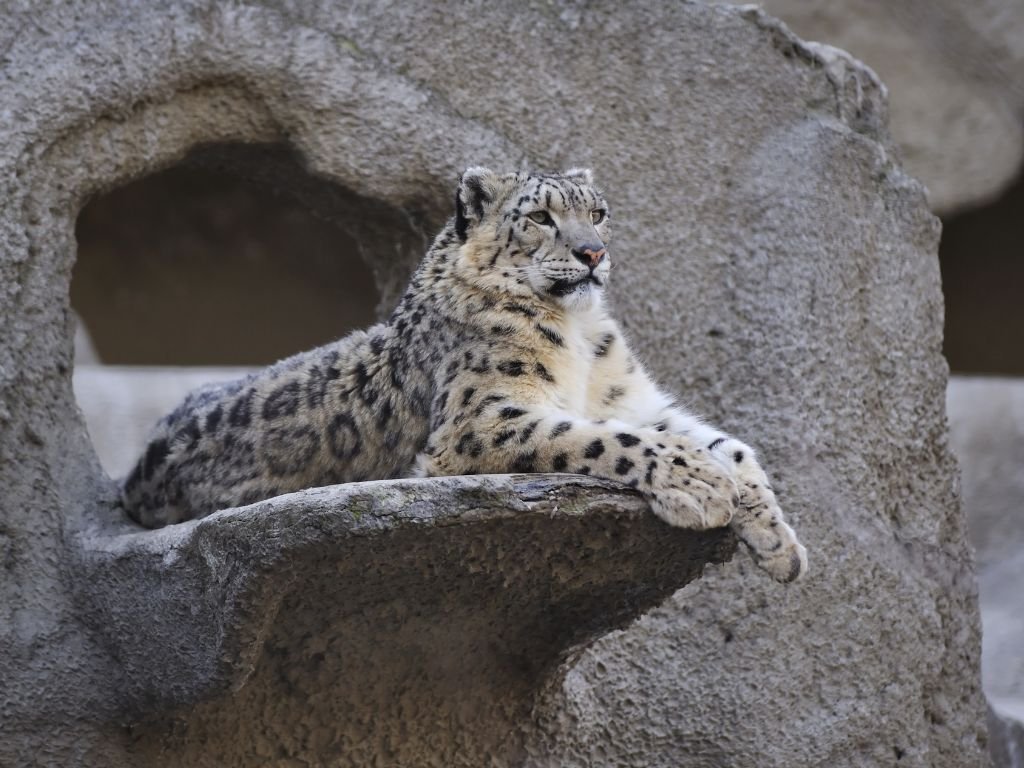
How do snow leopards hunt on steep slopes?
They stalk their prey, then spring and grab it, says San Diego Zoo Wildlife Alliance. A snow leopard can pounce on prey as far as six times its own body length away. Its body is 99 to 130 cm (39 to 51 in) long, so that is a leap of up to about 7 m (23 ft).
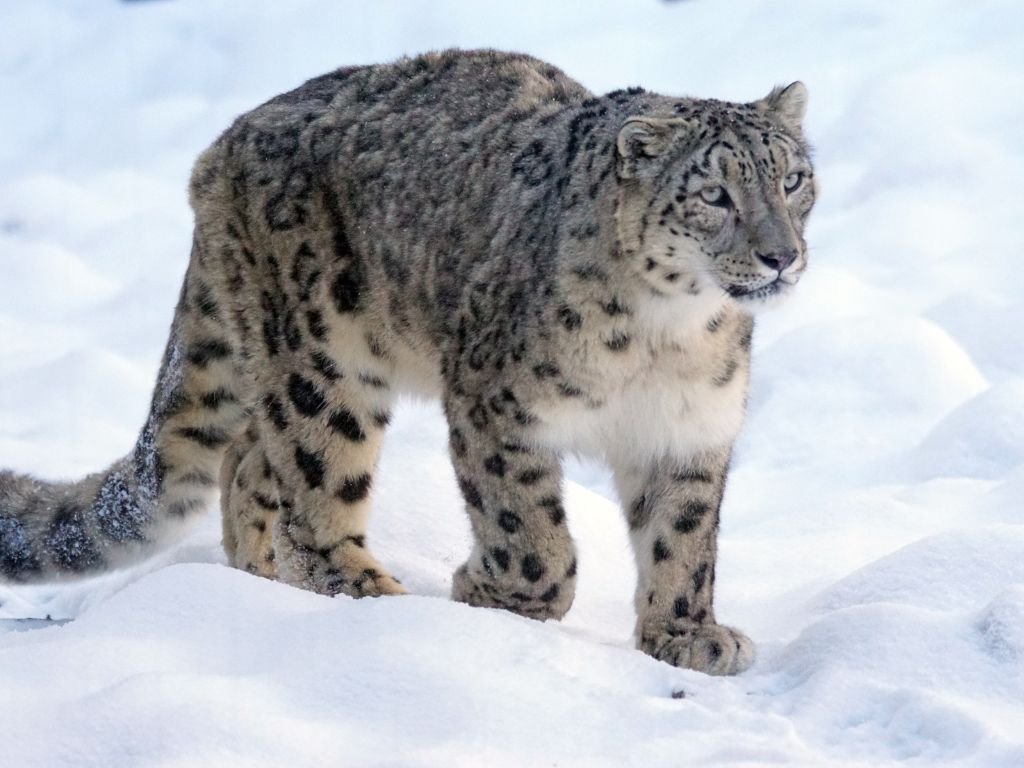
They hunt mostly at dawn and dusk, says the Snow Leopard Trust, and travel alone across home ranges of up to 1,000 km² (390 sq mi). A long tail of 80 to 100 cm (31 to 39 in) is almost as long as the body. Snow leopards live as high as about 5,500 m (18,000 ft) in summer.
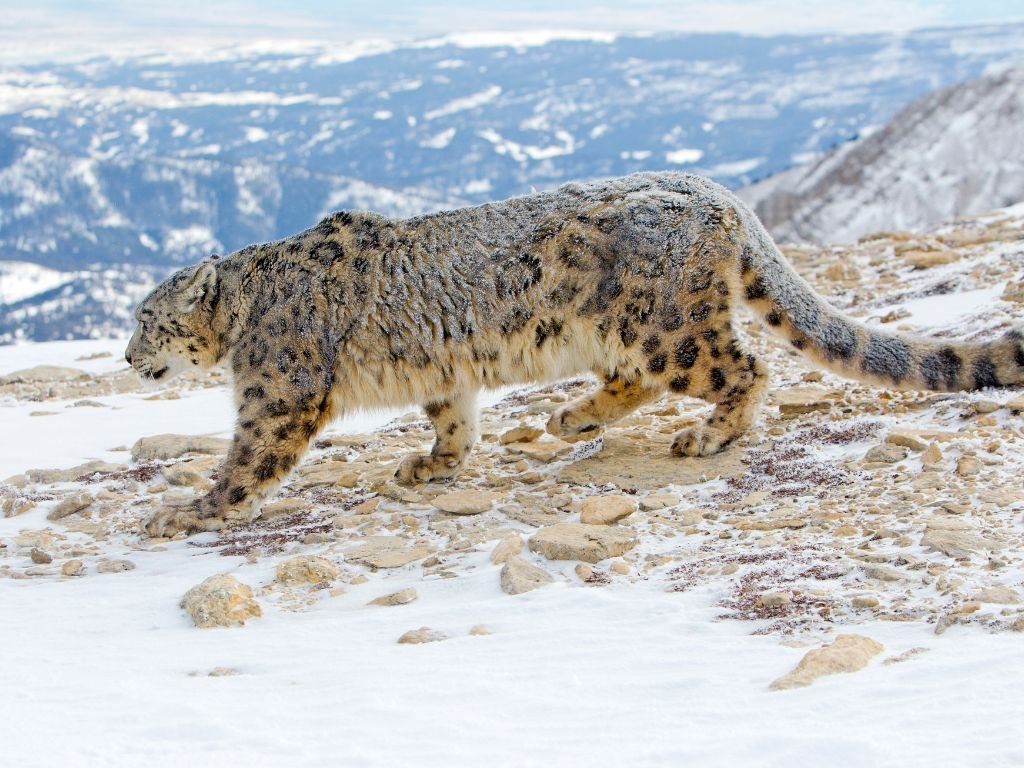
Do snow leopards eat livestock?
Sometimes, but less than many people think. Snow leopards prefer wild prey, but they do kill goats, sheep, donkeys, horses, camels, cattle and young yaks, says the Snow Leopard Trust. Stragglers left out on the pastures are most at risk.
Across the whole range, livestock made up less than 8% of the diet, the Lyngdoh review found. Herders still feel those losses, and some kill snow leopards in revenge. The review’s authors argue that protecting wild prey is one of the best ways to protect snow leopards, and herders’ animals too.
What do snow leopards eat in zoos?
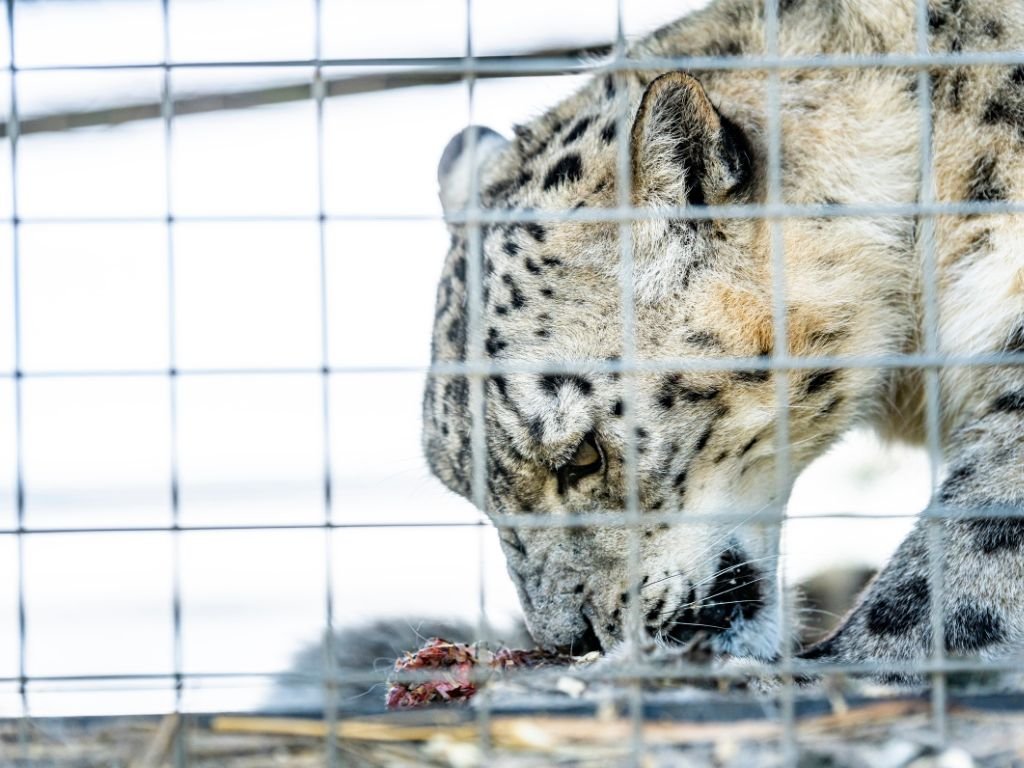
Zoos try to copy a wild diet. At San Diego Zoo, snow leopards get ground meat most days, large bones twice a week and a thawed rabbit once a week, says San Diego Zoo Wildlife Alliance. Bones give the cats something to chew, much like a real carcass.
Are snow leopards endangered?
Snow leopards are listed as Vulnerable on the IUCN Red List. They were moved down from Endangered in 2017. The Snow Leopard Trust disagrees with that change. It points out that less than 2% of the snow leopard’s range has ever been surveyed with reliable methods such as camera traps.
There may be only 3,920 to 6,390 snow leopards left in the wild, says the Snow Leopard Trust. Loss of wild prey makes things worse, because hungry cats turn to livestock. Compare the snow leopard’s menu with what Siberian tigers eat and what Bengal tigers eat, or see how another big cat is built in tiger adaptations and cheetah adaptations.
Frequently asked questions
Do snow leopards eat humans?
No. Snow leopards are not known to be aggressive toward people, says the Snow Leopard Trust. They are shy, live alone and are very hard to see. Their prey is wild sheep, goats, marmots and, sometimes, livestock.
How big is a snow leopard?
A snow leopard is 99 to 130 cm (39 to 51 in) long, with a tail of another 80 to 100 cm (31 to 39 in), says San Diego Zoo Wildlife Alliance. It stands about 60 cm (24 in) at the shoulder, a bit taller than a large dog.
What is a blue sheep?
The blue sheep, or bharal, is a wild animal of the Himalaya and Tibetan Plateau. Despite its name, it is not really blue and sits between sheep and goats. It is one of the two prey animals snow leopards prefer most, along with the Siberian ibex.
How many snow leopards are left?
The Snow Leopard Trust estimates there may be only 3,920 to 6,390 snow leopards in the wild. Numbers are uncertain because less than 2% of their mountain range has been surveyed with reliable methods. The IUCN lists them as Vulnerable.
Sources
- Snow Leopard Trust. What do snow leopards eat?.
- Snow Leopard Trust. Snow leopard facts.
- Snow Leopard Trust. Frequently asked questions on the snow leopard's Red List status.
- PLOS ONE (2014). Prey preferences of the snow leopard (Panthera uncia): regional diet specificity holds global significance for conservation (Lyngdoh et al., PLOS ONE, doi:10.1371/journal.pone.0088349).
- San Diego Zoo Wildlife Alliance. Snow leopard.
Sources checked 15 September 2026.

Keep the conversation curious