
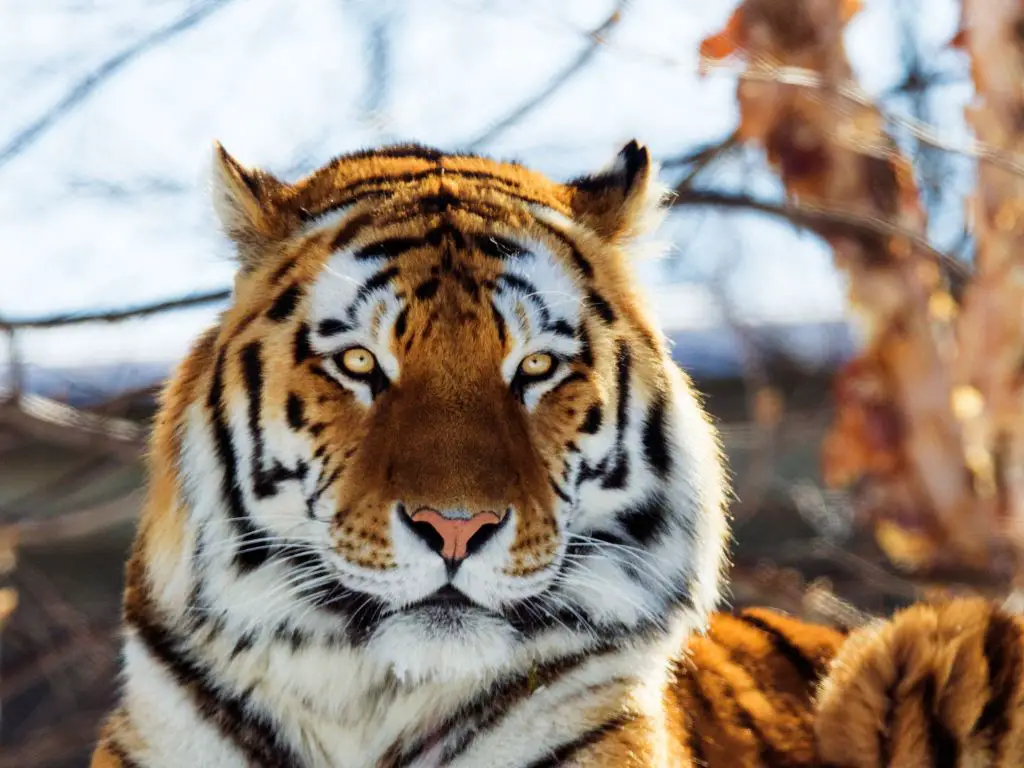
Siberian tigers, also called Amur tigers, are endangered mainly because people kill them. Poaching for skins and bones is the top cause of death for tigers in Russia, says the IUCN Red List tiger assessment (2022). A shortage of deer and wild boar, logging roads and car crashes add to the danger. About 750 live in Russia today.
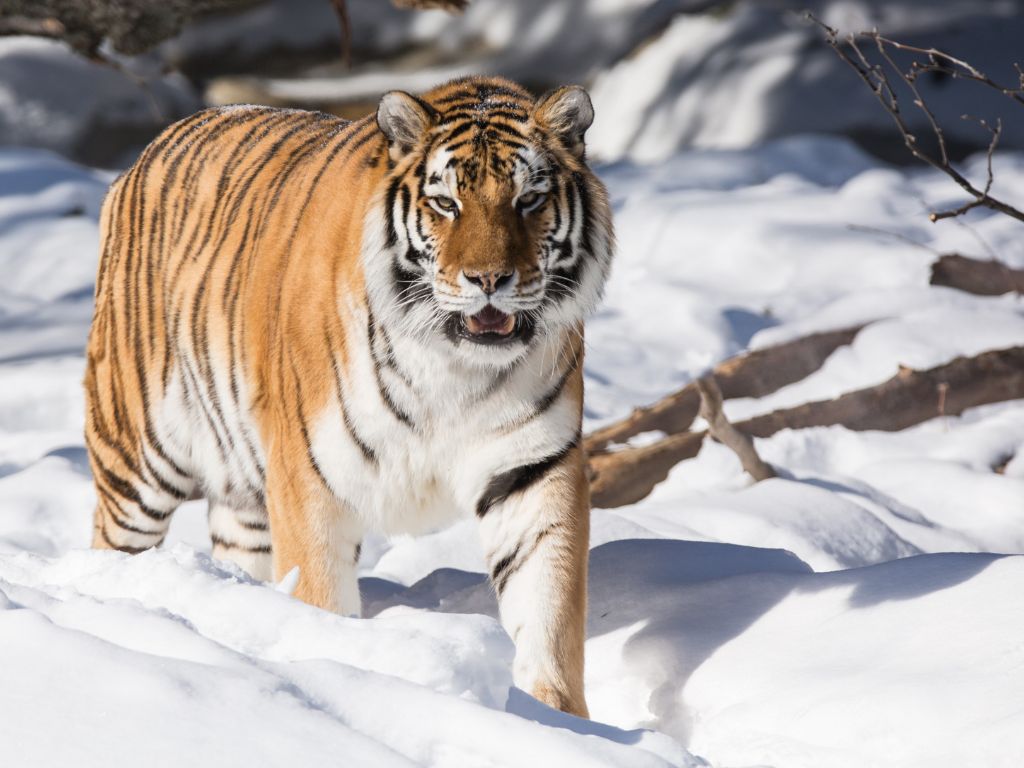
Why are Siberian tigers endangered?
The IUCN lists the tiger as Endangered, one step below Critically Endangered. Its 2022 assessment names hunting of tigers and of the animals they eat as the main cause of tiger declines since 1991. Put simply, people remove tigers and their food faster than tigers can replace them. Here are the threats one by one.
Poaching for skins and bones
Tiger skins, bones and meat sell for a lot of money. About ten years before the 2022 assessment, a tiger skin could sell for around US$16,000 in China, while the poacher who killed the tiger earned at most $100 to $200, the IUCN reports. In China, tiger bone is soaked in alcohol and sold as a “tonic”.
In Russia, poaching is the leading cause of death for tigers, the IUCN says, based on years of tracking tigers fitted with radio collars. International trade in tiger parts is banned. Amur tigers were added to Appendix I of CITES, the treaty that controls the wildlife trade, in 1987.
Not enough to eat
A tiger needs to kill 50 to 60 large animals a year, mostly deer and wild boar, according to the IUCN. People hunt the same animals. In Russia’s Sikhote-Alin mountains, food is so thinly spread that there are only 0.13 to 0.45 tigers per 100 km² (39 sq mi). That is one tiger for every 220 to 770 km² (85 to 300 sq mi). Our guide to what Siberian tigers eat lists their main prey.
Disease hits prey too. African swine fever, a virus that kills pigs, has cut wild boar numbers in the Russian Far East, say Oleynikov and colleagues (2025). Fewer boar means hungrier tigers.
Roads, logging and cars
Logging roads open up the forest. Roads give poachers easy access, and less than 10% of Amur tiger habitat is protected, says the Wildlife Conservation Society (WCS). Most tigers therefore live in forests that people also use for timber and hunting.
Roads also kill tigers directly. The 2025 Oryx study counted 26 Amur tigers killed by traffic in Russia from 1980 to 2023. Almost half of those deaths (46%) came in just the last four years, 2020 to 2023. Most (73%) happened in winter, above all in January. The authors link the rise to the loss of wild boar, which pushes hungry tigers towards villages and busy roads.
Disease
Canine distemper, a virus better known in dogs, has killed wild tigers in Russia. The IUCN reports a significant loss of tigers from Sikhote-Alin Zapovednik, a strict nature reserve, after the virus reached them. In a small population, even a few deaths matter.
Slow breeding and huge home ranges
A tigress has one to seven cubs at a time, usually two to four, and about half of wild tiger cubs die before age 2, says the Smithsonian’s National Zoo. A Siberian tiger may patrol 400 to 500 km² (155 to 195 sq mi) and walk up to 80 km (50 mi) in a day, according to the Toronto Zoo. An animal that needs that much room keeps running into people, roads and snares.
How many Siberian tigers are left?
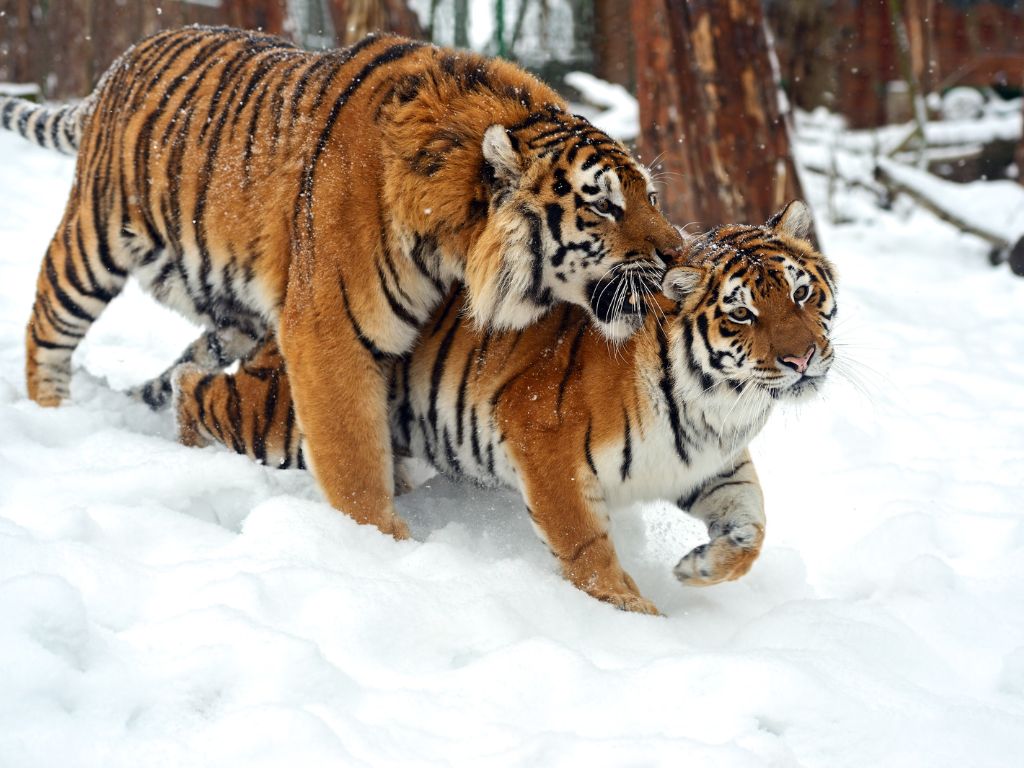
About 750 Siberian tigers live in Russia. Russia’s natural resources minister, Alexander Kozlov, gave that figure in October 2023, Interfax reported. He said numbers had grown by about 40% in recent years. A smaller group lives across the border in north-east China.
For all tigers worldwide, the IUCN estimated 3,726 to 5,578 wild tigers in 2022, not counting cubs. Its best guess is 3,140 adults old enough to breed. Every one of these numbers is an estimate. Tigers are shy, live in thick forest and roam huge areas, so scientists count them from tracks in the snow and camera traps, and give a range rather than a single number.
Watch out for old figures. The Smithsonian’s tiger page still says there are 360 Amur tigers, and this page used to say about 500. Both are out of date.
| Figure | What it counts | Source | Year |
|---|---|---|---|
| About 750 | Amur tigers in Russia | Russian government, reported by Interfax | 2023 |
| 3,726 to 5,578 | All wild tigers, not counting cubs | IUCN Red List | 2022 |
| 3,140 | Best estimate of wild tigers old enough to breed | IUCN Red List | 2022 |
| 0.13 to 0.45 per 100 km² | Tiger density in the Sikhote-Alin mountains | IUCN Red List | 2022 |
| 26 | Amur tigers killed by traffic, 1980 to 2023 | Oleynikov and others, Oryx | 2025 |
| 360 | Amur tigers (old figure, out of date) | Smithsonian’s National Zoo | Undated |
Are Siberian tigers still endangered?
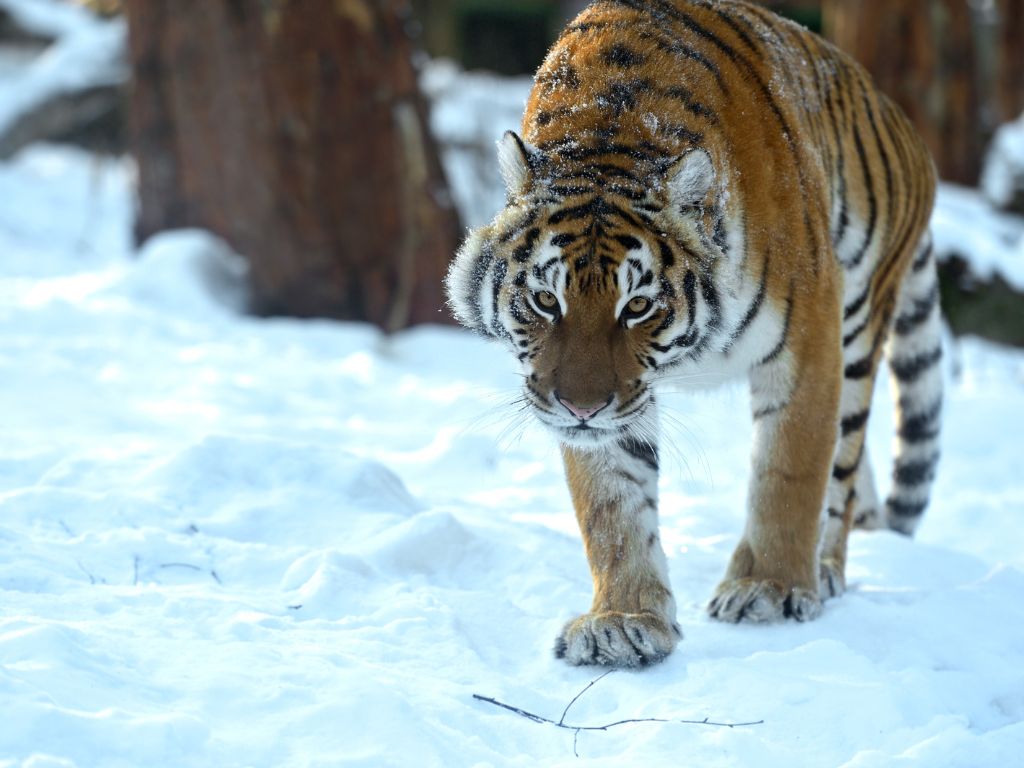
Yes. Numbers in Russia are rising, but the tiger is still listed as Endangered on the IUCN Red List (2022). The IUCN assesses all tigers as one species. Since a 2017 review of cat names, scientists group Amur tigers with the other mainland tigers as Panthera tigris tigris. So “Amur tiger” and “Siberian tiger” are names for a population, not a separate subspecies.
Growth from a low point is not the same as being safe. A few hundred tigers spread over a vast area can still be hit hard by a disease outbreak, a crash in wild boar, or a rise in poaching. Tigers in South Asia face many of the same problems, as our page on why Bengal tigers are endangered explains.
Do Siberian tigers live in Siberia?
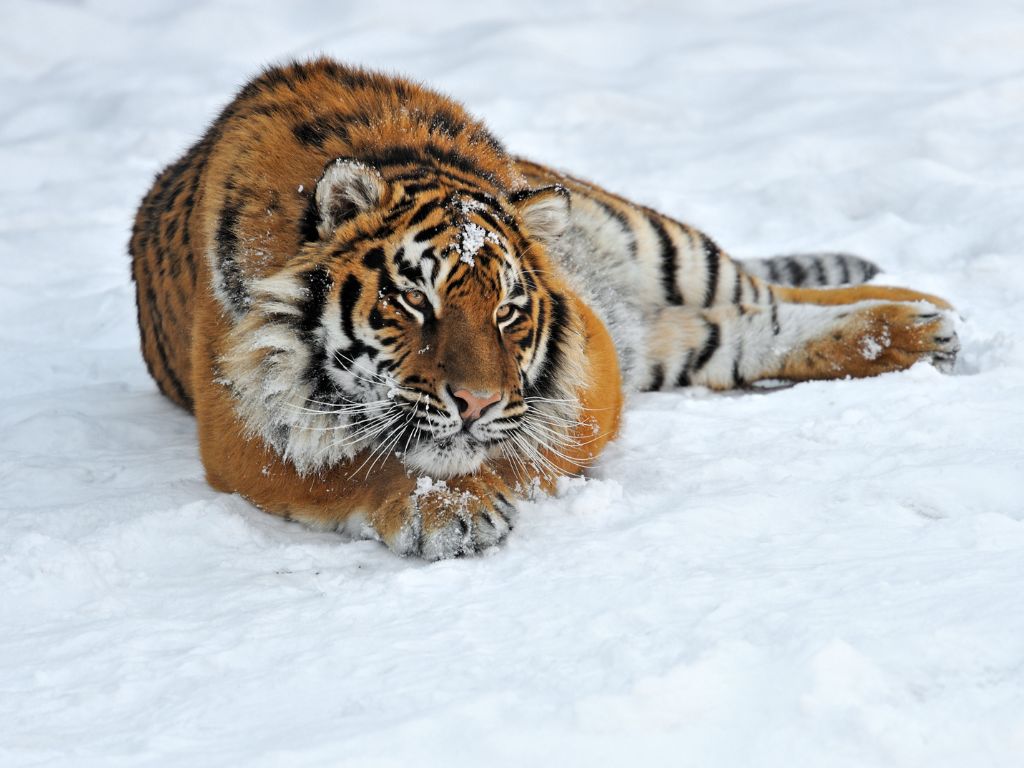
Not really. The IUCN places Amur tigers in the Russian Far East and north-east China. In Russia they live in the Primorye, Khabarovsk and Amur regions, on the Pacific side of Asia, far from central Siberia. The name “Amur tiger” comes from the Amur River, which forms part of the border between Russia and China.
Winters there are long and snowy. The Amur Tiger Centre notes that these tigers grow a thick, two-layer coat. They are also among the biggest tigers, as you can see in our guide to how big a Siberian tiger is.
What is being done to protect Siberian tigers?
In November 2010, leaders of the 13 countries that still have wild tigers met in St Petersburg, Russia. They agreed a plan to double the number of wild tigers by 2022, the IUCN records. Russia’s count has grown a lot since then.
On the ground, anti-poaching teams patrol reserves such as Kedrovaya Pad, and scientists track collared tigers to learn where and why they die. One photo in the WCS report shows a tiger found alive in a poacher’s snare, which was put to sleep with a dart and freed. Because protected areas cover less than 10% of tiger habitat, WCS also works with people who use the forest outside reserves.
Russia banned tiger hunting in 1947, after hunting had pushed tigers close to disappearing there. Today the main jobs are stopping poachers, keeping deer and boar numbers healthy, and making roads safer where tigers cross. To see what these tigers can do when they have enough to eat, read how strong a tiger is.
Frequently asked questions
How many Siberian tigers are left in the world?
About 750 live in Russia, according to figures the Russian government gave in 2023, and a smaller number live in north-east China. For comparison, the IUCN estimated 3,726 to 5,578 wild tigers of all kinds in 2022, not counting cubs. The Smithsonian's figure of 360 Amur tigers is out of date.
Is the Siberian tiger the same as the Amur tiger?
Yes. Siberian tiger and Amur tiger are two names for the same tigers of the Russian Far East and north-east China. Scientists now group them with other mainland tigers as Panthera tigris tigris, but Amur tiger is still widely used for this population.
Are Siberian tigers going extinct?
Not right now. Their numbers in Russia have risen in recent years, but tigers are still listed as Endangered by the IUCN (2022). A rise in poaching, a disease outbreak or a crash in wild boar numbers could reverse the gains, so protection is still needed.
How long do Siberian tigers live?
Wild tigers usually live 10 to 15 years, and some reach 20 in zoos or, rarely, in the wild, according to the Smithsonian's National Zoo. Many wild tigers die younger, because about half of all cubs do not survive their first two years.
Sources
- IUCN Red List (PDF copy hosted by Nature Conservation Foundation India) (2022). Panthera tigris. The IUCN Red List of Threatened Species 2022: e.T15955A214862019 (Goodrich et al., doi:10.2305/IUCN.UK.2022-1.RLTS.T15955A214862019.en).
- Interfax (2023). Population of Amur tigers, Far Eastern leopards growing in Russia – natural resources minister.
- Oryx, Cambridge University Press (2025). Tigers on thin ice: traffic mortality incidents and Amur tiger conservation in the Russian Far East (Oleynikov, Kolchin and Salkina, doi:10.1017/S0030605324000346).
- Wildlife Conservation Society. Tiger conservation in the Russian Far East: background.
- Smithsonian's National Zoo and Conservation Biology Institute. Tiger.
- Toronto Zoo. Amur tiger.
- Amur Tiger Centre. Who is the Amur tiger?.
- San Diego Zoo Wildlife Alliance. Tiger.
Sources checked 15 September 2026.

Keep the conversation curious